
Sexism in congolese parliament persists despite female representation
The shocking incident that exposed parliamentary sexism in the DRC
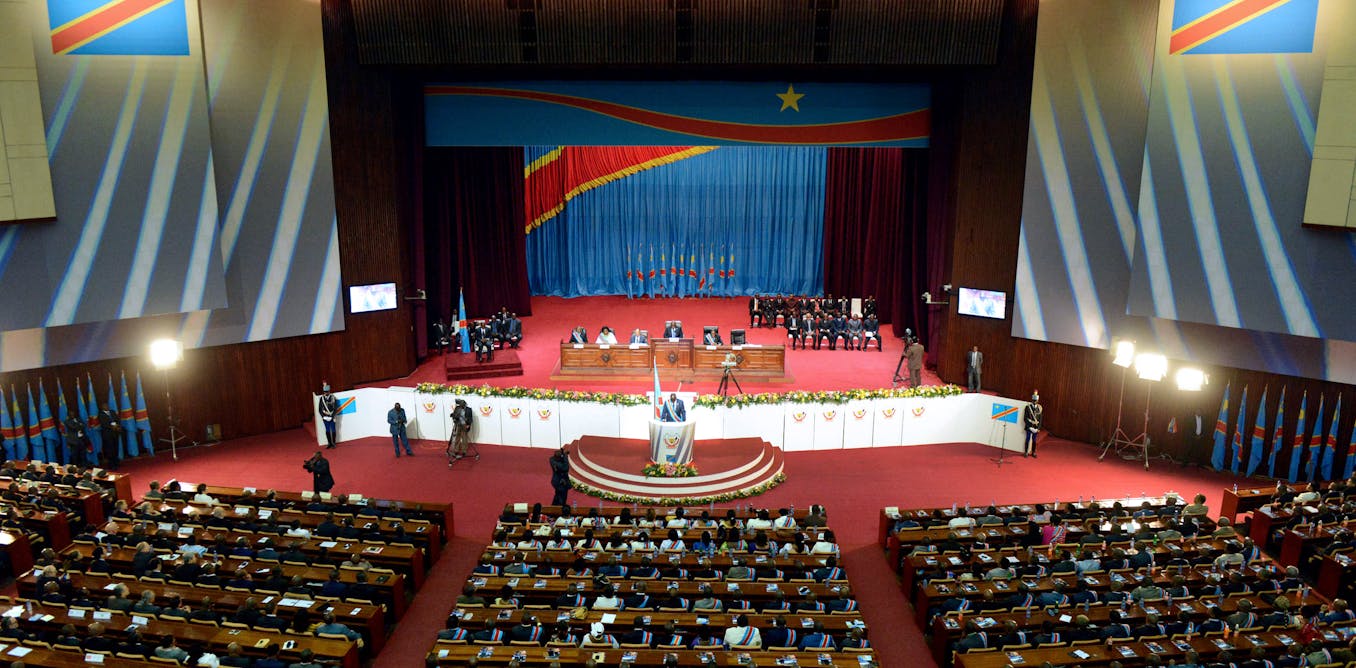
On May 15, 2026, a disturbing scene unfolded in the Democratic Republic of Congo’s National Assembly. As Micheline Mpundu, a female deputy, concluded her speech and prepared to leave the podium, Christophe Mboso, the acting presiding officer, publicly commented on her appearance. Addressing the plenary session, he remarked, “Thank you, colleague, she is very beautiful… isn’t she?” before continuing in Lingala, “Look at her yourselves,” and mimicking the shape of her body with his hands while laughing. His remarks were met with applause and laughter from the assembly, which carried on as if nothing had happened.
It was only after public outrage from political figures, human rights activists, and internal pressure from his superiors that Mboso issued a belated apology—without facing any consequences. This incident raises a critical question: when will African parliaments, particularly the Congolese one, stop being hostile spaces for the women they are meant to represent?
Sexism in parliament is not just a Congolese issue
Sexist violence in legislative bodies is part of a broader pattern of discrimination against women in politics across Africa. Long before Mboso’s remarks went viral in Kinshasa, similar incidents had been documented, highlighting a systemic problem that undermines women’s full participation in decision-making.
The early 1990s brought a surge of democratization across the continent, leading to an unprecedented increase in female legislators. Between 1990 and 2010, the number of women in African parliaments tripled. Yet, despite this progress, the entrenched culture of these institutions remained unchanged. The presence of women was often perceived as a challenge to the status quo, met with resistance from male colleagues—whether from opposing parties or their own ranks.
According to a 2016 global study by the Inter-Parliamentary Union (IPU), which surveyed women parliamentarians from 39 countries, over 65.5% reported experiencing repeated verbal abuse and insults during their mandates. These alarming statistics reveal a troubling reality: women legislators are frequently judged not on their political contributions but on their appearance, marital status, or adherence to traditional gender roles.
This sexism doesn’t stay outside the halls of power—it infiltrates them. The IPU and the African Parliamentary Union (APU) further confirmed in a 2021 regional study that progress in women’s political participation remains painfully slow, with persistent structural barriers.
How systemic sexism silences women in politics
The applause Mboso received in response to his remarks was far from insignificant. It underscored a deeper issue: the problem isn’t just one individual but the system that enables and tolerates such behavior. Philosopher Kate Manne describes this as a mechanism of control that keeps women subordinate, even in democratic institutions. Violence against female legislators isn’t always physical—sometimes, it’s the words, gestures, and laughter that remind them they are seen as bodies first, politicians second.
Mona Lena Krook, an expert on violence against women in politics, refers to this as semiotic violence—a form of oppression that doesn’t require physical harm to inflict damage. The colonial legacy of gender hierarchies, as theorized by feminist María Lugones, further explains why female parliamentarians in the DRC, despite being elected under the same laws and constitutions as their male peers, are still subjected to patriarchal control. They have equal rights on paper but unequal treatment in practice.
Comparing African cases of parliamentary sexism
The video of Mboso’s remarks inevitably draws parallels to other African nations. In Senegal, Deputy Amy Ndiaye, who was pregnant, was physically assaulted in the chamber in 2022. In Nigeria, Senator Natasha Akpoti-Uduagha was suspended in 2025—not for misconduct but for publicly naming the sexual harassment she endured from the Senate president. These cases, spanning three different countries, reveal a disturbing trend: African parliaments may tolerate women’s voices, but their dignity is still routinely violated.
Sexism in the DRC’s parliament: a long-standing crisis
The DRC has a history of such incidents. In April 2020, former Senate President Thambwe Mwamba publicly shamed Senator Bijoux Ngoya during a plenary session, accusing her of making inappropriate advances in exchange for political support—a claim that sparked chaos in the chamber. In July 2021, Deputy Christelle Vuanga was interrupted mid-debate by a colleague who simply stated, “You are a woman,” reducing her argument to her gender rather than her political stance.
The Mboso case is not an isolated anomaly. The DRC has ratified international conventions, adopted laws, and made commitments to gender equality—yet within the halls of its parliament, little has changed. The gap between policy and practice is nothing new, but the refusal to acknowledge it is becoming increasingly untenable.
Why silence is no longer an option
The words of feminist icon Simone de Beauvoir still resonate today: “Women are defined as the other.” In 2026, this otherness persists in the Congolese parliament, where female deputies are reduced to their bodies rather than their political contributions. These incidents expose how patriarchy corrodes democracy from within.
Without consequences for sexist behavior—evidenced by the lack of punishment for Mboso—the National Assembly remains a misogynistic space. While women make up 51% of the DRC’s population, they constitute only 13% of deputies. Underrepresentation does not justify tolerating such conduct. Other parliaments have taken steps, such as the #NotTheCost and #NotInMyParliament campaigns, proving that cultural change is possible through concrete sanctions and victim protection. The DRC has strong laws, including a 2025 Senate bill on violence against women, but laws without enforcement are meaningless. The time for silence has passed; failing to punish Mboso sends a clear message to all Congolese women considering a political career.