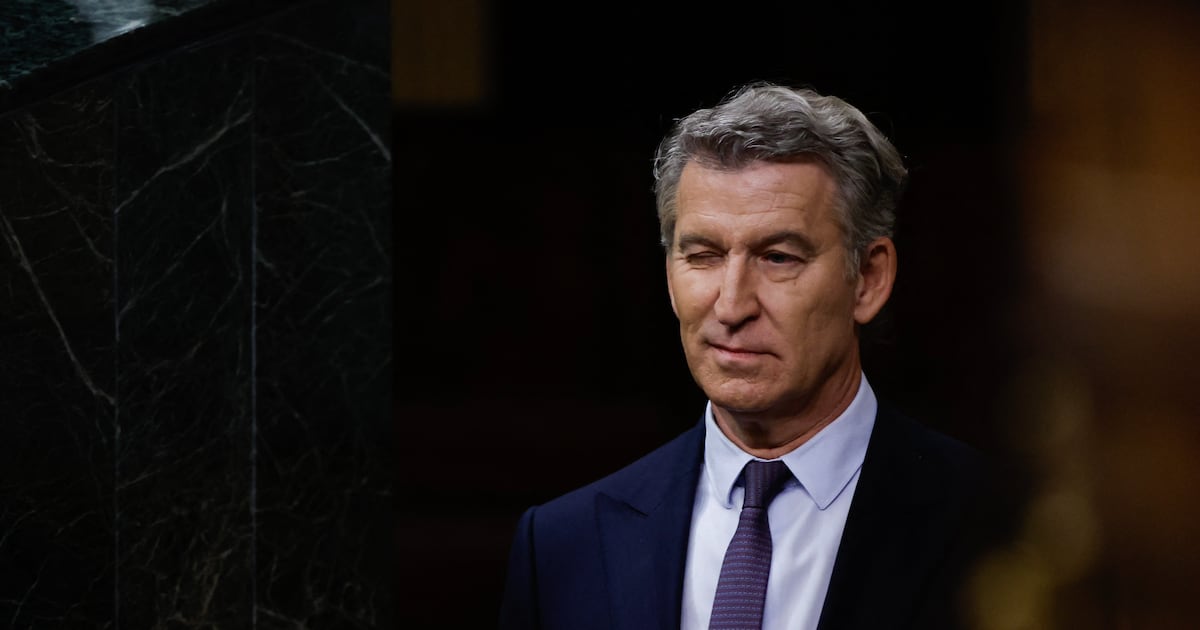

The gravity of the accusation against Spain’s Partido Popular (PP) is unprecedented in the nation’s foreign policy discourse. Foreign Minister José Manuel Albares recently branded the opposition party as “anti-Moroccan,” escalating verbal hostilities beyond typical political rivalry.
Albares argues that the PP has weaponized Spain’s external relations—particularly with Morocco—as a domestic political tool. Tensions have intensified following recent statements from current and former PP officials, prompting the minister to label the party an “obstacle” to Spain’s foreign policy objectives.
Beneath this political clash lies a far-reaching reality. Since 2022, Spain and Morocco have cultivated a strategic partnership spanning migration control, economic ties, security collaboration, and even co-hosting the 2030 FIFA World Cup with Portugal. By December 2025, this alliance deepened further with fourteen new cooperation agreements and a joint declaration to strengthen political dialogue.
The Western Sahara dilemma: a test for the PP
The Western Sahara dispute remains the PP’s most glaring contradiction. When Prime Minister Pedro Sánchez endorsed Morocco’s autonomy plan in March 2022 as the “most serious, credible, and realistic” basis for resolution, the PP condemned the move. Alberto Núñez Feijóo, then-opposition leader, accused the government of breaking decades of bipartisan consensus by acting unilaterally.
The PP’s official stance now emphasizes adherence to international law and UN resolutions without explicitly endorsing Morocco’s autonomy initiative. Yet internal divisions persist. Under former leader Mariano Rajoy, the party maintained a cautious approach, neither opposing nor endorsing Rabat’s proposal. Some PP factions have even aligned with separatist views, most notably in July 2025 when a Polisario representative attended the party’s national congress, sparking controversy in Morocco.
In February 2026, Albares accused the PP of a “double discourse,” claiming the party secretly backed Morocco’s position on Western Sahara while publicly criticizing it. The ministry alleged that PP emissaries privately supported the autonomy plan abroad despite public opposition.
A changing global landscape
If the PP assumes power, it will inherit a vastly different international context than in 2022. Morocco’s autonomy initiative has gained broader global support, and Spain’s stance on Western Sahara is now embedded in a broader bilateral relationship. Reversing course would not merely alter a diplomatic statement—it would reopen one of the most sensitive issues in Spanish-Moroccan relations. The PP has yet to clarify whether a Feijóo government would maintain Spain’s current position or revert to pre-2022 policies.
Vox’s influence and the rise of national priority rhetoric
The PP’s tensions with Morocco extend beyond Western Sahara. In April 2026, the term “national priority”—historically tied to Spain’s far-right Vox party—entered mainstream discourse. The concept advocates prioritizing Spanish nationals in access to public benefits, a stance that forced the PP to respond after Vox championed it in Congress and regional agreements.
Internal divisions emerged within the PP. Some leaders, like Jaime de los Santos, insisted “all legally resident immigrants have identical rights to Spanish-born citizens,” while others softened the language to “residential priority.” Yet the debate signaled Vox’s growing influence over Spain’s conservative bloc.
The Feijóo paradox: opposition vs. governance
The PP faces a fundamental dilemma. As an opposition party, it can attack the government by criticizing Morocco policy. Yet governing would require managing one of Spain’s most vital yet complex international relationships. The cooperation with Morocco is not merely ideological—it’s shaped by geography, economics, and security imperatives.
A likely scenario is a gap between the PP’s opposition rhetoric and its eventual governance. The party may find itself preserving core aspects of the current relationship with Rabat, leaving it to justify why it won’t undo policies it once condemned. Albares’ accusations of covert PP diplomacy in Morocco suggest the party’s private pragmatism may contrast sharply with its public stance.
Ultimately, the question isn’t whether the PP is “anti-Moroccan,” as Albares claims. It’s how far the party will go in exploiting this relationship for electoral gain—and how much of that rhetoric would translate into actual policy if it reaches power.
Spain’s proximity to Morocco and the latter’s strategic importance to Madrid ensure the relationship will endure regardless of who governs. For Feijóo, the challenge is clear: either embrace the existing cooperation framework or risk destabilizing a partnership deeply embedded in Spain’s national interests. The choice may define the early foreign policy legacy of a potential PP administration.



