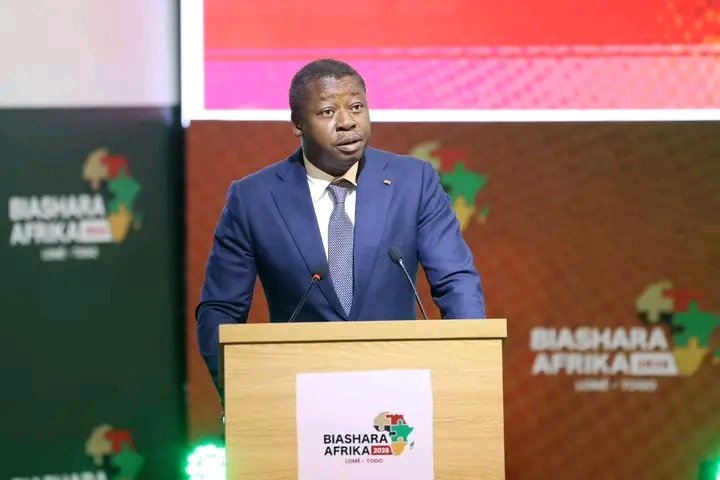

Lomé unites Africa’s economic vision at Biashara Afrika 2026
The capital of Togo, Lomé, is hosting the third edition of Biashara Afrika, a flagship pan-African forum dedicated to trade, investment, and economic partnerships, since May 18, 2026. The event has drawn heads of state, cabinet ministers, private sector leaders, and investors from across the continent, all gathered to discuss the future of intra-African commerce.
Among the speakers, Faure Essozimna Gnassingbé, President of the Togolese Council, delivered a keynote address emphasizing the urgent need to move beyond policy declarations and translate the African Continental Free Trade Area (AfCFTA) into tangible economic outcomes.
From vision to action: redefining Africa’s economic integration
In his speech, Gnassingbé underscored that “the era of vision must now become the era of results.” He highlighted the persistent challenges undermining Africa’s trade potential—non-tariff barriers, cumbersome border procedures, and exorbitant logistics costs—that continue to stifle intra-African trade despite the AfCFTA’s promise.
The Togolese leader paid tribute to Issoufou Mahamadou, former President of Niger and champion of the AfCFTA, for his relentless advocacy in advancing the continent’s economic unity. He stressed that the forum must evolve from a discussion platform into a solutions-driven engine for operationalizing the AfCFTA, fostering strategic partnerships, and accelerating the continent’s integration.
AfCFTA as a pillar of continental sovereignty
Gnassingbé framed the AfCFTA not just as a trade agreement, but as a cornerstone of Africa’s economic sovereignty. In a world reshaped by geopolitical tensions, rising protectionism, and shifting global supply chains, he argued that no single African nation can defend its interests in isolation. The AfCFTA, he asserted, must empower Africa to produce more locally, bolster industrial capacity, and strengthen its bargaining power on the global stage.
Building African industrial champions and regional value chains
The Togolese President highlighted a critical paradox: despite abundant natural and human resources, Africa remains trapped in a cycle of exporting raw materials while importing high-value finished goods. He called for a paradigm shift—leveraging the AfCFTA to dismantle fragmented national markets and nurture competitive African industries. This includes fostering homegrown multinational enterprises capable of operating continent-wide, reducing reliance on external players.
Empowering youth, women, and SMEs in Africa’s economic future
Gnassingbé concluded by emphasizing that Africa’s integration must be inclusive. He warned that the process will fail if it remains the preserve of large corporations or elites. Instead, he spotlighted the vital role of young entrepreneurs, women-led businesses, and small and medium-sized enterprises (SMEs) in driving sustainable growth. Their participation, he argued, is essential to ensuring that the benefits of integration reach grassroots communities through job creation, entrepreneurship, and expanded market access.
Togo’s strategic role in Africa’s economic transformation
In closing, Gnassingbé reaffirmed Togo’s commitment to the continent’s economic unity. Leveraging its strategic geographic position, robust logistics infrastructure, and regional connectivity, Togo is positioning itself as a key player in the development of Africa’s unified market. He expressed hope that this year’s Biashara Afrika forum would catalyze new partnerships and inject fresh momentum into the continent’s economic trajectory.