
Understanding africa corps the russian paramilitary group active in Mali
Understanding Africa Corps: The Russian paramilitary group taking over Wagner’s role in Mali
Emerging as one of Russia’s most discreet yet strategically vital military branches, Africa Corps has recently withdrawn from a key stronghold in Mali. Despite this setback, the group remains a critical asset for Moscow’s influence across the Sahel region.
Violent clashes erupted in Mali over the weekend of April 25, as jihadist forces allied with Tuareg rebels launched coordinated attacks on multiple positions under junta control. The assault extended from Bamako, where Defense Minister Sadio Camara was killed, to several major cities across the country.
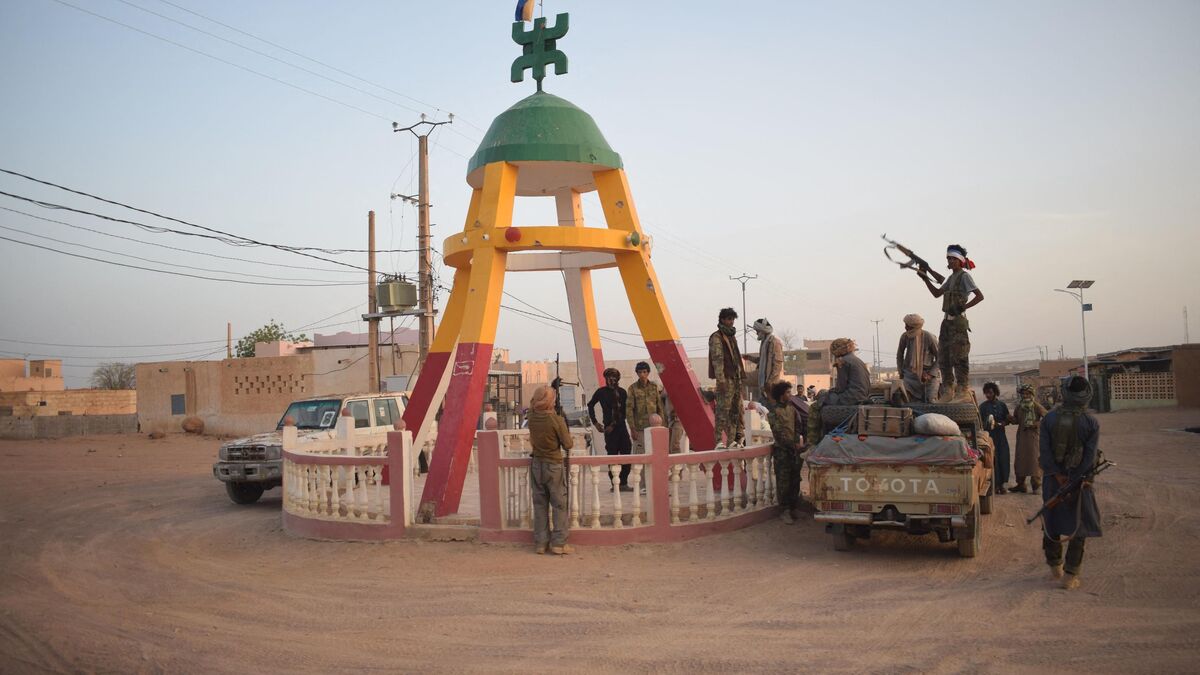
In the eastern region, rebels successfully reclaimed Kidal, a pivotal stronghold previously held by Africa Corps. After intense fighting and protracted negotiations, the Russian-backed paramilitary group withdrew from the city. However, its influence persists far beyond Mali’s borders, stretching across North and West Africa.
Russia’s Africa Corps emerged in late 2023 as a successor to the embattled Wagner Group, which had long served as Moscow’s primary military proxy in Africa. The transition followed the deaths of Wagner’s founders—oligarch Evgueni Prigojine and officer Dmitri Outkine—in a suspicious plane crash in August 2023, amid growing tensions between the group and the Kremlin.
The new organization was first publicly referenced by military blogger Deux Majors on Telegram in November 2023, citing statements from Igor Korotchenko, a former Russian colonel and Kremlin-aligned journalist. The group is reportedly overseen by Iounous-bek Evkourov, Russia’s Deputy Minister of Defense.
A calculated rebranding with historical echoes
The name Africa Corps deliberately evokes the Afrikakorps, the Nazi-era German force that operated in North Africa during World War II. This parallel is no coincidence—it signals a return to Moscow’s strategy of leveraging historical references to assert influence in former colonial territories. Unlike Wagner, which was often criticized for its brutal tactics and war crimes, Africa Corps presents itself as a more disciplined and state-aligned force.
Its stated mission is to conduct large-scale military operations across Africa, helping allied governments break free from neocolonial dependence, expel Western influence, and secure full sovereignty. Igor Korotchenko emphasized this vision in late 2023, framing the group as a tool for Russia to counter Western dominance on the continent.
Expanding influence across the Sahel
Africa Corps began consolidating its presence in 2024, replacing Wagner’s footprint in Mali. Hundreds—possibly thousands—of fighters were deployed, with some Wagner commanders and their units integrating into the new structure. The group’s primary objective in Mali is to prop up the junta in Bamako, facing off against Tuareg rebels who seek greater autonomy in the north.
This intervention aligns with Moscow’s broader regional strategy: filling the vacuum left by Western powers, particularly France, which withdrew its Operation Barkhane forces in 2022. By supporting local allies, Russia gains geopolitical leverage, secures critical migration routes, and gains access to valuable mineral resources.
The group’s footprint now extends beyond Mali into Burkina Faso, Libya, Sudan, the Central African Republic, and Niger. While its operations are less visibly violent than Wagner’s, Africa Corps has not escaped international scrutiny. In 2024, the United Kingdom imposed sanctions, accusing the group of systematic human rights abuses and exploiting natural resources for profit across the continent.
A strategic pivot in Russia’s African policy
Africa Corps represents a shift in Moscow’s approach to Africa, moving away from Wagner’s decentralized, profit-driven model toward a more centralized and state-controlled military presence. Analysts describe it as a direct competitor to Wagner, designed to absorb its assets, personnel, and regional influence.
The group’s withdrawal from Kidal does not signal a retreat from Mali or the Sahel. Instead, it reflects a tactical adjustment as Africa Corps consolidates its structure and deepens ties with allied governments. With Wagner’s legacy fading and Western influence waning, the new Russian paramilitary force is positioning itself as the dominant external military actor in one of Africa’s most volatile regions.