
- Bénin
- Politique
Wadagni’s Sahel diplomatic initiative: a new approach for regional stability
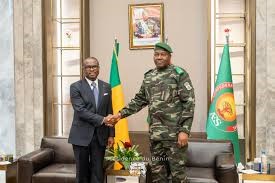
Three capitals, three pressing agendas, one intensive week. Bénin’s President Romuald Wadagni recently concluded his inaugural official journey beyond Bénin’s borders, setting his course for Abuja, Niamey, and Ouagadougou. The stated objective was to mend the frayed threads of sub-regional cooperation, which has been severely strained by escalating security crises and political tensions since 2023. This diplomatic tour highlights the critical need for renewed engagement in the Sahel region, a key focus for current affairs reporting.
Security and commerce formed the bedrock of discussions throughout Romuald Wadagni’s extensive tour. The initial phase of his travels aimed at re-establishing direct dialogue with the leaders of Nigeria, Niger, and Burkina Faso. With Abuja, the discussions primarily revolved around economic and security imperatives. Nigeria stands as Bénin’s foremost trading partner and plays a pivotal role in the ongoing struggle against armed groups operating within the Lake Chad basin. President Wadagni particularly emphasized the urgent need to streamline the Lagos-Cotonou corridor, where persistent blockages continue to hinder both nations’ economies.
In Niger and Burkina Faso, President Wadagni’s message underscored the vital importance of trans-border coordination. The increasing frequency of jihadist incursions into Bénin’s Atacora and Alibori regions makes isolated responses untenable. Concrete proposals included the recommencement of intelligence sharing mechanisms and the partial reopening of commercial exchanges, crucial steps for on the ground Sahel stability.
President Wadagni deliberately chose to focus on shared problems requiring immediate solutions rather than dwelling on political alliances. This pragmatic stance marks a notable departure from previous diplomatic approaches, where regional relations were often contingent upon positions regarding ECOWAS and the various military transitions.
Navigating the challenges of variable geometry cooperation
This diplomatic gamble carries inherent risks. The three nations visited maintain distinct statuses concerning regional institutions. Nigeria remains an active member of ECOWAS, while Niger and Burkina Faso have withdrawn, subsequently forming the Alliance of Sahel States (AES).
Facilitating dialogue between these divergent blocs without assuming the role of an official mediator compels Bénin to operate on two fronts simultaneously. On one hand, it must preserve its credibility with ECOWAS and its Western partners. On the other, it seeks to avoid isolating neighboring countries with which Bénin shares a 700-kilometer border and experiences daily human interactions. This delicate balance is vital for effective Sahel news English coverage.
The second, equally pressing, challenge is security. No bilateral agreement can truly succeed unless joint patrol units are adequately equipped with logistical resources and operate within a clear legal framework. Border populations, in particular, eagerly await the reopening of local markets and the enhanced security of rural transportation routes.
Future outlook: a pragmatic Bénin-Sahel axis?
Wadagni appears to be championing a diplomacy centered on specific projects. Rather than attempting to resolve deep-seated political differences immediately, he prioritizes technical agreements across sectors such as water management, energy cooperation, and cross-border mobility. The underlying strategy is to forge concrete, shared interests that would make disengagement financially and politically costly for all parties involved.
Should this innovative approach yield tangible results by the close of 2027, Bénin could effectively reclaim its role as a crucial facilitator within the sub-region. Conversely, the risk remains that these negotiations could prove exhaustive without translating into meaningful improvements on the ground, while insecurity continues its relentless advance. This perspective is keenly watched by any Sahel Reporter.
The immediate litmus test for this renewed diplomatic effort will be the practical implementation of commitments made in Niamey and Ouagadougou regarding the security of the Northern corridor. Without significant progress before the end of the current year, the discourse of pragmatism risks losing its credibility.