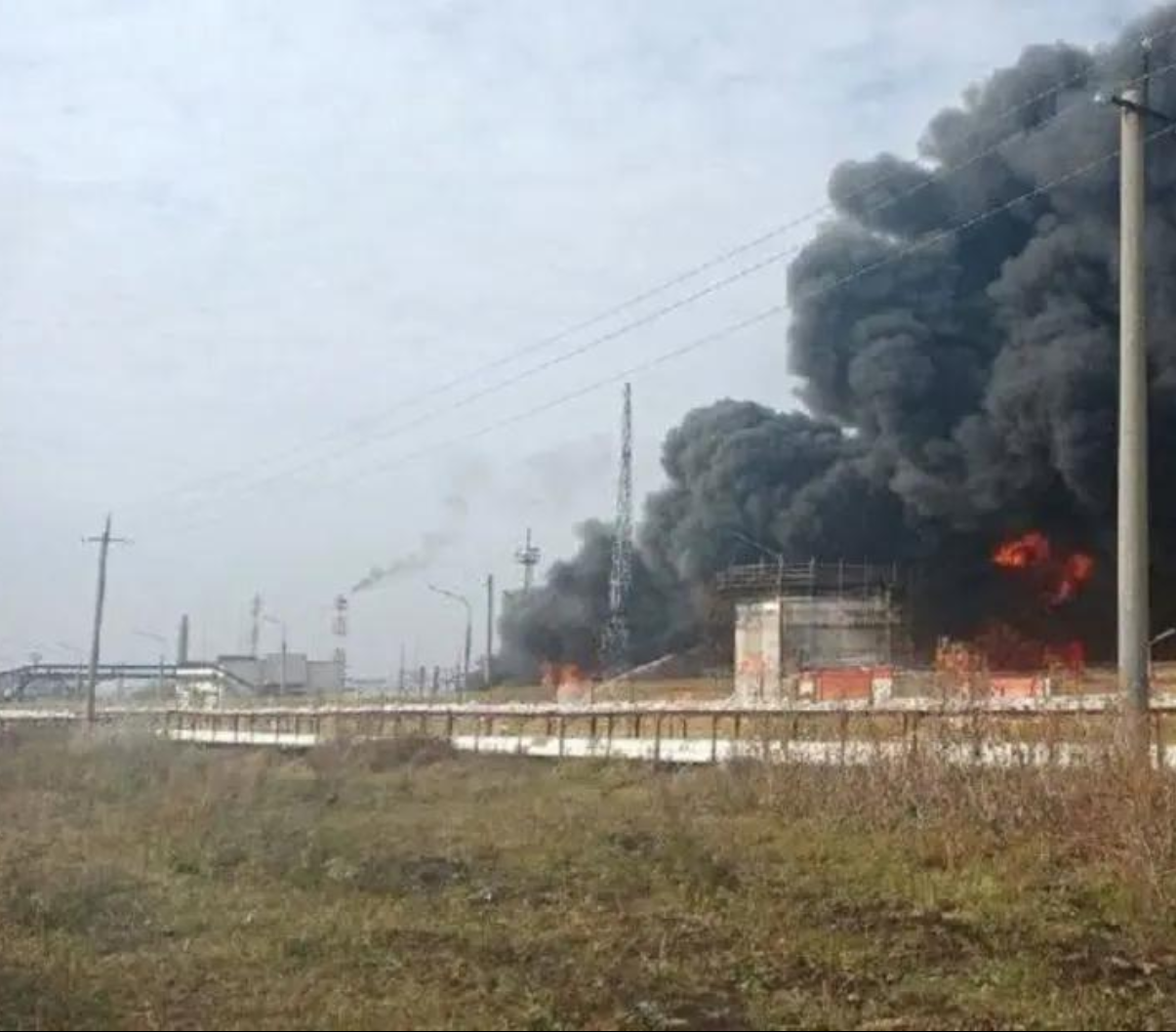

The night of October 29 to 30 marked a turning point in the shadow war between Ukraine and Russia—not on the battlefield, but in the quiet heart of Russia’s energy sector. Deep behind what Moscow considers safe lines of defense, the Novokouïbychevsk oil refinery, a key asset of state giant Rosneft, erupted into flames as Ukrainian drones pierced its airspace. The blaze sent towering plumes of black smoke into the sky, a silent counterpoint to the screams still echoing from another front: Dnipro’s railway station, where yet another civilian train had just been turned into a tomb.
The strategic chessboard: why refineries became the new front line
Since the full-scale invasion began in early 2022, Russian and Ukrainian forces have fought not only on land but across an invisible board—one defined by energy arteries and logistical veins. The Novokouïbychevsk facility is far from the Ukrainian front, yet its destruction carries weight beyond mere kilometers. With an annual processing capacity approaching five million tons of crude, the plant fuels domestic aviation, powers regional transport, and generates billions in export revenue. By striking it, Kyiv doesn’t just burn fuel tanks—it severs a critical financial lifeline of the Kremlin’s war chest.
Inside the fire: what really happened when the drones struck
Local residents captured the first glimpses of the assault on their phones: roaring orange flames licking at storage tanks, secondary explosions rippling through the complex, and plumes of acrid smoke blotting out the moon. Within hours, regional authorities confirmed a drone strike but offered no breakdown of damage, leaving analysts to parse grainy social media footage. Firefighters battled into the morning, their efforts complicated by ruptured pipelines and toxic fumes. While no official death toll emerged, the visual evidence suggests structural damage reaching far beyond superficial scars—tanks scorched, control rooms scorched, and the entire site shrouded in the metallic stench of burning hydrocarbon.
Dnipro’s morning horror: how civilians became collateral in a war of retribution
Just hours before Novokouïbychevsk ignited, a Russian drone completed its deadly arc over central Ukraine. It found a packed platform at Dnipro’s railway station. Two passenger trains stood idle—one commuter shuttle, one inter-city service—each carrying scores of families, students, and workers. The impact sent shattered glass and twisted metal raining onto the tarmac. Emergency crews worked frantically through shattered concrete and sobbing parents, pulling a child no older than eleven from the wreckage. Authorities tallied fourteen dead, with several still clinging to life in intensive care. President Volodymyr Zelensky condemned the strike as a “deliberate massacre of civilians,” while European capitals echoed the outrage, branding it a breach of every norm of modern warfare.
The infrastructure paradox: how railroads and refineries became weapons of war
Ukraine’s railway network has long been its lifeline, moving soldiers, refugees, and grain across a country under siege. Each missile aimed at a depot or rail hub weakens morale, interrupts evacuations, and chokes supply lines to the front. Russia, in turn, has waged a relentless campaign against energy infrastructure, plunging entire cities into darkness and cold during the brutal winters of 2022 and 2023. The logic is clear: collapse the grid, and you collapse the will to resist. But Kyiv’s strategy pivoted. Facing a resource-poor adversary, it turned to precision long-range strikes against Russian oil refineries, targeting the flow of money rather than the flow of electrons. The Novokouïbychevsk strike wasn’t just retaliation—it was economic warfare waged through thermobaric precision.
The economic domino effect: when fuel stops flowing, revenues fall
The ripple effects extend far beyond smoldering metal. Rosneft’s shareholders felt the tremor immediately; insurance premiums for oil facilities spiked across the Volga basin. European buyers hesitated before signing new term contracts, fearing delayed shipments or contamination from fire-damaged crude. Domestic aviation grounded regional flights due to fuel shortages, while trucking companies rerouted cargo to avoid Samara’s embattled corridor. Analysts estimate that even partial shutdowns at Novokouïbychevsk can shave millions from Russia’s monthly export earnings—funds that otherwise pad the war machine.
Diplomatic deadlock: why pressure on Kyiv failed to halt the strikes
As Western capitals urged restraint, citing fears of escalation and global energy shocks, Ukrainian commanders pressed forward. Intelligence suggested that Novokouïbychevsk had already been refurbished after earlier attacks, its new control systems hardened against cyber incursions. The resilience of the plant became a symbol: if one refinery could be hit twice in six months and still rise from the ashes, then no distance was safe, no defense impenetrable. The strike on October 30 proved that kinetic deterrence had folded—drone technology had outpaced diplomacy.
The human cost: behind the metrics of smoke and steel
While analysts debate barrels lost and ruble revenues foregone, the real cost is measured in singed children’s schoolbags and charred passenger tickets. The eleven-year-old pulled from the Dnipro wreckage will remember the smell of burning diesel long after her casts come off. Mothers in Samara will wake to the acrid tang of refinery smoke and wonder if tomorrow’s bread will cost more because the planes no longer fly. These are the invisible lines that connect a scorched tank farm in Samara to a shattered platform in Dnipro—two tragedies separated by hundreds of kilometers yet bound by a single war that refuses to end.
As autumn chill creeps across Europe, the question lingers: when infrastructure becomes a weapon, and civilians the ammunition, what remains of the world’s oldest rules of engagement?