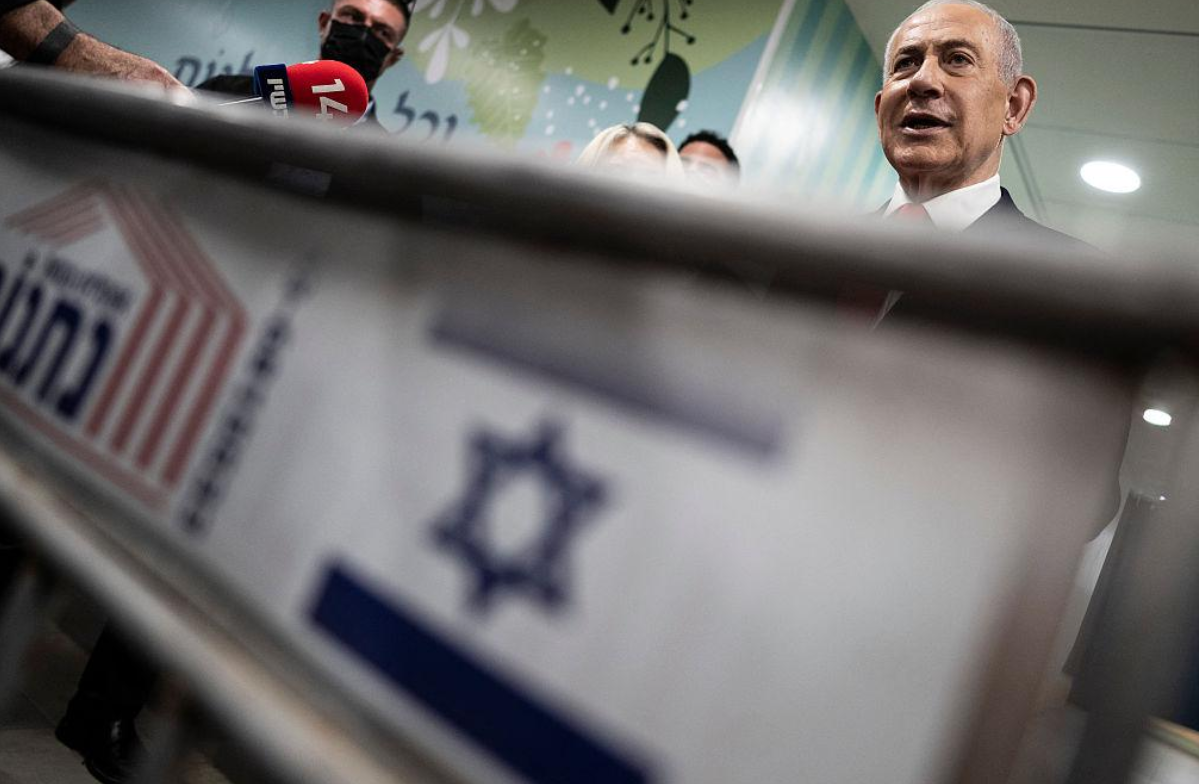

Benjamin Netanyahu’s narrow lead in Israel’s October 27, 2026 legislative elections did not secure the 61-seat majority needed to form a government. With his bloc holding just 53 seats, the opposition—led by Gadi Eisenkot’s coalition—commands 48, while Arab parties now hold 19 seats, a historic high. This unprecedented fragmentation isn’t just reshaping Israeli politics; it’s sending ripples across a region already on edge, from Gaza to Beirut, and from Tehran to Arab capitals.
The anatomy of a relative victory that failed to deliver a mandate
The election results paint a stark picture: Netanyahu’s Likud remains the largest party with 27 seats, but his bloc’s total of 53 has shrunk sharply from the 68 it held in the previous Knesset. The opposition, though trailing, has gained ground after years of public dissatisfaction over governance, wartime policies, and internal strife. Arab parties, particularly the Joint List and Ra’am, have emerged as kingmakers, their historic tally of 19 seats giving them unprecedented influence.
Yet their support doesn’t come without cost. Many Zionist parties remain reluctant to govern alongside Arab factions, complicating any path to a stable majority. The arithmetic leaves several plausible scenarios on the table: a fragile unity government, a minority coalition propped up by external backing, or—if negotiations collapse—a return to the polls. Each option carries its own risks in a nation deeply divided over security, identity, and national priorities.
The Palestinian question: a litmus test for Israel’s next government
Gaza’s reconstruction, Israel’s security needs, and the future of Palestinian governance will dominate the early agenda of any new administration. If Netanyahu retains power through traditional allies—hardline nationalists and religious factions—a continuation of current policies seems likely. These groups advocate a firm stance on Palestinian territories and security demands, potentially delaying any diplomatic breakthroughs.
But if an alternative coalition emerges, cautious adjustments may be possible—though not a wholesale shift. Divisions persist across the political spectrum on issues like Hamas, statehood recognition, and security cooperation. For Palestinians, the election outcome offers no immediate relief; it merely underscores that Gaza and the West Bank will remain flashpoints dictated by the fragile alliances that ultimately form Israel’s next government.
Tehran to Beirut: how regional security hinges on Jerusalem’s next moves
Beyond domestic instability, Israel’s next government will face urgent strategic challenges. Iran’s advancing nuclear program, its ballistic missile capabilities, and its support for regional armed groups remain top priorities. A fractured Knesset could weaken Israel’s ability to respond decisively—or to coordinate a coherent strategy with partners.
Lebanon, too, looms large. The evolving threat from Hezbollah could escalate quickly, risking devastating military and humanitarian consequences. Israel must also monitor Syria, where shifting power dynamics along its northern frontier could alter the security calculus. Even as Israel grapples with internal divisions, its regional footprint ensures every decision reverberates far beyond Tel Aviv.
Global players watch closely as Arab states weigh normalization prospects
The United States will be watching closely as Jerusalem navigates coalition-building. While the U.S.-Israel alliance remains strong, disagreements over Gaza, military operations, and regional de-escalation could strain ties. Arab states—including Egypt, Jordan, Saudi Arabia, and the UAE—are equally vigilant. For Riyadh, normalization with Israel remains a strategic goal, but one that hinges on Palestinian progress and regional stability. A government unable to articulate a clear policy may slow diplomatic momentum.
Conversely, a coalition open to dialogue could open new channels of communication—though real progress toward a comprehensive regional agreement would still require significant concessions on both sides. The stakes are high, and the window for constructive engagement is narrow.
A nation at a crossroads: what the election reveals about Israel’s future
This election isn’t just about Netanyahu’s political survival; it’s a referendum on Israel’s identity and direction. The rise of Arab representation, the erosion of traditional blocs, and the absence of a clear majority reflect a society fractured by security concerns, religious divides, and competing visions of the state. Three paths lie ahead: Netanyahu consolidates power through new alliances, an opposition-led coalition takes the helm, or another election is triggered. Whatever the outcome, Israel’s choices will shape not only its own future but the stability of the Middle East as a whole.
Netanyahu may have won the vote, but the absence of a mandate has left him—and the region—trapped in a moment of deep uncertainty.