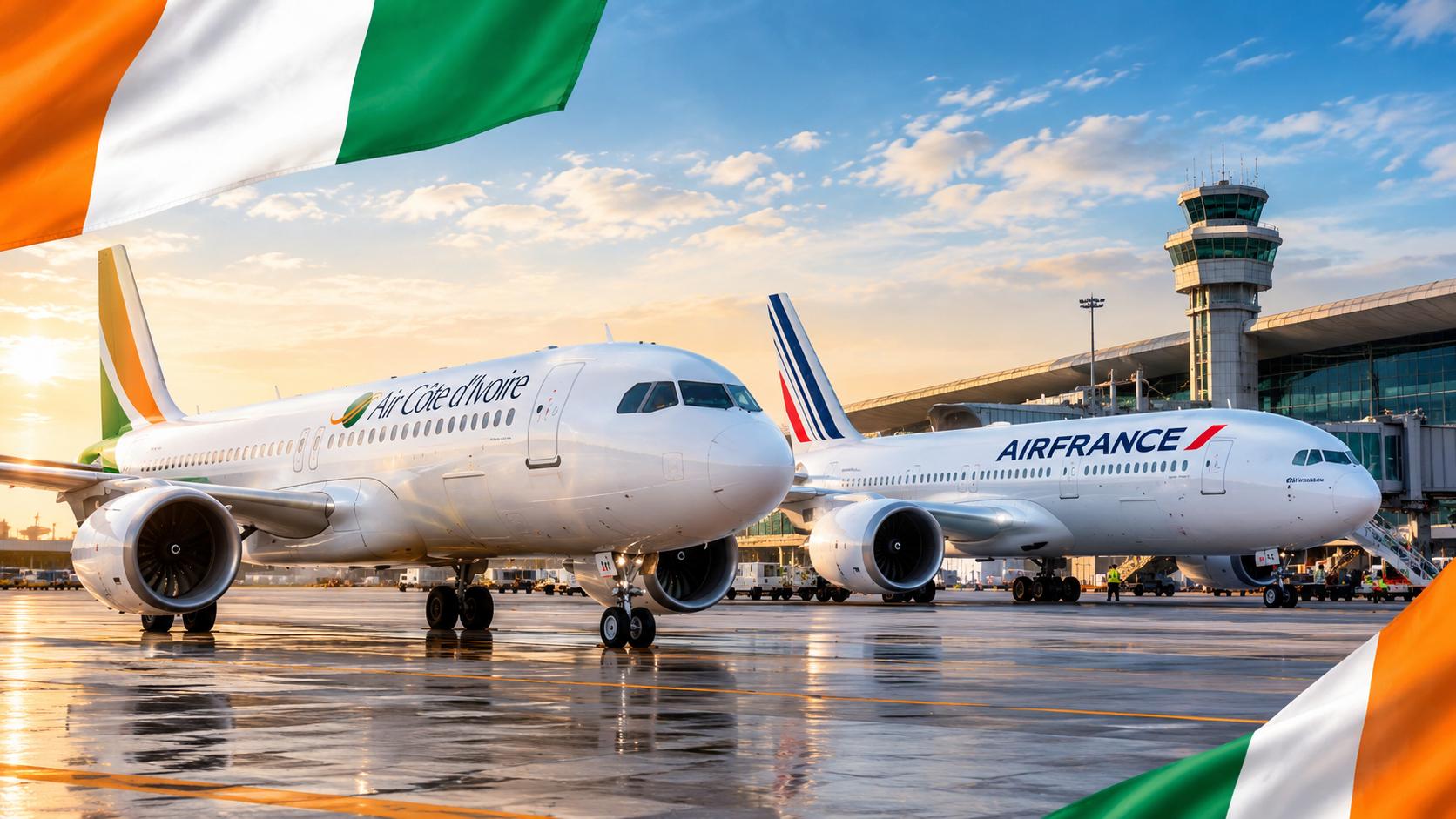

What started as a strategic stake in a national carrier is now transforming the way travelers move between Abidjan and Paris. In October 2026, Air Côte d’Ivoire and Air France will activate a reciprocal codeshare agreement that merges their networks on the continent’s busiest Francophone route. This move is more than a commercial deal—it reflects deeper operational synergies that have evolved over more than a decade of collaboration.
Fueling the partnership: why this alliance matters now
When Air Côte d’Ivoire launched in 2012, its partnership with Air France was designed to build a gateway into West Africa. At the time, Air France not only invested financially but integrated the Ivorian carrier into its global network through interlining. Over the years, both airlines refined their operational alignment, from fleet coordination to ground handling, creating the foundation for today’s expanded codeshare.
That long-term trust is now paying off. The new agreement, formalized during a Francophone airline summit in Ajaccio, transforms a legacy relationship into a unified market strategy. It ensures passengers on the Paris–Abidjan axis can book under either airline’s brand while flying on the aircraft of its partner—a seamless experience that boosts connectivity without changing the actual operator.
Codesharing unlocked: what changes for travelers
The agreement allows both carriers to market seats on each other’s flights using their own flight numbers. That means:
- Air France passengers can book seats on Air Côte d’Ivoire flights between Abidjan and Paris under Air France codes, gaining access to Ivorian departure times and frequencies.
- Air Côte d’Ivoire customers can now purchase Paris–Abidjan tickets under their national carrier’s identity, even when the aircraft is operated by Air France.
This flexibility extends booking options across both airlines’ sales channels, effectively doubling the available flight schedules without increasing aircraft movements. It also simplifies connections: travelers heading to secondary Ivorian cities can now book through Air France hubs, while those connecting within Europe can rely on Air Côte d’Ivoire’s Paris presence.
Building loyalty bridges: sMiles meets Flying Blue
Beyond seat sales, both airlines are integrating their loyalty programs. By the end of 2026, sMiles members will earn miles on Air France’s Paris–Abidjan flights and redeem them across Air France’s global network. Similarly, Flying Blue participants can accumulate and use miles on Air Côte d’Ivoire flights between the two cities.
This reciprocal mileage exchange is designed to deepen customer retention. It turns a simple flight into a long-term engagement opportunity, especially for frequent flyers who regularly traverse the Abidjan–Paris corridor. The integration reflects a broader industry trend toward alliance-based loyalty economies, where seamless rewards drive brand preference.
Expansion on the horizon: what’s next after Paris–Abidjan
Air Côte d’Ivoire isn’t stopping with this single route. Within six months of the codeshare launch, the airline plans to extend the agreement to additional Air France destinations across Africa and Europe. By leveraging its partner’s global distribution network, Air Côte d’Ivoire aims to position Abidjan as a central hub for West African travel, accessible from major international gateways.
The strategy is clear: use codeshare as a launchpad to scale presence without the cost of new fleet acquisitions. It’s a low-risk, high-impact approach that aligns with the airline’s growth vision for the mid-2020s.
The operational engine: how the alliance works behind the scenes
The success of the codeshare depends on flawless backend coordination. Both airlines have aligned their:
- Inventory systems: real-time seat availability is synchronized across both platforms to prevent double-selling.
- Baggage handling: luggage tagged under either airline’s code is processed through the same streamlined system, reducing delays.
- Customer service protocols: standardized response timelines ensure passengers get consistent support, regardless of the operating carrier.
Behind these technical integrations lies a decade of operational familiarity. Air France’s maintenance teams already support Air Côte d’Ivoire aircraft at key airports, and Air Côte d’Ivoire pilots train on Airbus models that dominate Air France’s fleet. This shared ecosystem minimizes transition risks and accelerates the alliance’s scale-up.
What this means for the aviation landscape in West Africa
The Paris–Abidjan codeshare isn’t just a bilateral deal—it’s a strategic signal to the region. In a market where connectivity and brand trust drive growth, this alliance showcases how smaller carriers can punch above their weight by partnering with established global players. For passengers, it means more choices, better loyalty rewards, and a stronger voice in shaping future routes.
As both airlines prepare to activate the codeshare in late 2026, the broader industry will be watching closely. The outcome may set a precedent for similar alliances across Francophone Africa—where legacy carriers and emerging airlines are increasingly looking beyond borders to expand their reach.