
How a parliamentary vote exposed fractures in Senegal’s ruling coalition
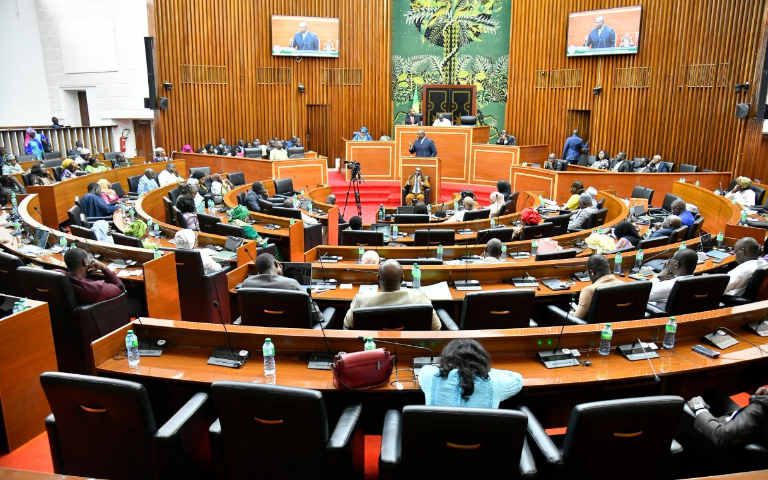
When Senegal’s National Assembly rejected the 2026 rectified budget on November 3, 2026, it wasn’t just a financial setback—it marked a turning point in the country’s political landscape. The vote, driven by a procedural maneuver led by Pastef lawmaker Amadou Ba, resulted in 109 votes to reject, 20 against, and three abstentions. What began as a technical adjustment to state finances quickly escalated into a public confrontation between President Bassirou Diomaye Faye’s executive branch and the parliamentary majority still loyal to former Prime Minister Ousmane Sonko’s party.
From political allies to institutional adversaries
This dispute reveals a paradox at the heart of Senegal’s government. While President Faye heads the executive, Ousmane Sonko—once a close ally—now leads the National Assembly as Speaker of Parliament. The rift between them widened after Sonko’s departure from the Prime Minister’s office in May 2026, creating an unprecedented dynamic: a president governing without automatic parliamentary backing, even on key economic decisions.
For decades, the ruling coalition had operated under a unified structure where economic policies enjoyed smooth passage. Today, that assumption no longer holds. The budget rejection underscores a fundamental shift: the government can no longer assume legislative support, even on priorities presented as non-negotiable.
The numbers behind the deadlock: what’s at stake in the budget dispute
The rejected rectified budget proposed total revenue of 5,848.7 billion CFA francs, a sharp drop from the original projection of 6,188.8 billion. Meanwhile, total expenditure reached 7,583.9 billion, pushing the budget deficit to 7.6% of GDP—a significant leap from the initial 5.4%. The most contentious reduction involved cutting 555 billion CFA francs in investment credits, threatening critical infrastructure and development projects.
Pastef lawmakers have challenged the government’s financial justifications, demanding greater transparency on subsidy allocations, family security grants, and priority spending. While the Ministry of Economy and Finance insists it provided all requested data, parliamentary critics argue the cuts reflect poor fiscal judgment rather than economic necessity.
Two competing fiscal philosophies
The clash reflects a deeper ideological divide. The government argues that rapid fiscal adjustment is essential to address changing economic realities. Meanwhile, opposition lawmakers insist on maintaining rigorous oversight of public funds, positioning themselves as guardians of fiscal responsibility—despite their shared political origins.
The global stakes: IMF talks and economic instability
The budget deadlock doesn’t just affect domestic politics—it risks derailing Senegal’s negotiations with the International Monetary Fund. Adopting a rectified budget was a key milestone in securing continued financial support under a new IMF program. Its rejection introduces delays and uncertainty, compounding concerns over public debt sustainability and macroeconomic stability.
Domestically, mounting cash flow challenges raise concerns over delayed payments to contractors, suppliers, and social sectors—all of which could erode public confidence and economic activity.
Is Senegal drifting toward an informal cohabitation?
While not a formal cohabitation in the constitutional sense, Senegal is experiencing a rare political anomaly: an executive branch led by one faction of a once-united movement, now facing resistance from its own parliamentary majority. This split raises a critical question: how far can internal divisions escalate before they disrupt the functioning of state institutions?
With no immediate path to resolution, the government is exploring avenues to break the impasse, while Pastef lawmakers remain steadfast in their demands for greater fiscal accountability. One thing is clear: the budget rejection has set the stage for a lasting realignment of political power in Senegal.
The human factor: Faye vs. Sonko and the future of the republic
Behind the procedural drama and budgetary figures lies a personal and political rivalry that has redefined Senegal’s governance. Once comrades in arm against an entrenched system, President Faye and Speaker Sonko now embody opposing visions of leadership. Their dispute echoes through the halls of parliament, reverberating in every postponed infrastructure project and deferred payment.
The November 3 vote was more than a rejection of a financial document—it was a vote of no confidence in an executive that can no longer count on its own ranks. And as Senegal navigates this uncharted territory, the world is watching to see whether unity can be restored—or whether institutional gridlock becomes the new norm.