
Behind Port-au-Prince’s pivot to African expertise amid gang escalation
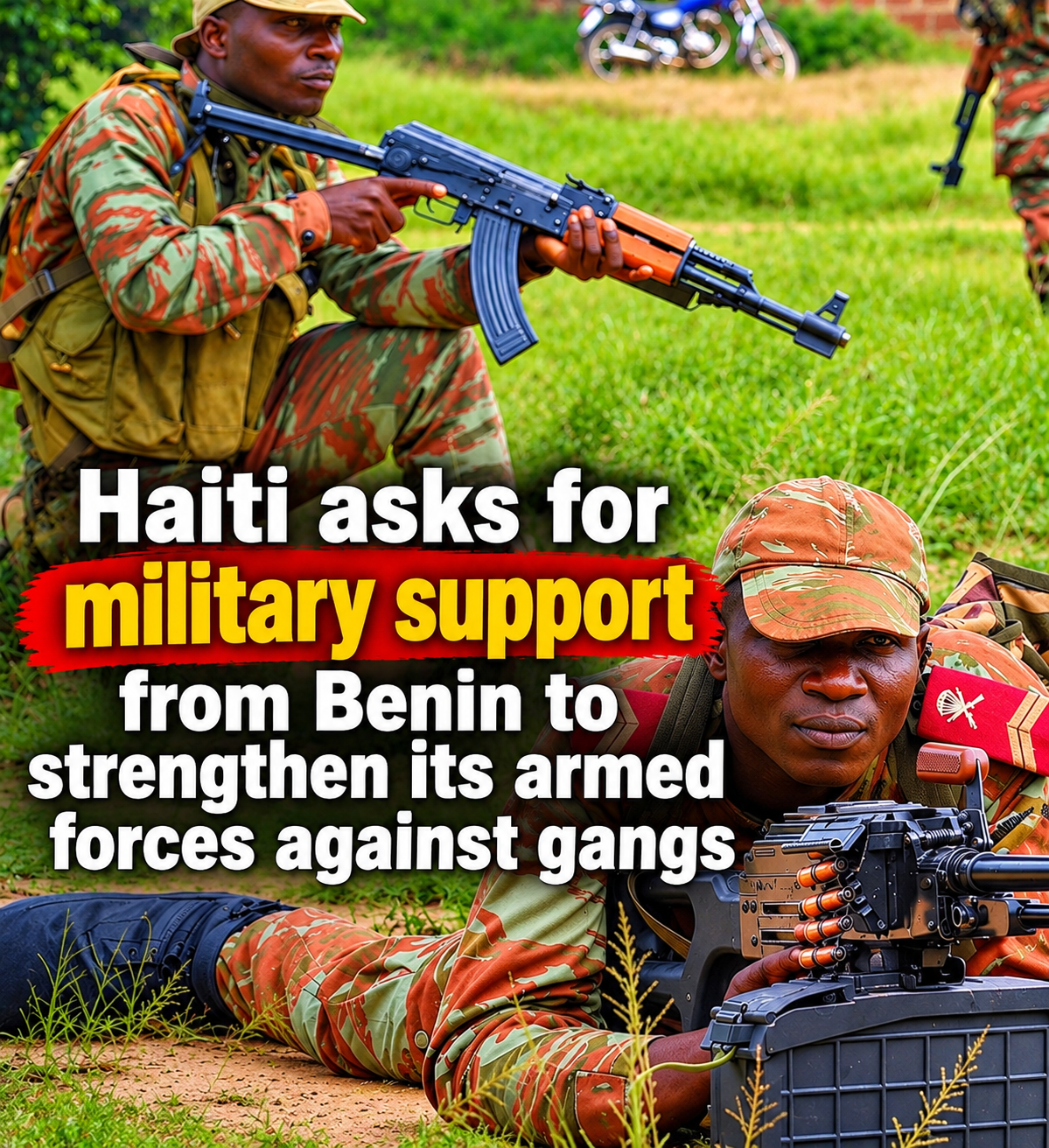
As armed gangs tighten their grip across Haiti, threatening security, governance and daily life, authorities in Port-au-Prince are quietly pursuing a strategic shift. Seeking fresh solutions beyond traditional partners, Haiti has turned its attention to Benin’s military expertise, signaling a growing recognition that Africa’s operational experience could offer critical advantages in restoring order and rebuilding national institutions.
Why Haiti is looking south for security solutions
The Haitian government faces an unprecedented challenge: an insurgency-like grip by armed gangs in key urban zones, disrupting infrastructure, commerce and public services. Traditional responses rising troop numbers, equipment upgrades have proven insufficient. In response, Port-au-Prince is exploring deeper collaboration with Benin, a nation that has itself navigated complex internal security threats, particularly in its northern regions.
This strategic pivot reflects a broader reassessment of where effective military support can be found. It underlines a shift from dependency on distant partners to leveraging regional expertise rooted in similar geopolitical and socio-economic realities.
The role of military training in crisis response
For Haiti, the focus is not merely on acquiring weapons or increasing troop strength, but on elevating the competencies of its soldiers. Military training stands at the core of this strategy, aiming to strengthen discipline, operational readiness, unit coordination, and tactical responsiveness in high-risk environments.
Such training goes beyond technical drills. It emphasizes leadership, situational awareness, and the ability to operate effectively under pressure key skills needed when confronting decentralized, highly mobile gangs that exploit urban terrain and civilian vulnerabilities.
Building resilience through shared operational lessons
The discussions between Haiti and Benin, initiated during high-level defense talks in Cotonou on November 3, 2026, underscore a deeper exchange of knowledge. Benin’s experience in countering asymmetric threats rooted in years of adapting to evolving security dynamics could provide Haiti with adaptable frameworks rather than rigid models.
It is not about replicating Benin’s playbook, but extracting relevant practices: how to restructure command chains, improve intelligence-sharing, or integrate community-based policing into military operations. This nuanced transfer of know-how is particularly vital in Haiti, where gang control is deeply embedded in local power structures.
From dialogue to impact: the test of implementation
While the intent to collaborate is clear, the path to impact remains uncharted. The success of this partnership will be measured not by the volume of exchanges or the signing of agreements, but by tangible improvements in Haiti’s operational capacity.
This includes measurable gains such as reduced gang influence in strategic corridors, improved soldier response times, strengthened civilian protection protocols, and sustained institutional trust. It also demands alignment between training curricula and Haiti’s unique security landscape clashing urban densities, entrenched criminal networks, and fragile state legitimacy.
Moreover, the durability of this cooperation rests on follow-through: continuous mentorship, adaptive training modules, and consistent evaluation of outcomes. Without these, even the most promising partnerships risk fading into mere symbolic gestures.
Redefining international defense partnerships through regional collaboration
This emerging Haiti–Benin military dialogue represents a quiet revolution in international security cooperation. It reframes support not as a top-down transfer of force, but as a horizontal exchange of expertise between nations that have confronted comparable challenges often with limited resources and within complex socio-political contexts.
By turning to a fellow African nation, Haiti is challenging the assumption that only Western militaries possess the knowledge to counter modern insurgencies. It validates a model where resilience is built not through foreign intervention, but through strategic alliances grounded in shared experience and mutual growth.
The ultimate test of this initiative will be whether it can convert collaboration into calm translating training and tactics into real-world security that allows Haitian institutions to function and citizens to live without fear.
What lies ahead: turning experience into stability
The November 3, 2026, meeting in Cotonou signaled a new chapter in Haiti’s search for peace and order. Yet the road from dialogue to operational effectiveness is long and uncertain.
For Haiti and for Benin, as a partner this collaboration represents an investment in institutional resilience and national sovereignty. Its success will depend on more than good intentions; it will require persistence, adaptability, and an unwavering focus on the needs of Haiti’s people. In a nation where gangs have redefined power, the return of authority can only come through stronger, smarter, and more self-reliant security forces built not on imported force, but on shared African expertise.
By Moussa Samuel Coulibaly — Journalist