
The hidden calculations behind Africa’s anti-terrorism arms supply chain
For years, the Sahel region has been portrayed as a battleground where one power—Russia—dominates military partnerships. But when you strip away the headlines, the data reveals a far more complex reality. Behind the headlines of Russian advisors and Wagner Group successors lies a supply chain where Beijing and Washington quietly outpace Moscow in arms exports to African governments fighting terrorism.
The latest figures from the Stockholm International Peace Research Institute (SIPRI), covering 2021 to 2025, expose a market in transition. Across Africa, the U.S. leads with 19% of major arms imports, followed closely by China at 17%, while Russia trails in third place with 15%. In Sub-Saharan Africa, the gap widens further: China claims 22% of imports, outpacing Russia (12%) and Turkey (11%).
The shifting calculus: why Beijing’s defense exports are rising
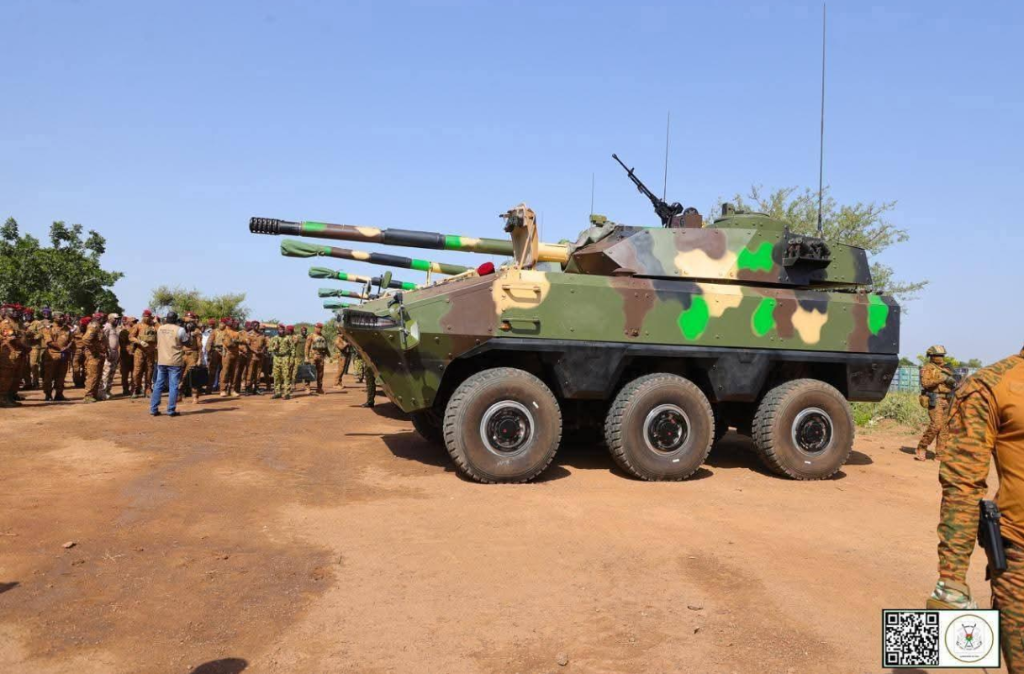
China’s rise isn’t accidental. As African armies face growing threats from armed groups and insurgencies, Beijing has tailored its offerings to meet urgent operational needs. Its portfolio spans armored personnel carriers, surveillance and combat drones, air defense systems, radar, artillery, and transport aircraft—hardware that directly addresses mobility, intelligence, and firepower deficits on the battlefield.
This strategy has paid off. Burkina Faso received 116 Chinese infantry transport vehicles and six assault vehicles in 2024 alone. In Mali, state-owned NORINCO has expanded beyond arms sales to include training and technology transfer, delivering armored vehicles and artillery systems. But Beijing’s influence extends beyond hardware. It builds long-term defense relationships, offering maintenance, training, and capacity-building—elements that resonate with African governments seeking sustainable security partnerships.
From buyer to partner: the evolution of China’s role
Unlike traditional arms dealers focused solely on transactions, China integrates defense cooperation into broader Belt and Road Initiative projects. This approach provides African nations with a dual benefit: access to modern military equipment and infrastructure development. The message is clear: Beijing is not just selling arms—it’s positioning itself as a strategic ally in Africa’s fight against terrorism.
Moscow’s fading dominance: visibility vs. market share
Russia may dominate headlines with Wagner’s legacy and Africa Corps advisers, but its commercial footprint is shrinking. Between 2016–2020 and 2021–2025, Russian arms exports dropped by 64% globally, driven by the demands of war in Ukraine, international sanctions, and Kremlin priorities shifting inward. The result? Moscow retains strategic influence—especially in the Central African Republic and Mali—but its role is increasingly operational rather than transactional.
Russian military engagement in Africa is defined not by arms sales, but by boots on the ground: trainers, advisors, and embedded support units. This model amplifies visibility but doesn’t translate into market leadership. While countries like the CAR and Mali depend on Russian security assistance, Moscow’s inability to scale arms production limits its commercial appeal in a continent where quantity and affordability matter.
The paradox of influence: why presence doesn’t equal power
Russia’s enduring appeal lies in its ability to provide immediate, flexible support—ranging from counterterrorism training to direct combat operations. However, this model comes with risks: reliance on a single supplier, high operational costs, and reputational damage linked to human rights concerns. For African governments, the trade-off between fast deployment and long-term sustainability remains a delicate balance.
Beyond the arms race: the real test for African security
The debate over who sells the most weapons misses the point. Effective counterterrorism requires more than drones and rifles. It demands reliable intelligence networks, air mobility, cross-border cooperation, state presence in vulnerable regions, and well-trained armed forces. Even the best-equipped armies struggle without these fundamentals.
As African nations diversify suppliers, they face new challenges: technological dependency, high maintenance costs, spare parts availability, and the risk of arms proliferation. The shift from single-source dependence to a multi-partner model offers flexibility but introduces complexity in coordination and training standards.
A new equation: why diversification is the way forward
For policymakers in Africa, the lesson is clear: security partnerships must prioritize long-term capability over short-term firepower. While China’s industrial and commercial strategy aligns with this need, and U.S. supply chains offer reliability, Russia’s model—though operationally valuable—cannot sustain a continent-wide arms procurement strategy. The real winners won’t be the suppliers, but the African governments that use this competition to build resilient, self-sufficient defense systems.
The bottom line: Africa’s security future is not one-dimensional
The narrative of a Russia-dominated African arms market is outdated. SIPRI’s latest data confirms what many analysts have suspected for years: the continent’s security architecture is evolving. China and the U.S. lead in arms exports, Russia in operational influence, and African nations now hold the cards in choosing which model best suits their long-term security needs.
In this new landscape, the question isn’t who is the top supplier—but who can deliver lasting security. And that requires more than weapons: it demands vision, partnership, and a commitment to building Africa’s own defense capabilities from the ground up.