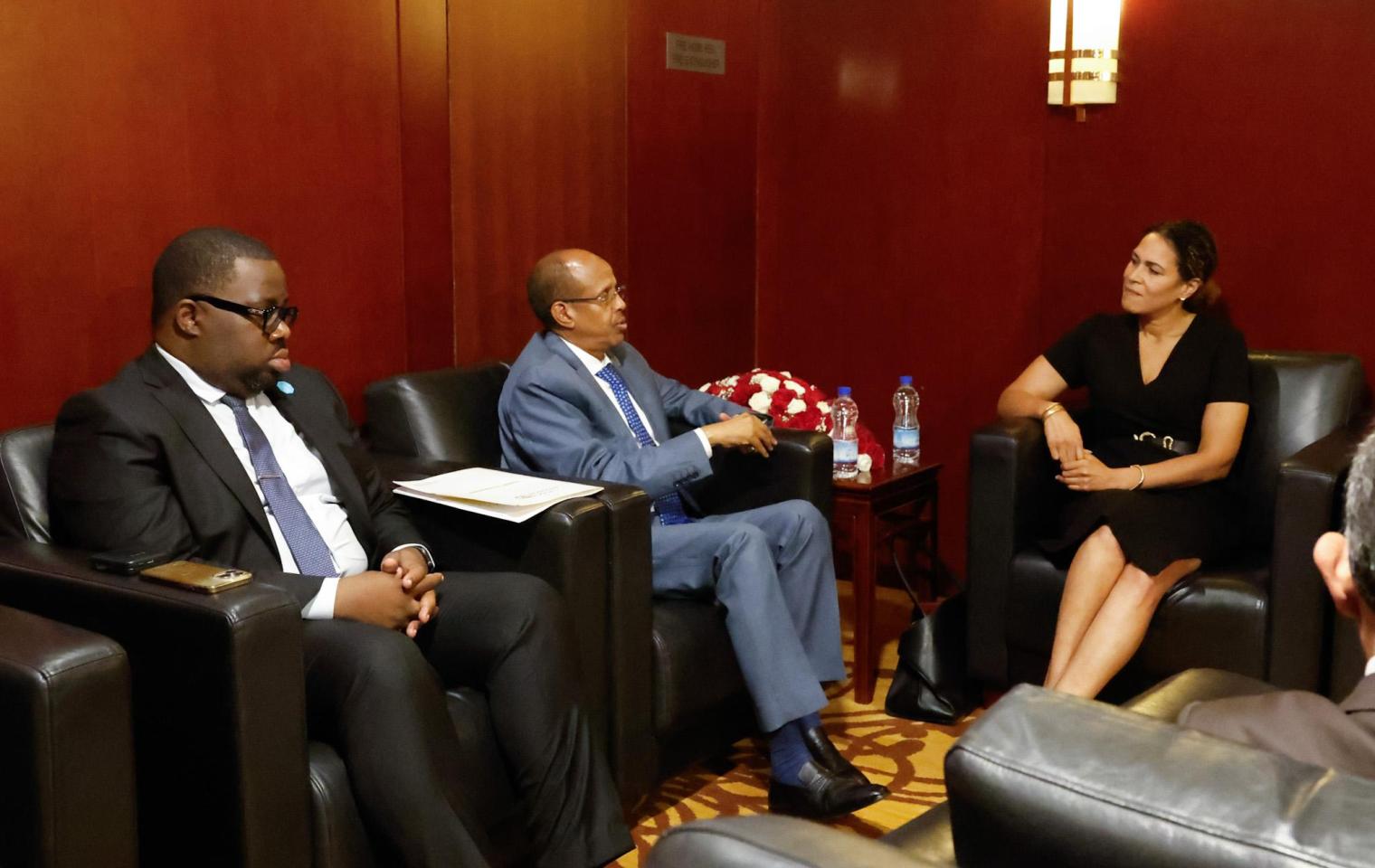
Within the distinguished halls of the African Union headquarters, a significant development unfolded. On July 28 and 29, 2026, Corinne Amori Brunet, Benin’s Minister of Foreign Affairs, engaged in crucial discussions with Mahmoud Ali Youssouf, President of the AU Commission. These exchanges took place on the sidelines of the 49th ordinary session of the Executive Council. Far from a mere courtesy call, the meetings were dedicated to meticulously preparing for a pivotal moment: Benin’s upcoming rotating presidency of the African Union Peace and Security Council (PSC) in September. Cotonou is clearly signaling its intent to make this a demonstration of strategic diplomatic prowess.
This important responsibility is a culmination of prior diplomatic efforts. On February 11, 2026, also in Addis Ababa, Benin secured its election as a member of this critical body for the 2026-2028 mandate. The September rotating presidency represents a natural progression and, crucially, the most high-profile test of its capabilities. The Peace and Security Council remains the continent’s most closely observed institution, tasked with mediating crises, authorizing missions, and deciding on political transitions. Leading this body, even for a limited period, places a nation under intense scrutiny from its peers across Africa.
The timing further amplifies the significance of this moment. Benin’s presidency will coincide with the 81st session of the United Nations General Assembly in New York, a global platform where African priorities can resonate worldwide. Cotonou views this as a prime opportunity to champion an African perspective on peace and security issues, and to strengthen the essential institutional partnership between the African Union and the UN. This collaboration is vital for effective responses to regional crises, from the Sahel to the Horn of Africa.
For a medium-sized nation, traditionally seen as a quiet player in regional affairs, this heightened diplomatic exposure is far from trivial. It aligns with a deliberate strategic trajectory initiated since President Romuald Wadagni assumed office. His initial sub-regional tour had already indicated a clear ambition: to position Benin as an influential partner, capable of impacting major continental issues while maintaining the measured approach that has long defined its reputation.
The recent events in Addis Ababa underscore this growing influence. By choosing to prepare its presidency through direct engagement with the Commission, Cotonou demonstrates its intention to actively shape, rather than merely react to, the continental agenda. Benin steps into a deteriorating security environment, where the expansion of armed groups towards the coastal states of the Gulf of Guinea, the fragility of Sahelian transitions, and tensions within regional blocs demand a nuanced understanding of power dynamics. On these critical issues, the credibility of a presidency hinges less on pronouncements and more on its ability to forge consensus.
The challenge for Corinne Amori Brunet will be to effectively translate this exposure into tangible influence. Leading the Peace and Security Council requires setting the agenda, navigating often-intense negotiations among states with differing interests, and delivering a message that is both resolute and unifying. It is a delicate balancing act where any misstep can carry significant political cost. However, it also presents a rare chance for a country to demonstrate that the quality of its diplomacy can effectively compensate for its geographical size.
Nevertheless, the rotating presidency spans only one month within a two-year mandate. Its ultimate success will be measured over time, based on Benin’s unwavering commitment to its priorities long after the presidential gavel has been passed. The coming weeks will reveal whether the meticulous preparation observed in Addis Ababa translates into concrete initiatives during the September UN session.
In a region where security challenges are deepening, the voice of a state committed to dialogue and methodical engagement is invaluable. By systematically positioning itself at the core of the continental peace apparatus, Benin is betting that patient diplomacy remains a crucial strategic asset. The demonstration of this strategy is set to begin in September.