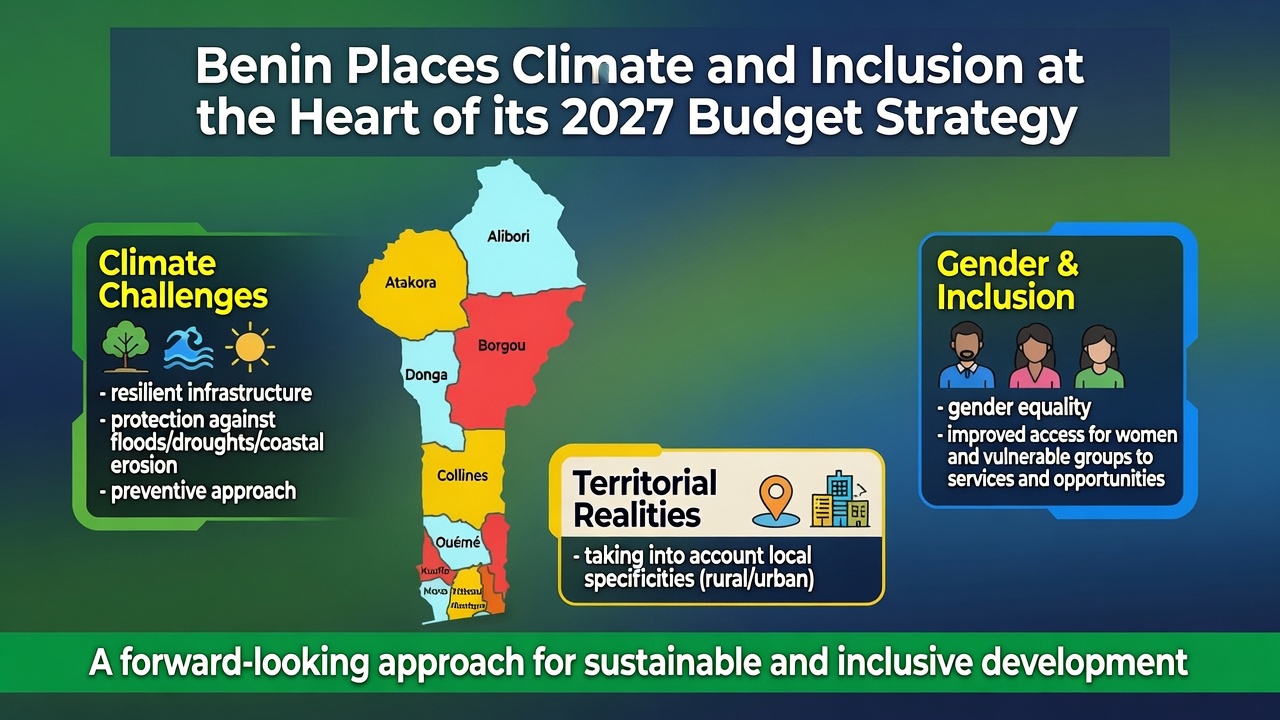

Benin has taken a decisive step toward modernising its public policies with the 2027 budget framework, placing climate resilience, gender equality, and regional disparities at the core of fiscal planning. This initiative reflects a forward-thinking strategy that transcends traditional budgetary management, positioning public investment as a catalyst for sustainable development and societal resilience.
The decision to embed climate considerations into budgetary decisions marks a significant shift in governance. In an era of escalating environmental challenges—rising temperatures, natural resource depletion, and recurring social pressures—the new framework prioritises proactive measures over reactive crisis management. By allocating resources to climate-resilient infrastructure, strengthening protections for vulnerable communities, and mitigating risks such as coastal erosion and drought, the government aims to reduce both the economic and human toll of future disasters. This preventive approach not only enhances governance standards but also demonstrates fiscal prudence by curbing long-term recovery costs.
gender equality as a pillar of inclusive growth
The 2027 budget framework also introduces a structured approach to gender mainstreaming, acknowledging that public policies often yield uneven outcomes across different social groups. This commitment ensures that women, youth, and marginalised populations gain equitable access to essential services, economic opportunities, and social protection mechanisms. By integrating gender perspectives into resource allocation, the government fosters a more inclusive development model that aligns with global best practices in sustainable governance.
local realities shape national priorities
A third key innovation lies in the emphasis on territorial inclusivity. Recognising that urban and rural regions face distinct socio-economic and environmental challenges, the budget framework incorporates granular data to tailor interventions. This decentralised approach enhances the efficacy of public spending, aligns national policies with on-the-ground realities, and empowers local authorities to address their communities’ specific needs.
The 2027 budget does more than allocate funds—it redefines fiscal policy as a strategic tool for national transformation. By weaving climate adaptation, social equity, and territorial balance into its core, the government signals a departure from conventional budgeting toward a model rooted in foresight, efficiency, and fairness. This shift not only strengthens institutional credibility but also positions Benin as a preferred partner for international financiers prioritising sustainable and inclusive development agendas.
Ultimately, the 2027 budget framework embodies a vision of progress that is resilient, equitable, and adaptive to the demands of the 21st century. It represents a roadmap for balanced growth, one that equips Benin to navigate future uncertainties while ensuring that the benefits of development reach all segments of society.