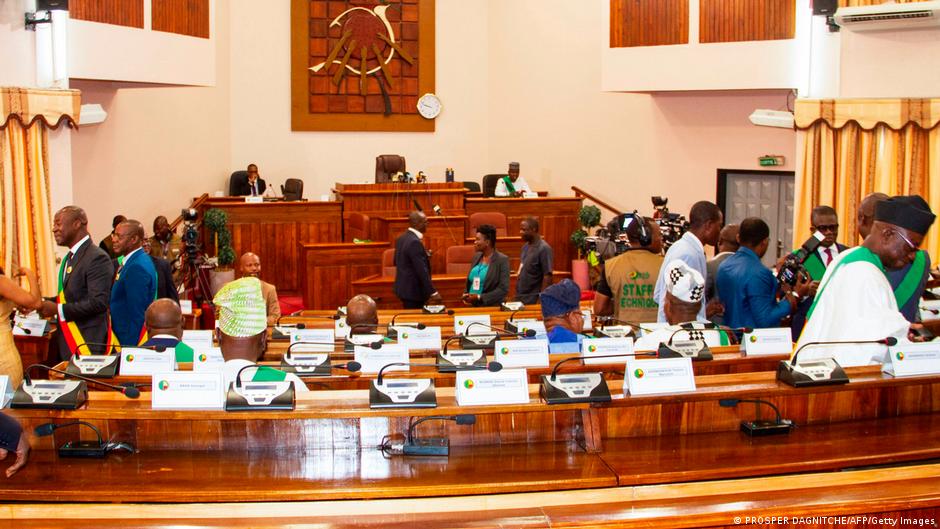

The Senate of Bénin officially inaugurated its 25 members today, marking the beginning of a new chapter in the country’s institutional landscape. Among the inaugural senators are former heads of state, whose collective experience is expected to shape the chamber’s advisory role.
Designed as a chamber of reflection and a council of elders, this second parliamentary body aims to regulate political dynamics while promoting social stability. Its creation follows the constitutional revision of November 2025, with members currently operating from the National Assembly premises until dedicated facilities are finalized.
On Friday, senators convened in Cotonou under the leadership of Maître Robert Dossou, former president of the Constitutional Court, for a closed-door meeting to organize their legislative agenda. The primary expectation surrounding this Senate lies in its potential to de-escalate political tensions, with both ex-officio members and appointed figures expected to act as stabilizing forces.
Governance expert Joël Atayi-Guèdègbé highlighted the significance of this institution, stating: “Frankly, I expect this upper house to embody true wisdom, functioning as a genuine council of elders given the exceptional caliber and experience of those who will serve. This is a critical responsibility that cannot afford mistakes or repeat past political conflicts.”
Institutional regulator with historic figures
The Senate includes prominent former presidents Patrice Talon, Boni Yayi, and Nicéphore Soglo, whose political histories have not always aligned. In a climate still marked by lingering political divisions, citizens and analysts view this institution as a vital mechanism for fostering a more balanced political ecosystem.
“We see this Senate as a pathway to peace, particularly given our nation’s history of political strife driven by competing interests. Moving forward, we anticipate a more regulated and calm political environment in Bénin. This doesn’t mean stifling dissent—rather, it means creating space for constructive dialogue,” noted political analyst Eugène Allossoukpo.
Financial implications and democratic investment
A key concern remains the financial burden on taxpayers. The government has allocated 100 million West African CFA francs solely for the inauguration ceremony, raising questions about long-term operational costs.
Joël Atayi-Guèdègbé commented on the economic aspect: “There’s no denying this will increase public expenditure. While the Senate’s smaller size may limit costs, the high-level allowances for its members could escalate expenses. Still, democracy comes at a price—and this investment may well be justified if it secures national stability.”
All eyes are now on the Senate’s presidency. Will former president Patrice Talon assume leadership? With the 25 inaugural senators taking office, the nation watches closely to see if this new democratic institution can deliver on its promise of stability and cohesion.