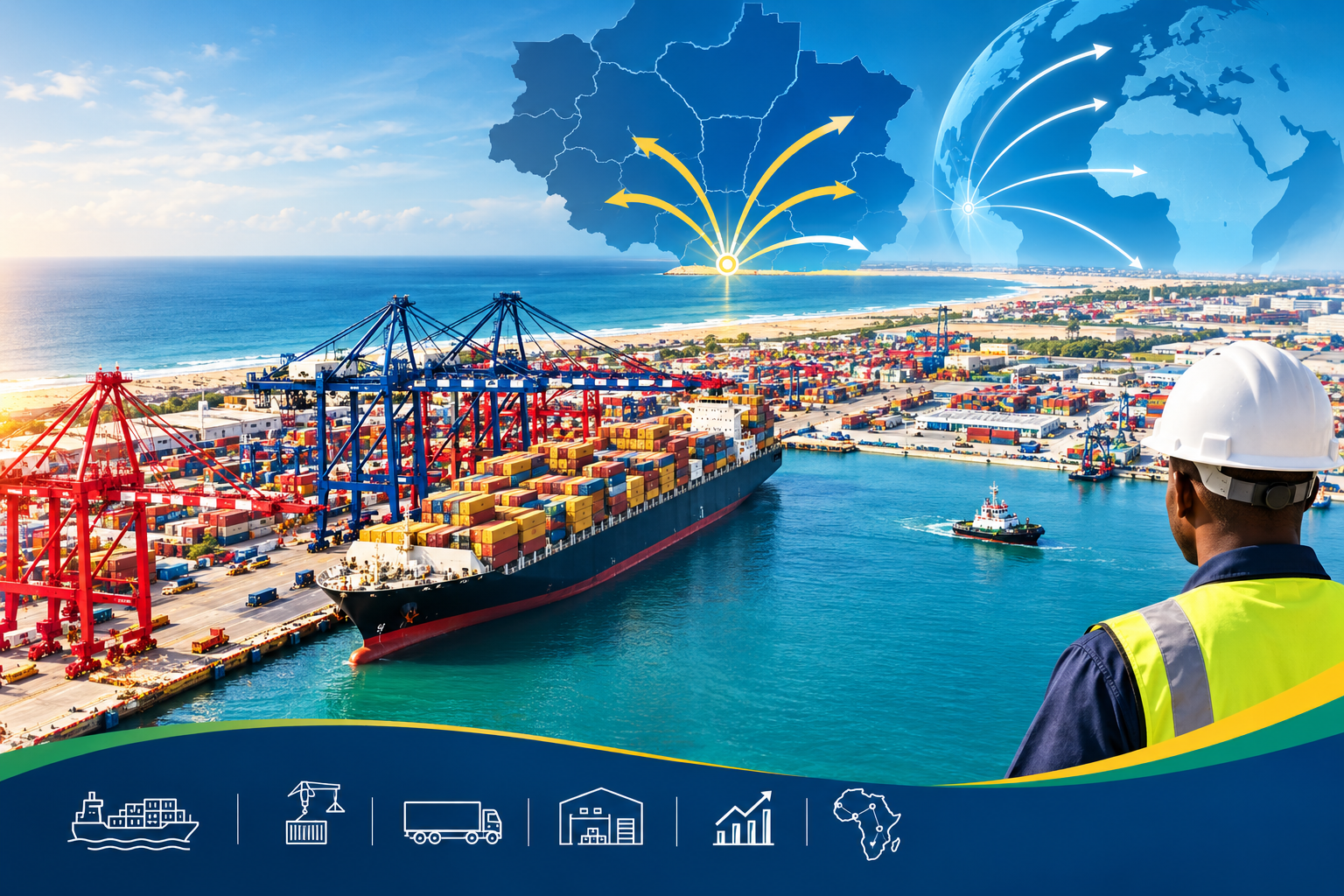

The Port of Cotonou is rapidly reinventing itself, shifting from a regional transit point to a dynamic logistics hub with continental ambitions. Fresh data for 2025 and the first half of 2026 reveals a facility no longer confined to serving just Benin’s borders or immediate neighbors, but actively carving out new trade corridors across West Africa.
From hinterland gateway to regional redistribution center
Total throughput at the Autonomous Port of Cotonou surged to 14.7 million tonnes in 2025, up from 9.6 million the previous year a 52 % leap. Export volumes jumped by 74.8 %, while transshipment activity exploded by 312.6 %. The number of vessels handled rose from 725 to 841 over the same period, underscoring a decisive break from past performance.
These figures matter more than ever in a subregion roiled by persistent shocks. Border closures, diplomatic tensions, and spiraling logistics costs have repeatedly disrupted traditional trade corridors. Yet despite the closure of the Benin-Niger frontier, the port’s traffic continued to climb, signaling that a structural shift is underway. No longer dependent on a single hinterland, Cotonou is building multiple engines of growth.
Transshipment takes center stage in new logistics strategy
The most striking evidence of this transformation is the meteoric rise in transshipment. In 2025 the activity soared 312.6 %, and by mid-2026 it had already reached 516,558 tonnes more than double the 204,928 tonnes recorded in the first half of 2025. This surge reveals a clear pivot: Cotonou is transitioning from a simple entry point for goods destined for Benin to a redistribution platform serving markets far beyond its immediate vicinity.
The port’s strategic roadmap now prioritizes outward flows export diversification, re-export networks, and connections with regional economic blocs. By reorienting its value proposition, the facility is positioning itself as a hub capable of drawing in new cargo streams, processing them efficiently, and dispatching them across West and Central Africa.
Resilience in the face of regional disruption
Benin’s decision to close its land border with Niger in 2023 could have crippled the port’s activity. Instead, growth accelerated. Behind the uptick lie major infrastructure upgrades: deepening of the harbor basin, commissioning of Terminal 5, modernization of quays, and expanded storage areas. These changes were made possible by a 60 billion CFA franc financing package secured from the African Development Bank, aimed at streamlining cargo flows and boosting the port’s competitiveness. The investments also included centralized access roads and the Zongo logistics park measures designed to cut turnaround times and lower operational costs.
The result is a facility that can now handle larger vessels and process cargo faster. According to the latest Container Port Performance Index, compiled by the World Bank and S&P Global Market Intelligence, Cotonou climbed nearly 100 places in global rankings from 402nd out of 405 ports in 2023 to 303rd out of 403 in 2024.
Export surge fuels industrial transformation
Exports through Cotonou are also gaining momentum. In the first half of 2026 they reached 2.87 million tonnes, up 33.3 % from the same period in 2025. This spike reflects rising industrial output and the inclusion of Nigerien crude oil flows. The trend aligns with Benin’s push to shift from a re-export economy toward value-added production, anchored by the Glo-Djigbé Industrial Zone. As local factories scale up, the port’s role expands from mere transit point to a lever of national industrialization and export competitiveness.
Building a multi-corridor resilience model
Cotonou’s breakthrough stems from an explicit policy of corridor diversification. In addition to traditional hinterland flows from Niger, Burkina Faso, and Mali, the port is cultivating new trade lanes toward Nigeria, Ghana, Togo, Cameroon, and beyond. Digitalization projects such as an upgraded customs clearance platform and blockchain-based bill-of-lading system are shortening release times and adding predictability to supply chains.
The port’s broader ecosystem is also expanding. Each incremental tonnage handled triggers ripple effects across transport, handling, storage, insurance, banking, hospitality, and digital services. Together they form a dense economic cluster that strengthens Benin’s overall trade footprint.
What’s next for Cotonou’s port ambitions
The coming years will demand further upgrades. Priority areas include deeper integration with Nigeria’s rail and road networks, continued maintenance of digital tools, tighter security along access corridors, and sustained cost reductions. Yet the trajectory is clear: Cotonou is no longer merely defending market share it is systematically capturing new flows and reshaping West Africa’s trade map. With investments exceeding €450 million, the port is being recast not just as Benin’s commercial gateway, but as a strategic node in the continent’s logistics architecture.