
A decisive shift is underway in eastern Democratic Republic of Congo. A newly released United Nations report has directly accused the Alliance Fleuve Congo and the March 23 Movement (AFC/M23) of systematically targeting civilian populations during their military operations against the Democratic Forces for the Liberation of Rwanda (FDLR). The findings mark a critical moment, undermining the rebel coalition’s long-standing justification that its armed presence is solely aimed at combating Rwandan Hutu fighters who have been on Congolese soil since the 1994 genocide. This breakthrough documentation signals new momentum toward accountability in the conflict.
Documented pattern of civilian targeting in the Kivus
UN investigators paint a picture of a recurring and deliberate tactic. Rather than limiting their actions to direct clashes with the FDLR, AFC/M23 offensives have been accompanied by reprisals against villages suspected of sheltering or supporting the Rwandan armed group. Summary executions, forced displacement, and the destruction of homes are among the violations recorded. These acts form part of a territorial occupation strategy that has profoundly reshaped the security landscape of eastern Congo since hostilities resumed in 2022.
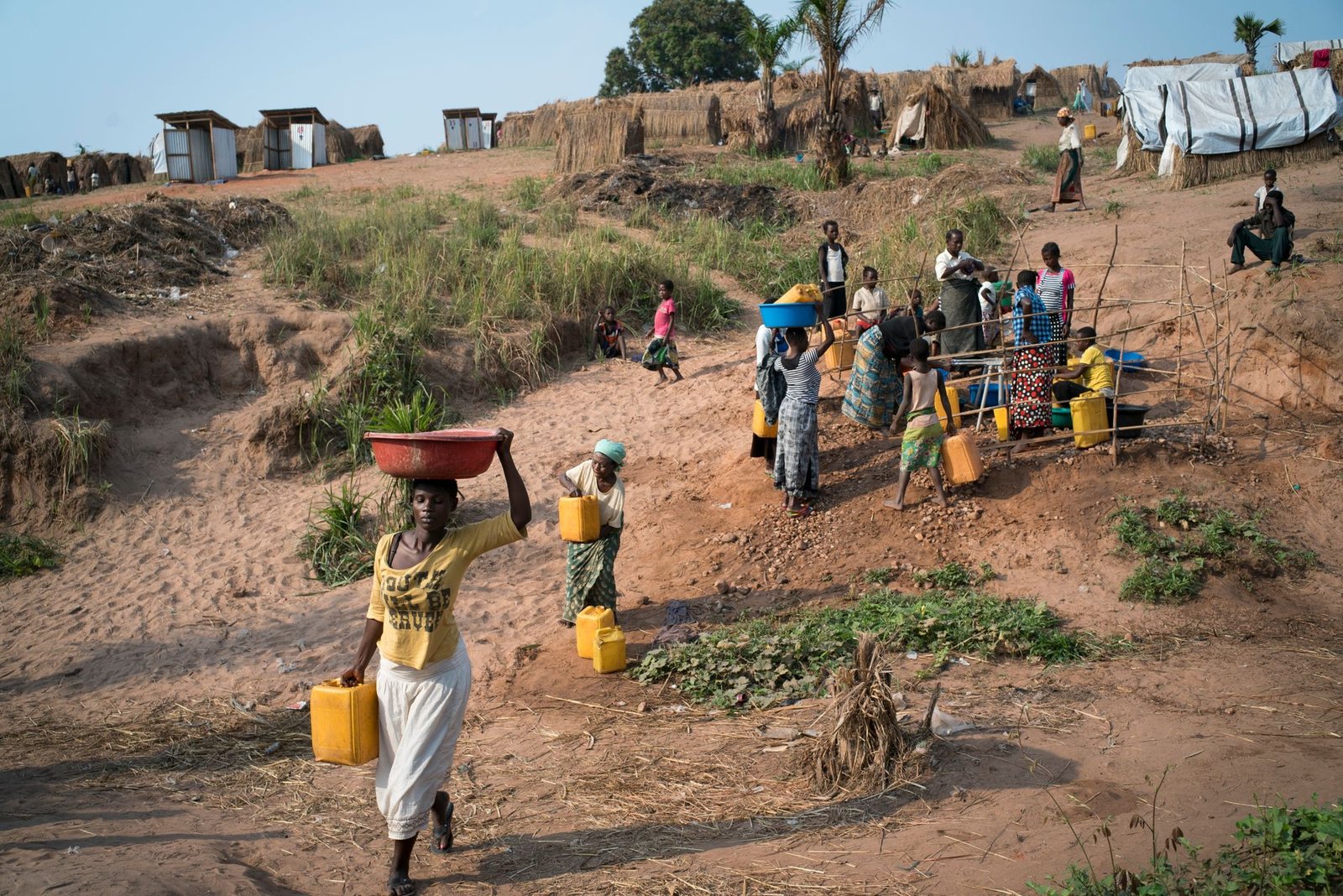
The report highlights the extreme difficulty of distinguishing, on the ground, between combatant targets and Congolese Hutu populations who are sometimes wrongly assumed to be FDLR members. This confusion fuels a cycle of community violence that humanitarian actors are struggling to contain. UN agencies operating in Goma and Bukavu report a continuous influx of displaced people, in a context where humanitarian access remains hampered by fighting and restrictions imposed by the warring parties.
Kinshasa’s disarmament process under scrutiny
In response to the situation, Congolese authorities are defending a political process for the voluntary disarmament of the FDLR, presented as the fundamental solution to the presence of the Rwandan armed group on their territory. Kinshasa argues that some fighters have already been cantoned and that repatriation mechanisms are being studied, in coordination with the United Nations Organization Stabilization Mission in the Democratic Republic of the Congo (MONUSCO) and several regional partners.
This approach is fiercely contested by Kigali, which views the FDLR as an existential threat and accuses the Congolese government of de facto collusion with the group. Rwanda uses this interpretation to justify its support—documented in several earlier UN expert reports—for AFC/M23 operations. The latest report does not fundamentally alter this equation, but it shifts the debate’s focus toward the human cost borne by Congolese civilians.
A regional impact extending beyond the Kivus
The UN’s conclusions come at a pivotal moment for regional diplomacy. The Luanda process, led by Angola, and the Nairobi process, sponsored by the East African Community, aim to link ceasefire agreements, the withdrawal of foreign forces, and the neutralization of armed groups. The accusations against AFC/M23 complicate any prospect of the movement’s political integration, a scenario that has nonetheless been mentioned in some mediation tracks.
For the DRC’s economic partners, particularly in strategic mining sectors such as coltan, cobalt, and tin, the persistent insecurity in the Kivus poses a major challenge. Traceability mechanisms promoted by the European Union and major technology industries run up against the reality of a war economy where supply chains remain captured by armed groups. The UN’s detailed documentation of abuses could intensify pressure on international buyers and on neighboring states involved in cross-border flows.
The question of judicial follow-up remains. Previous expert panel reports have rarely led to prosecutions, despite regular referrals to the International Criminal Court regarding the Congolese situation. Human rights organizations are urging that the gathered evidence feed into concrete proceedings, both in Kinshasa and The Hague. The UN document is expected to be examined in the coming weeks by the relevant Security Council bodies.
Further reading
Anglophone crisis: 707 separatist materials seized in Ekok · Israel and UAE move toward support for Ethiopia against Eritrea · Mali: Amnesty documents abuses by the army and Wagner