
Behind the scenes: when Sahel regimes turn French protests into political leverage
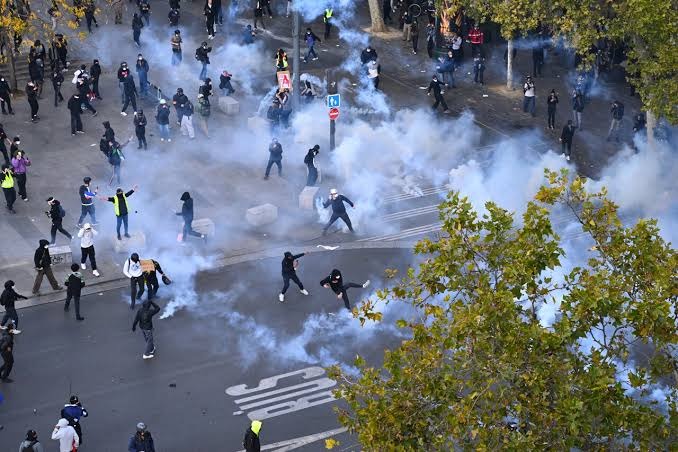
The crackdown on protesters, shattered storefronts, and clouds of tear gas in Paris are not just images from a distant crisis—they have become prime content for propaganda machines in Bamako, Ouagadougou, and Niamey. What began as domestic unrest in France is now ammunition for military juntas across the Sahel, who frame these scenes as proof of the West’s hypocrisy and the inevitable collapse of liberal democracy. This calculated narrative isn’t accidental; it’s a deliberate strategy to reshape regional perceptions and consolidate power under the banner of ‘sovereignty.’
From lecturers to targets: the ideological role reversal in the AES
For years, France positioned itself as the guardian of democratic values, tying its diplomatic support to human rights, free speech, and transparent governance. But today, the tables have turned. In the self-proclaimed Alliance of Sahel States (AES), analysts and state-aligned influencers are weaponizing France’s own struggles against it. Videos of police violence, controversial parliamentary maneuvers, and sweeping crackdowns on dissent are celebrated as ‘just desserts’ for what they call Paris’s double standards. The narrative is clear: if Western democracies can’t maintain order at home, how can they judge African governments?
This reversal isn’t just rhetorical—it’s structural. The juntas of Mali, Burkina Faso, and Niger have made anti-France rhetoric a pillar of their legitimacy. By contrasting their ‘strong leadership’ with the ‘chaos’ of French governance, they justify their own authoritarian turns while positioning themselves as the true defenders of national sovereignty.
Three strategic purposes behind the protest spectacle
The exploitation of France’s social upheaval serves multiple, interconnected goals for Sahel juntas:
- Undermining democratic legitimacy: By depicting liberal democracy as chaotic and failing, AES propagandists promote their own militarized governance as the only viable alternative. The message: Western-style elections and free speech lead to instability, while strongmen deliver security and order.
- Shifting focus from domestic failures: As inflation soars and armed groups expand their reach, the juntas redirect public anger toward France. The more attention remains on Paris’s turmoil, the less scrutiny falls on rising fuel prices, chronic blackouts, or the erosion of civil liberties at home.
- Accelerating the Western decline narrative: These images are not just shared—they’re amplified by networks tied to Moscow and other anti-Western actors. The subtext is unmistakable: the West is in decline, and Africa must pivot away from Paris toward new partners in the East.
The mirror effect: why the analogy between France and Sahel regimes is flawed
Despite the persuasive power of these images, the comparison between France’s civil society and Sahel juntas is deeply flawed. While Paris allows protests, strikes, and open criticism of government policy—rights systematically denied under military rule—the analogy overlooks a brutal reality. In the AES, dissent is not a civic right; it’s a crime. Journalists disappear, opposition leaders face arrest, and the press operates under constant threat. The freedoms that define French democracy—the very freedoms being weaponized in Bamako—are nonexistent in the capitals that now lecture France on governance.
Yet perception trumps nuance. In the court of public opinion across West Africa, the damage is already done. The once-unquestioned image of France as a stable, democratic model has cracked. Each viral clip of French unrest chips away at France’s soft power, while the juntas frame themselves as the architects of a new, assertive Africa—one that no longer bows to former colonial masters.
The long game: what’s at stake for France and the Sahel
This isn’t just a war of words. It’s a geopolitical shift in motion. For France, the erosion of its diplomatic credibility in the Sahel comes at a cost: fewer allies, shrinking influence, and a narrative of decline that spreads across the continent. For the juntas, it’s a survival tactic. By positioning themselves as the vanguard against Western interference, they justify their hold on power and attract new patrons—primarily Russia—willing to supply arms, energy, and political cover.
As long as the streets of Paris remain a stage for protest, the juntas will keep mining those images for gold. The question is no longer whether France’s internal struggles will shape Sahel politics—but how far the fallout will go.