
When tranquility trembled in Islam’s holiest city
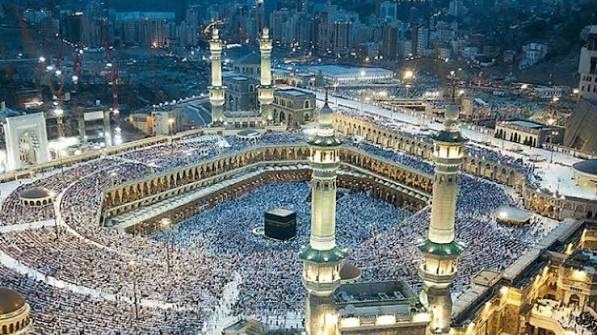
The Great Mosque of Mecca, a beacon of peace for over 1.8 billion Muslims worldwide, stood at a crossroads in the early hours of dawn. A routine night of circumambulation around the Kaaba—one of Islam’s most sacred rituals—spiraled into a global scare, fueled by misinformation and the speed of digital virality. What began as a minor disruption escalated into a moment that tested the limits of faith, security, and perception in the heart of the Islamic world.
A spark in the crowd: how fear spread faster than facts
Just past midnight, the rhythmic flow of pilgrims moving in circles around the Kaaba came to a sudden halt. Shouts erupted near one of the main entrances to the central esplanade. Within seconds, heavily armed security personnel and plainclothes officers converged, detaining an individual exhibiting erratic behavior. What followed was a cascade of events that exposed the fragility of truth in an era of instant information.
Videos circulated online within minutes, capturing the chaos from elevated walkways. They showed a surge in the crowd, people stumbling backward, and emergency teams sealing off a perimeter. Regional and international media outlets quickly amplified reports, claiming a suicide bomber had been intercepted—allegedly carrying explosives intended for the Kaaba. The mere suggestion of violence at Islam’s most revered site sent shockwaves across the Middle East and beyond. For hours, the world held its breath: no explosion occurred, but the specter of catastrophe lingered like a shadow over the sacred grounds.
The official response: separating fact from fiction
As dawn broke, Saudi authorities stepped forward to clarify the events. The Ministry of the Interior categorically denied any bomb threat or explosive device. According to security force spokespeople, the individual in question exhibited extreme behavioral disturbances, harassing pilgrims and shouting inflammatory slogans, which triggered the intervention. “The suspect was apprehended immediately by on-site patrols before the situation could escalate,” stated the official communiqué. The detainee was handed over to public prosecutors without delay.
Yet this episode underscored a growing challenge: the weaponization of information. In a geopolitical landscape rife with tension, manipulated videos and extracted security footage can, within moments, construct a narrative of narrowly avoided disaster. For Riyadh, the task is twofold—dispelling panic is as critical as neutralizing physical threats.
Fortress Mecca: the ironclad security behind the sacred
The incident, though resolved without violence, has cast a spotlight on the immense security apparatus safeguarding Islam’s holiest shrine. The Great Mosque is not merely a spiritual center; it is a high-security zone equipped with cutting-edge technology and relentless vigilance.
Sightlines and surveillance: An intricate network of over 10,000 high-definition cameras blankets every corner of the mosque and its surrounding areas. These feeds are monitored 24/7 by a centralized command center utilizing facial recognition and behavioral analytics to detect anomalies in real time.
Human presence and rapid response: Thousands of National Guard members, traffic police, and special forces personnel are deployed continuously around the sanctuary. Their presence ensures immediate intervention—response times are designed to be under 60 seconds in case of an incident.
Rigorous access control: Entry points to Mecca and the mosque complex undergo multiple layers of screening, designed to intercept any unauthorized items, including weapons or hazardous materials.
A legacy of vigilance: lessons from decades of threats
Mecca’s history is punctuated by security crises. The 1979 siege of the Grand Mosque, led by extremist Juhayman al-Otaybi, remains a dark chapter. Decades later, the kingdom has fortified its defenses against both physical assaults and modern-day disinformation campaigns. The monarchy’s role as Custodian of the Two Holy Mosques hinges entirely on its ability to maintain absolute safety at these revered sites—where the line between peace and peril is thinner than ever.
After the storm: calm returns, but questions remain
By sunrise, normalcy had returned to the marble floors of the Great Mosque. The evening’s tumult had been erased by the swift work of cleaning crews and the resumption of morning prayers. Pilgrims from across the globe resumed their devotions, their voices rising in unison once more.
Yet the incident leaves lingering questions. Was this a false alarm, or a nascent threat? Regardless of the answer, the event serves as a stark reminder: the sanctity of Mecca is not solely protected by steel and surveillance. In a hyper-connected world, where a single viral clip can ignite global anxiety, the city’s true defense lies in truth—delivered swiftly, clearly, and without ambiguity.
A new era for sacred security
This night in Mecca marked more than a passing scare. It was a turning point—a moment where the world saw just how close global panic could come to Islam’s most sacred space. It was also a test of resilience, revealing both the sophistication of Saudi security and the enduring vulnerability of faith in the digital age.
As technology evolves, so too must the strategies protecting the holiest of places. The lesson for Mecca—and for the world—is clear: security is no longer just about watching the gates. It’s about controlling the narrative, before fear takes control of the story.