
Burkina Faso: the growing isolation of Ibrahim Traoré amid security and governance challenges
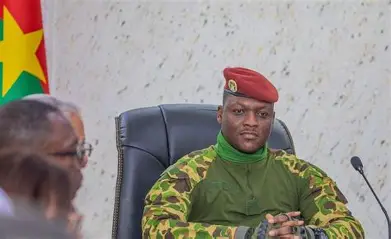
The age-old trap of military leaders ascending to power—confusing powerful rhetoric with ground realities and misreading public silence as unwavering support—appears increasingly evident in Burkina Faso.
Behind carefully staged appearances, immaculate uniforms, fiery speeches condemning the « treacherous West, » and repeated warnings against « anti-revolutionary » behavior, a different narrative is unfolding. What once projected an image of unshakable authority now reveals a regime grappling with deepening internal fractures.
To its critics, Captain Ibrahim Traoré’s leadership is growing increasingly isolated, with growing distrust replacing the initial cohesion once seen within the corridors of power. This perception is fueled by persistent rumors of destabilization attempts, reshuffles in the military hierarchy, and successive reorganizations of the security apparatus.
The erosion of trust within the inner circle
The political history of Africa—and indeed many other regions—demonstrates a recurring pattern: those who help seize power often become the first to be distrusted once a leader solidifies their hold.
Since assuming leadership in September 2022, Ibrahim Traoré has overseen multiple restructurings of the military and security chains of command. Several key officers from the early days have been sidelined, transferred, or removed, raising questions about the true cohesion within the armed forces.
The removal of the intelligence services director—widely regarded as a central pillar of the security framework—has drawn particular attention. Analysts suggest that when a head of state begins reshaping the very institutions tasked with safeguarding their authority, it signals a broader crisis of confidence within their inner circle.
Such shifts indicate more than a security dilemma; they reflect a political one. As loyalty to the leader increasingly outweighs operational experience in promotions and appointments, the Burkina Faso Armed Forces, once united by the urgent fight against armed groups, now appear riddled with suspicion.
Governance through fear and control
Facing persistent security challenges, the regime has adopted a hardening stance, which critics highlight through several concerning trends:
- Arrests targeting outspoken critics of the government;
- Allegations of forced disappearances and abductions reported by human rights organizations;
- Shrinking press freedom, including media suspensions and restrictions on journalists;
- Pressure on civil society actors, perceived by supporters as retaliatory measures.
These developments have been widely documented by international human rights bodies, warning of a sharp decline in public freedoms across Burkina Faso.
Official communication has also become heavily centered on the figure of the head of state. State media and pro-government outlets prominently amplify Ibrahim Traoré’s public appearances, speeches, and initiatives, reinforcing the perception among opponents of an increasingly personalized form of leadership.
Rather than signaling unassailable authority, critics argue this strategy reflects an attempt to compensate for the regime’s weaknesses through information control.
The unaddressed security crisis
Yet the most pressing issue remains unresolved: the persistent security crisis that initially justified the change in power.
Nearly four years after the transition, large parts of the country remain outside state control, either under direct threat or influenced by armed groups. The humanitarian situation continues to deteriorate, with millions displaced and enduring severe hardship. Attacks on civilians, defense and security forces, and local defense volunteers are frequently reported.
Recent data from the United Nations, humanitarian agencies, and independent research centers confirm that the security crisis remains profound, despite ongoing military efforts. Jihadist attacks continue to destabilize multiple regions, while internal displacement rates remain among the highest in the Sahel.
The risk of self-imposed isolation
Patriotic rhetoric, though mobilizing, cannot substitute for concrete security gains, institutional rebuilding, or restored trust between citizens and the state.
Observers warn that Ibrahim Traoré’s progressive isolation—marked by the removal of former allies, continuous security restructurings, and governance under perpetual suspicion—risks undermining the very foundations of his authority.
The political history of the continent offers sobering precedents: military regimes that concentrate power in an ever-shrinking circle often collapse not under external pressure, but from internal distrust.
The true challenge for Burkina Faso remains unchanged: restoring lasting security, rebuilding institutional trust, and addressing the humanitarian toll borne by a population still reeling from years of instability. When a government expends more energy on preventing conspiracies than resolving the crises that brought it to power, its own political survival can easily become its central preoccupation—at the expense of the national interest.