
Burkina faso’s humanitarian aid reliance exposes junta’s food security failure
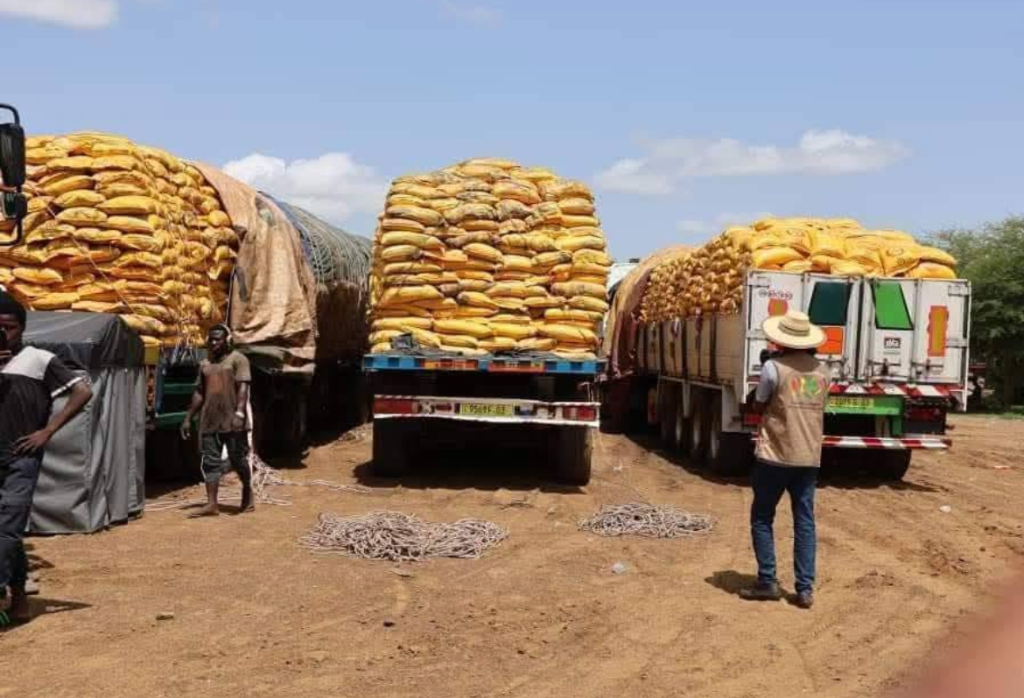
The Burkina Faso government, led by Captain Ibrahim Traoré, continues to prioritize national sovereignty rhetoric while relying heavily on foreign food aid to address a worsening food crisis. Recent shipments of rice from Pakistan, China, and Canada highlight the stark contrast between political promises and ground realities.
The latest consignment of 2,422 tons of Pakistani rice arrived in the country as part of a growing list of international donations. While officials celebrate these gestures of solidarity, the aid underscores the failure of Burkina Faso’s transitional authorities to stabilize food security, even after more than three years since the Movement for Safeguarding and Restoring (MPSR) took power.
Rhetoric vs. Reality: The Broken Promise of Self-Sufficiency
The military junta’s pledge to make local production a cornerstone of governance has yet to materialize. Instead, over 3.5 million Burkinabè now depend on international charity to meet their basic nutritional needs. This dependence is not just a temporary setback but a systemic failure, as Burkina Faso struggles to produce enough food domestically.
The aid influx—including contributions from Beijing and Ottawa—serves as a harsh critique of Traoré’s leadership. Despite claims of restored sovereignty, the country remains trapped in a cycle of dependency, with food aid flowing in from Asia and the West while local agricultural production collapses.
Insecurity and Agricultural Collapse: A Vicious Cycle
The food crisis is exacerbated by ongoing insecurity in northern and eastern regions, where armed groups continue to disrupt farming activities. These areas, once key agricultural zones, now face severe food shortages due to disrupted supply chains and abandoned farmlands. Over 2 million internally displaced persons (IDPs) have fled their homes, leaving once-fertile lands fallow.
According to the Integrated Food Security Phase Classification (IPC), parts of Burkina Faso are on the brink of Phase 4 (humanitarian emergency). The situation is particularly dire for children, with over 600,000 at risk of acute malnutrition by year-end. Climate change has further strained resources, but critics argue that the junta’s heavy-handed military approach has worsened the crisis.
Transparency Concerns and Donor Distrust
The management of humanitarian aid raises serious questions. While the Pakistani rice shipment was handed over to the Ministry of Humanitarian Action, international partners express concerns over transparency in distribution. Militarized crisis management and strained relations with aid organizations have undermined trust, with the 2026 Humanitarian Response Plan funded at only 18%—a clear sign of donor fatigue toward Ouagadougou’s leadership.
As the rainy season approaches, the imported rice offers only temporary relief to a exhausted population. For Ibrahim Traoré, the moment of reckoning is nearing. True sovereignty, experts argue, cannot be achieved through televised speeches alone—it must be built through resilient local economies and secure agricultural lands. Until then, Burkina Faso remains trapped in a cycle of dependency, with no sustainable solution in sight.