
Burkina Faso’s military leader rejects democracy in bold statement
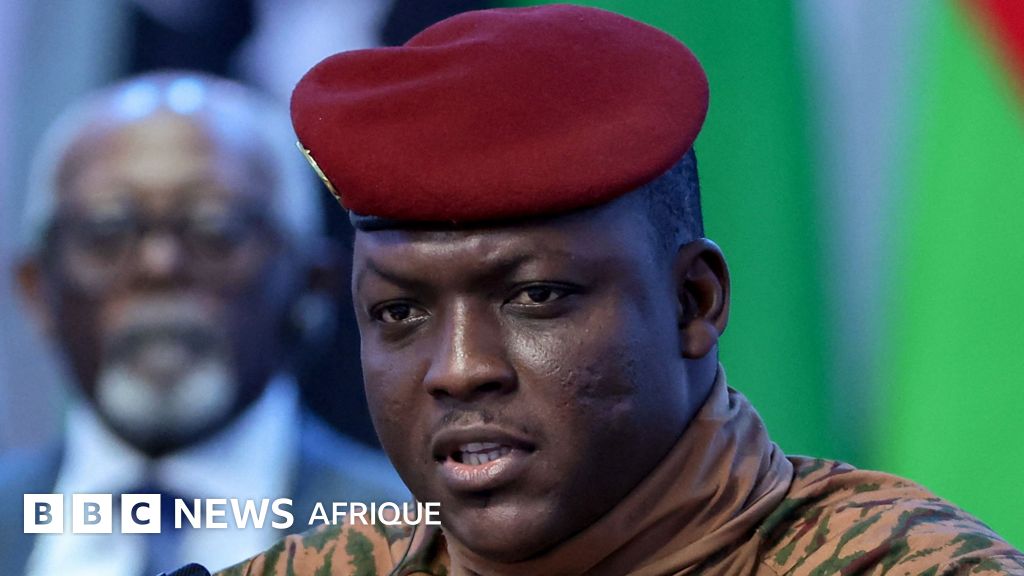
Captain Ibrahim Traoré, Burkina Faso’s military leader, has publicly declared that the nation must abandon its pursuit of democracy, calling the system fundamentally incompatible with African realities. Speaking during a nationally televised address, he argued that the democratic model has repeatedly failed to deliver stability across the continent.
« The people must forget about democracy entirely. It simply isn’t for us, » Traoré stated emphatically, dismissing the concept as an unsuitable framework for Burkina Faso’s future. His remarks come at a pivotal moment for the country, which has been under military rule since his 2022 coup.
The captain, who seized power nearly three years ago, initially promised to restore democratic governance by July 2024. However, with the deadline approaching, his administration announced a five-year extension of military rule—effectively postponing any return to civilian leadership.
Traoré’s government has taken further steps to consolidate control, including the January ban on all political parties. Officials framed the move as part of a broader « national rebuilding » initiative, though critics view it as an erosion of civil liberties. The decision transferred party assets to state ownership, raising concerns about political repression.
a revolutionary vision or a rejection of accountability?
During the televised interview, Traoré drew parallels between democracy and foreign interference, asserting, « Wherever Western powers impose democracy, it always results in bloodshed. » He cited Libya—a country he described as a cautionary tale—as an example of democratic intervention leading to prolonged instability. Following the 2011 NATO-backed overthrow of Muammar Gaddafi, Libya has remained mired in conflict, with no functioning elections and divided governance.
The 38-year-old leader, who positions himself as a revolutionary figure opposing Western imperialism, has positioned Burkina Faso as part of a broader regional shift. Alongside neighboring juntas in Mali and Niger, he has distanced Ouagadougou from Western alliances, particularly France, in the fight against Islamist militants. Instead, these nations have increasingly turned to Russia for military support—a shift that has yet to curb the violence plaguing the Sahel.
Traoré’s administration has justified its crackdown on dissent by framing opposition figures, media outlets, and civil society groups as obstacles to progress. Critics argue that the government’s heavy-handed tactics, including the alleged deployment of detractors to frontline combat zones, underscore a growing authoritarianism. Despite these controversies, Traoré has cultivated significant support across Africa for his anti-Western rhetoric and pan-Africanist stance.
economic sovereignty and revolutionary governance
The military leader outlined his vision for Burkina Faso’s future, emphasizing sovereignty, patriotism, and grassroots mobilization. He dismissed traditional political structures as corrupt, declaring, « In Burkina Faso, a true politician is nothing more than a liar, a flatterer, and a charlatan. » His alternative, still undefined, hinges on revolutionary transformation rather than democratic reform.
Traoré also stressed the need for radical economic and military self-reliance, asserting that Burkina Faso cannot achieve progress with conventional work schedules. « A six- or eight-hour workday won’t bring us closer to prosperity, » he argued, calling for relentless effort to rebuild the nation from the ground up.
Human rights organizations have documented a sharp rise in civilian casualties since Traoré’s takeover. A recent report by Human Rights Watch estimates that over 1,800 civilians have been killed in Burkina Faso since 2023, with the majority of deaths attributed to military operations and allied militias. The remaining killings are linked to Islamist insurgents. These figures paint a grim picture of the human cost behind Traoré’s uncompromising rule.
As Burkina Faso grapples with escalating violence and political upheaval, Traoré’s rejection of democracy signals a definitive break from the country’s recent past. Whether his revolutionary model offers a path to stability—or merely entrenches further instability—remains an open question for the Sahel region.