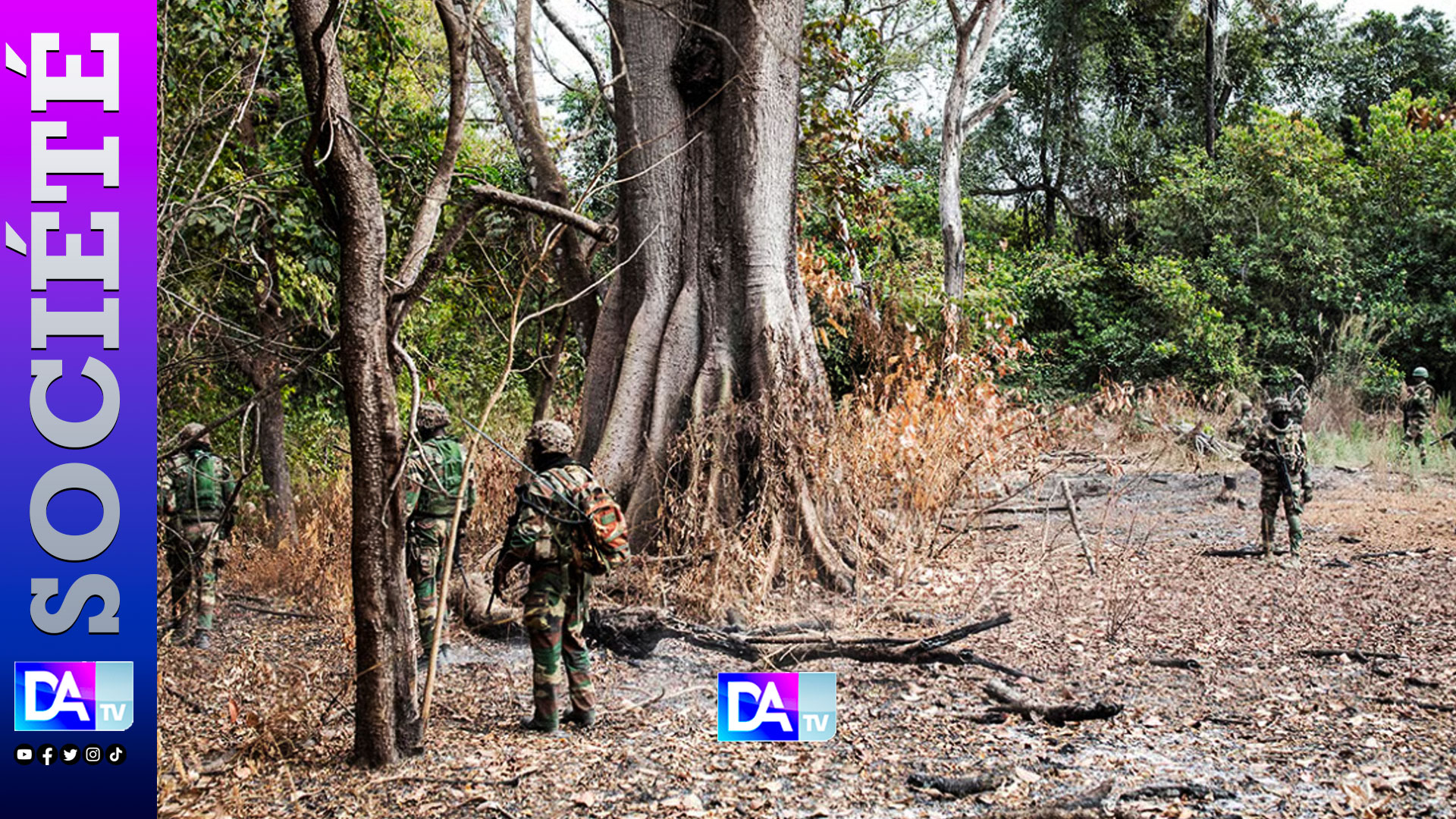

Soldiers and gendarmes from the Sénégal military, supported by trained sniffer dogs, recently dismantled cannabis plantations in Casamance during an early May operation. This crackdown marks another chapter in one of Africa’s longest-running conflicts—a decades-old insurgency in southern Sénégal, now in its 43rd year, despite the rebel group’s weakened state.
The military operation targeted areas near the Gambia border, where fighters from the Movement of Democratic Forces of Casamance (MFDC) have been active since 1982, seeking independence for the region, which is geographically separated from the rest of Sénégal by Gambia.
According to Colonel Cheikh Guèye, regional military commander in Ziguinchor—one of Casamance’s three administrative zones and the epicenter of this low-intensity conflict that has claimed thousands of lives—the mission was executed “without major difficulties.” Fourteen individuals were arrested, along with the seizure of firearms and over six tons of cannabis.
a rebel force in steep decline
Analysts describe the MFDC as severely diminished today. “The group has suffered heavy losses, no longer recruits new fighters, and faces an aging combatant base,” noted a security expert familiar with the dossier, who requested anonymity due to the sensitivity of the topic. Internal fractures further weaken the movement, with political and military factions deeply divided. Supply lines for weapons and ammunition have also dried up, as neighboring Gambia and Guinea-Bissau—once key support zones—now collaborate with Dakar to curb insurgent activities.
A local civil society leader highlighted another critical factor: the erosion of the MFDC’s local support. “The rebellion has lost its political and emotional foundation among communities that once backed it,” the leader explained. “Decades of conflict have bred disillusionment, and people now prioritize peace over separatist ambitions.”
The rise of political leaders from Casamance—including Prime Minister Ousmane Sonko, whose party holds a majority in Sénégal—has also played a role in calming tensions. “Many now feel a sense of vindication, seeing their region finally represented in national politics after years of exclusion,” the source added.
cannabis: the new battleground
In mid-March, Sonko addressed a crowd in Ziguinchor, Casamance’s largest city, declaring that the MFDC had failed to control even a single village in over 40 years of fighting. His remarks followed a tragic incident on March 17, when three soldiers died and three others were injured in an accidental explosion during anti-cannabis operations. Just days earlier, on March 11, another soldier was killed and six wounded in a separate clash.
Sonko emphasized that while separatist rhetoric persists, the real issue is the cannabis trade. “We do not believe the maquisards still pursue independence as a priority. The primary problem is cannabis cultivation. We will deploy all necessary means to eradicate it,” he stated. The colonel echoed this sentiment, noting that cannabis provides armed groups with significant funding for their operations. The May operation aimed to cripple this financial lifeline by targeting cultivation sites.
The North Sindian region, near the Gambia border, has become a hotspot for illicit activities. Its dense forests and isolation—despite fertile land and abundant resources—make it a haven for traffickers. Local populations, struggling with poverty and limited access to markets, often rely on cannabis cultivation for survival, with some even seeking religious justifications from imams to justify the practice.
fragile progress toward peace
While the Guinea-Bissau border area has seen relative calm since 2021, when the military destroyed rebel bases there, recent violence has shifted to the North Sindian. Local officials report that refugees and displaced persons are gradually returning to villages as hostilities ease and partial disarmament takes place. “Communities are slowly rebuilding their lives,” said a civil society figure. “But true pacification remains elusive, as some armed elements continue to resist disarmament.”
This week near Ziguinchor, locals marked the third anniversary of a peace accord between a rebel faction and the government. Another agreement was signed in February 2025 with a different faction in Bissau, though past deals have often failed to endure. The path to lasting peace in Casamance remains fraught with challenges, compounded by the shadow of cannabis and the resilience of armed groups clinging to their cause.



