DRC’s ebola outbreak: an escalating crisis in the east, international aid lags
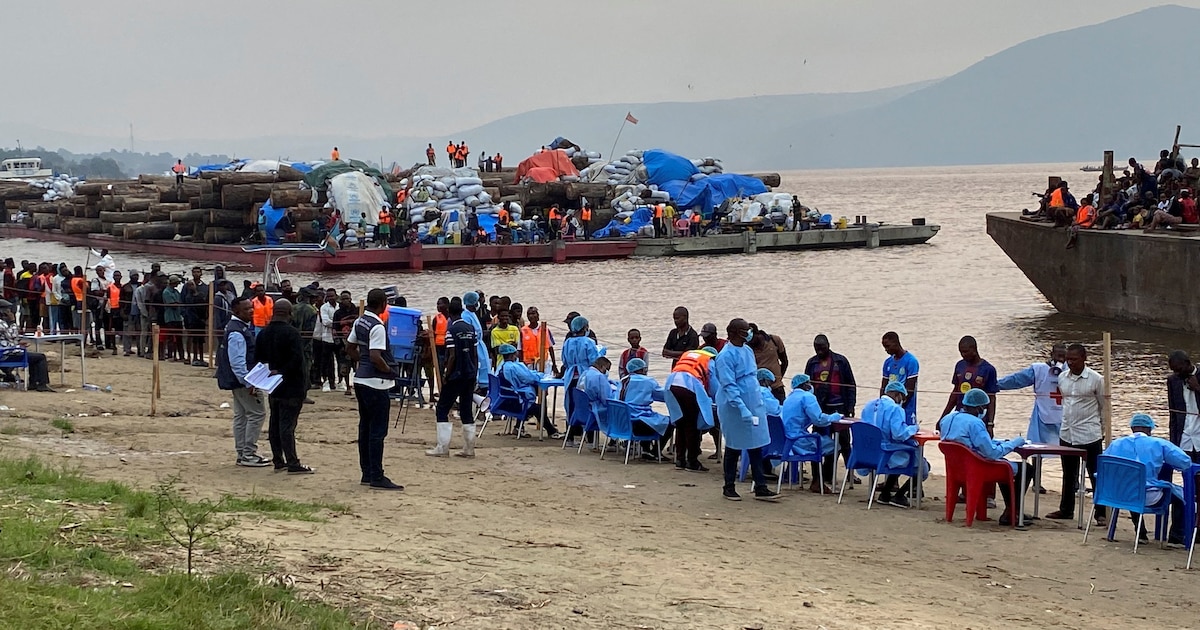
“The Ebola epidemic shows no signs of abatement.” This stark assessment was delivered on August 5 by the Deputy Medical Director of Médecins Sans Frontières (MSF), coinciding with the World Health Organization Director-General’s official visit to the eastern Democratic Republic of Congo. Declared on May 15, this outbreak has, in just two and a half months, become the second largest ever recorded, spreading at an unprecedented rate. Latest figures from the Congolese government and the World Health Organization (WHO) indicate approximately 4,000 cases and 1,850 fatalities, pushing the lethality rate above 40%.
The responsible virus, the Bundibugyo strain, has already claimed over five times more lives than previous outbreaks of this particular variant over a comparable timeframe, according to the Africa Centres for Disease Control and Prevention (Africa CDC). In contrast, the previous major Ebola epidemic in the DRC, which began in 2018 and concluded in 2020, took more than ten months to reach a similar death toll. “I am unable to tell you that we are fully controlling this epidemic today,” admitted Jean Kaseya, Director General of Africa CDC, in late July.
Extreme violence complicates case tracking efforts
Several factors contribute to this unparalleled progression. Firstly, there was a delay in detecting the virus’s initial emergence. The eastern Congo region presents a particularly challenging environment for medical coordination and case identification. Ituri province, the epidemic’s epicenter, frequently endures terrorist attacks by ADF militants originating from Uganda, while numerous militias vie for control over land, mineral resources, and influence among the populace. North Kivu, also affected, remains partially outside the control of the Kinshasa government, with significant areas of the province seized over a year ago by M23, an armed group widely seen as a proxy for neighboring Rwanda, following intense clashes with the Congolese army.
Millions of individuals have been displaced by these conflicts in recent years, fleeing to Uganda, Burundi, or other Congolese territories. This has precipitated a major humanitarian and security crisis, forcing the population to endure dire living and hygiene conditions. Furthermore, epidemiological surveillance and screening capabilities were initially inadequate due to a lack of allocated resources, hindering the rapid identification and confirmation of the disease’s circulation.
Tracking “contact cases” also remains critically insufficient. According to MSF, in Bunia, a city at the epidemic’s heart, 90% of admitted patients had not been identified as monitored contacts. Across Ituri province, only 59% of contacts were successfully traced. For every confirmed case in an urban area, Africa CDC estimates that approximately 40 contacts require monitoring; this would imply tracking around 134,400 individuals, yet only about 17,500 are currently being followed—just 13% of the target. Moreover, approximately one-fifth of recorded individuals are not regularly monitored, often due to staffing shortages or ongoing violence. Another indicator of the difficulty in containing the virus is that 60% of those who died succumbed within their communities, rather than in a healthcare facility.
Treatments and vaccines: still in trial phases
Nevertheless, progress is being made in efforts to curb the epidemic. A phase one clinical trial for a Bundibugyo vaccine commenced this month at Oxford University, with the first volunteer receiving the vaccine as part of a trial designed to assess its safety in 50 adults. The Coalition for Epidemic Preparedness Innovations (CEPI) is also financing the development of another vaccine by Singaporean laboratory Hilleman Laboratories, with the aim of rapid production and testing in the DRC.
Given the current absence of an available vaccine for this highly virulent strain, Africa CDC announced on August 6 its intention to massively administer the vaccine for the Zaïre strain of the Ebola virus to affected populations. Although the Bundibugyo variant in question is distinct, patients vaccinated against the Zaïre strain typically experience mild symptoms and do not die, according to the CDC. Additionally, according to reports, over 40 patients are participating in a preliminary trial evaluating a combination of treatments.
Jean Kaseya also declared plans to “expand the use of remdesivir in the DRC,” an antiviral, citing positive outcomes observed in neighboring Uganda, which successfully contained the initial spread of the epidemic from the DRC. Kaseya asserted that Uganda’s 10% fatality rate was “primarily because Ugandan authorities used remdesivir for all sick individuals and for those who were contact cases.” Projections from international health authorities suggest that this current epidemic could surpass the 2014-2016 West African outbreak, the deadliest ever recorded with over 11,000 fatalities, in terms of both cases and deaths.
Delayed and insufficient international support
Another factor contributing to the strain’s proliferation has been the significant delay in the deployment of international aid. In early 2025, the Trump administration had cut health and medical assistance provided for decades by USAID, the U.S. international development agency. The Congo had been a major beneficiary, and these cuts severely weakened the country’s health infrastructure.
On August 5, the U.S. State Department finally announced a new allocation of $242 million, bringing the total direct American aid for the Ebola response to $512 million. This funding, three months after the epidemic began, finally allows the WHO and CDC to secure the necessary financing for their initial six-month Ebola response plan, estimated at $518 million. However, as noted, this amount “remains significantly lower than what the United States has previously spent on humanitarian and health aid.” The United States continues to be the leading contributor to the Ebola response, far surpassing the European Union.