Us Morocco alliance and its impact on ceuta migration crisis
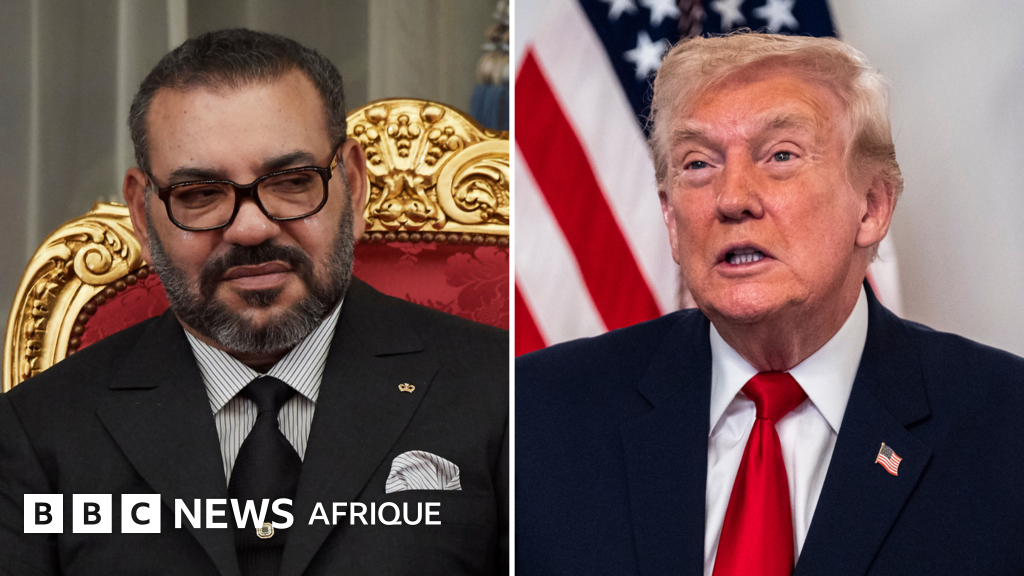
The enduring US Morocco alliance: from 18th-century diplomacy to Ceuta’s migration crisis
The bond between the United States and Morocco stretches back more than two centuries, evolving from a historic 1786 treaty into a modern strategic partnership that now shapes North African geopolitics.
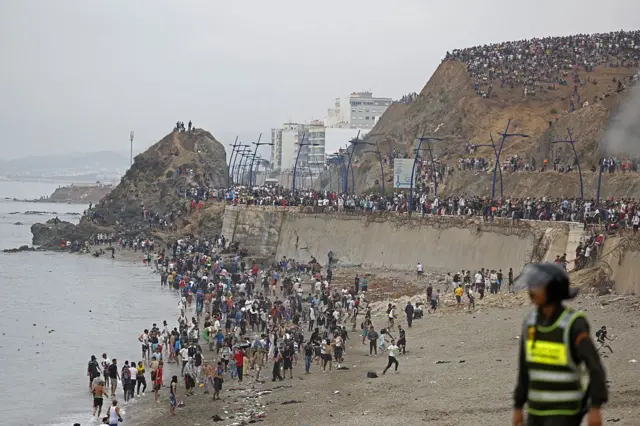
This week, Morocco’s King Mohammed VI renamed a 1,000-kilometer highway in the Western Sahara after former US President Donald Trump, a symbolic gesture of gratitude for Washington’s consistent backing of Rabat’s sovereignty over the disputed territory. The move came shortly after over 70,000 people surged from Morocco into the Spanish enclave of Ceuta, leaving at least 140 dead on both sides of the border and triggering a severe migration emergency.
Washington’s response to the Ceuta crisis underscored the depth of its ties with the Moroccan monarchy. While the Trump administration condemned the incident as a “catastrophe” akin to an “invasion,” it reserved its sharpest criticism for Spain’s immigration policies and what it described as Madrid’s alignment with “far-left globalist agendas.”
Notably, the White House and State Department avoided any direct reproach toward Morocco, despite the mass influx originating from its territory. This stance has raised eyebrows in Madrid, a NATO ally that hosts American military installations in Rota and Morón de la Frontera.
Although Morocco is not a member of the Atlantic Alliance, it remains one of Washington’s most trusted military and intelligence partners in North Africa. This enduring collaboration has reshaped regional security dynamics, particularly in counterterrorism efforts.
Origins of a Diplomatic Bond
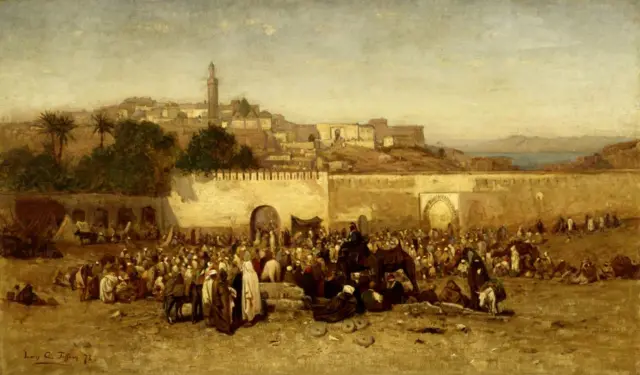
The foundation of US Morocco relations was laid in 1776, when the newly independent United States sought international recognition. Just a year and a half later, Morocco’s Alaouite dynasty, under Sultan Mohammed III, opened its ports to American vessels—a move Rabat proudly cites as the first formal acknowledgment of US sovereignty.
The landmark Treaty of Peace and Friendship, signed in Marrakech on June 23, 1786, solidified this early rapport. For the fledgling American republic, the pact was more than symbolic; it provided protection against North African corsairs who routinely seized ships and held crews for ransom.
“Morocco’s strategic position at the Mediterranean crossroads offered Washington a gateway to Europe, Africa, and the Islamic world,” explains Timothy W. Kneeland, a professor of history and political science at Nazareth University in New York.
Renewed in 1836, the treaty remains in force today—earning the distinction of being Washington’s oldest active agreement. Sarah Yerkes, a senior fellow at the Carnegie Endowment for International Peace, notes, “Moroccans often remind visitors that this document is the longest-standing accord in US diplomatic history.”
After France and Spain divided Morocco in 1912, US recognition of the colonial order was delayed until 1917. Upon Morocco’s independence in 1956, Washington promptly established an embassy in Rabat, signaling the start of a new chapter in bilateral relations.
Security, Trade, and Western Sahara
Military cooperation predates Morocco’s independence. In 1950, while the country was still under French protectorate rule, Washington secured agreements to develop air bases—an arrangement that would later prove pivotal during the Cold War.
The 1975 Green March, orchestrated by King Hassan II to reclaim the Western Sahara from Spain, tested US neutrality. While publicly advocating for a negotiated solution, declassified documents reveal Washington’s tacit support for Rabat’s territorial ambitions.
In a 1974 meeting with Hassan II, Henry Kissinger reportedly stated, “If I were in your position, I would do the same.” By January 1976, internal memos described US policy as “essentially pro-Moroccan.”
Following the 9/11 attacks, security ties deepened markedly. In 2004, Morocco was designated a Major Non-NATO Ally, unlocking access to advanced weaponry and joint military exercises. Today, the kingdom hosts African Lion, AFRICOM’s largest annual drill, and co-chairs the Africa cell of the global coalition against ISIS.
Stockholm International Peace Research Institute data shows the US supplied 60% of Morocco’s major arms imports between 2021 and 2025—far outpacing Israel (24%) and France (10%).
Economically, the 2006 US Morocco Free Trade Agreement—Washington’s first with an African nation—has expanded bilateral commerce from $927 million in 2005 to $7.4 billion in 2025. Though modest on the global scale, the pact has cemented Morocco’s role as a key North African partner.
Diplomatically, the alliance peaked in December 2020 when the Trump administration recognized Moroccan sovereignty over Western Sahara in exchange for Rabat normalizing ties with Israel. Washington continues to champion Rabat’s autonomy plan as the only viable path to resolution.

The US Morocco Spain Trialogue
The Ceuta crisis has exposed fractures within the US Morocco Spain triangle. Madrid, a NATO stalwart and host to American bases, depends on Rabat for border management—yet now faces conflicting loyalties.
Spanish Prime Minister Pedro Sánchez initially attributed the influx to human trafficking networks and social media. However, opposition figures and analysts have accused Morocco of orchestrating or at least facilitating the surge to pressure Spain.
Washington’s reaction has further strained Madrid’s position. The Trump administration lambasted Spain for opposing NATO spending caps and blocking the use of Rota and Morón bases for strikes against Iran—grievances that surfaced during the Ceuta emergency.
“The White House did not view Ceuta as a Moroccan initiative,” observes Yerkes. “Instead, it blamed Spain for mismanaging its border, revealing where Washington’s allegiances lie.”
This alignment underscores Morocco’s rising value as a security and logistics partner for the US, especially after Madrid’s refusal to permit strikes from its territory. In a message to King Mohammed VI on Throne Day, Trump celebrated “250 years of American friendship with Morocco, built on trust and mutual respect.”
He reiterated US recognition of Western Sahara as Moroccan territory and expressed hope that cooperation would continue “for the next 250 years.”
