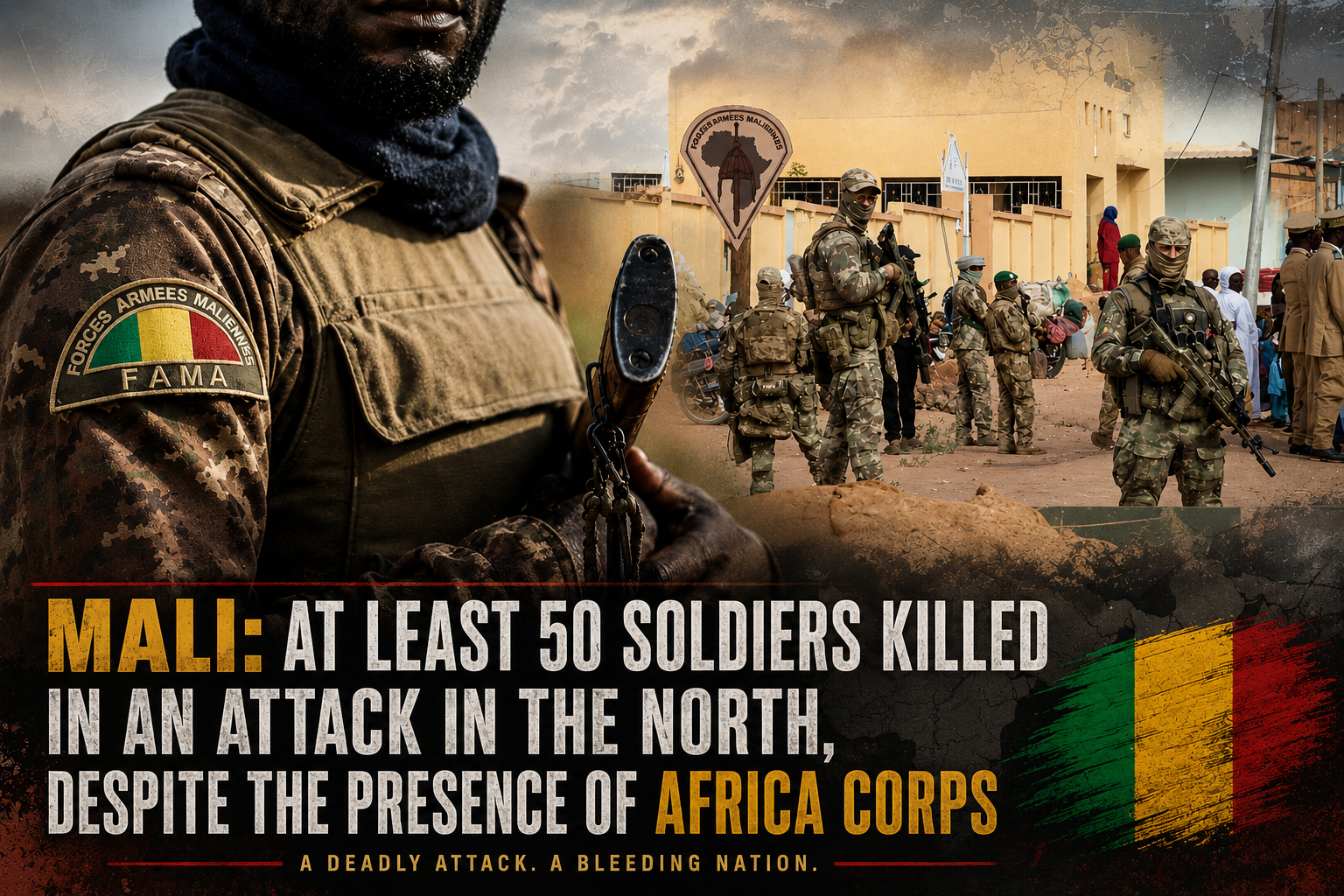

The latest large-scale attack in northern Mali has resulted in the deaths of at least 50 soldiers, according to multiple verified accounts. The assault, carried out by independentist fighters alongside jihadist groups, underscores the worsening security landscape in the country.
Questions raised about Africa Corps’ role amid persistent attacks
The tragic outcome of the assault has reignited discussions about the actual effectiveness of the military support system in place for Bamako. Since the deployment of Africa Corps, touted by officials as a strategic partner capable of delivering decisive military expertise, expectations have been high. Yet, deadly attacks continue to escalate, and the Malian armed forces sustain significant losses.
This pattern fuels criticism from observers who question the precise nature of Africa Corps’ involvement. If its role is confined to technical assistance, training, or advisory functions without active participation in high-risk operations, many are questioning the tangible value this presence brings in addressing an unrelenting crisis.
Debate intensifies over foreign military partnerships
Analysts argue that recent events reinforce the perception that combat operations remain almost entirely dependent on the Malian armed forces, while international partners maintain a more cautious stance. This view has sparked a broader debate about the balance between the resources allocated to this cooperation and the outcomes achieved on the ground.
Critics contend that support which fails to reduce attacks sustainably, improve civilian security visibly, or better protect soldiers risks eroding its own credibility. In their assessment, military partnerships must be judged by their operational impact and ability to shift the balance of power on the battlefield, rather than political announcements alone.
Lessons for Sahel allies amid ongoing threats
In light of these developments, some observers suggest that Mali‘s experience should prompt other members of the Alliance of Sahel States (AES) to carefully assess the results of such military cooperation. They argue that if a strategic partner’s primary function is to provide technical assistance without decisive involvement in critical operations, it becomes reasonable to question whether it can meet the expectations set for it. These analysts emphasize that the true measure of a partnership lies not in signed agreements or official declarations but in its concrete effectiveness when confronting attacks and safeguarding national territory.
In this climate, calls grow louder for greater transparency regarding Africa Corps’ assigned missions, its operational engagement, and the tangible results achieved since its arrival. Many believe it is entirely appropriate to scrutinize the outcomes of this cooperation, especially as Mali continues to face deadly attacks and faces formidable security challenges.
A demand for tangible security improvements
Beyond official rhetoric, the population’s primary expectation is a visible improvement in their safety. As long as violence continues to claim lives among both soldiers and civilians, the debate over the efficacy of security partnerships—including that with Africa Corps—will remain a national priority. Several observers advocate that other AES countries should draw their own conclusions from Mali’s experience before placing full confidence in a foreign partner. They argue that before entrusting national security to external allies, it is essential to evaluate their real contribution to enhancing safety and protecting communities. Only measurable progress, they insist, can determine the relevance of such cooperation in the face of an intensifying threat.