
Tensions are escalating in Lomé as the government of Faure Gnassingbé faces mounting scrutiny over the alleged presence of foreign military and paramilitary forces on Togolese soil. With northern Togo, particularly the Savanes region bordering Burkina Faso, under increasing pressure from Sahel-based armed groups, the lack of transparency surrounding these deployments has triggered a political firestorm.

Opposition unites to demand accountability
A coalition of opposition parties and civil society groups, including the Dynamique Monseigneur Kpodzro (DMK), Dynamique pour la majorité du peuple (DMP), Lumière pour le développement dans la paix (LDP), and the Front « Touche pas à ma Constitution », has issued a joint statement condemning the opacity surrounding foreign military personnel operating in the country. Their primary concern centers on the deployment of foreign troops—particularly in the Savanes region—where security challenges have intensified due to spillover effects from neighboring Burkina Faso.
The opposition argues that while national security is paramount, the absence of official communication about these foreign forces is unacceptable. They are demanding full disclosure of the legal framework, operational roles, and exact numbers of these personnel, accusing the government of sidestepping democratic accountability.
Controversial actors under the spotlight
The coalition’s statement highlights two key entities at the center of the controversy: Russia’s Africa Corps and Turkey’s private military firm SADAT. While neither Lomé, Moscow, nor Ankara has confirmed their presence, reports suggest that up to 350 Russian operatives may be active in Togo. Meanwhile, SADAT, known for its close ties to Ankara, is suspected of providing training, technical support, or even operational guidance to local forces.
The lack of verifiable information has fueled speculation about their actual roles—whether they function as advisors, intelligence experts, or combatants involved in frontline operations. Without official clarifications, the public remains in the dark about the true nature of their missions.
Legal and financial concerns take center stage
The opposition’s demands extend beyond mere transparency. They are calling for strict adherence to national and international legal standards, insisting that any foreign personnel must operate under the direct command of Togo’s Armed Forces (FAT). Additionally, they warn against any involvement of these forces in domestic law enforcement, surveillance, or political repression.
Another critical issue is the financial burden on taxpayers. With no parliamentary debate or public oversight on the costs of these security contracts, civil society groups are demanding full accountability for how public funds are being allocated to foreign military partnerships.
Gnassingbé’s shifting security alliances
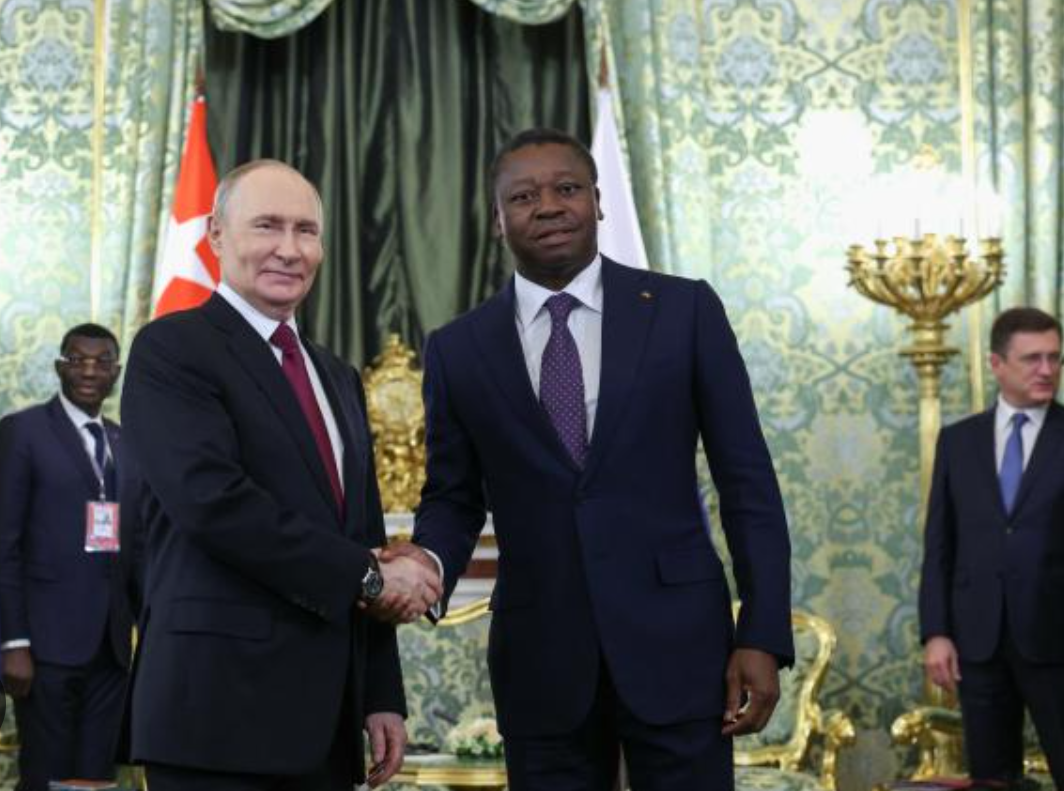
While the government has yet to publicly address the opposition’s concerns, its engagement with non-Western military partners has been steadily increasing. Since 2021, Togo has deepened defense ties with Turkey, including the acquisition of Bayraktar TB2 combat drones for border surveillance. Simultaneously, cooperation with Russia has expanded through military intelligence sharing, joint exercises, and logistical support.
These moves align with the government’s Togo-Sahel 2026-2028 Strategy, a roadmap aimed at strengthening security partnerships to counter the jihadist threat advancing toward the Atlantic coast. However, critics argue that such strategic shifts must not bypass democratic scrutiny.
Time for national dialogue?
As regional instability and shifting geopolitical alliances reshape West Africa’s security landscape, the demand for clarity has never been more urgent. The opposition insists that national security decisions should not be made behind closed doors. A public or parliamentary debate could help resolve ambiguities, restore public trust, and prevent these security arrangements from becoming a source of internal political strife.
For now, all eyes remain on the government, as citizens await definitive answers on the legal, operational, and financial dimensions of these foreign military deployments.