
Gabon’s agricultural transformation: forging food sovereignty by 2030
Libreville, Monday, July 13, 2026 — Gabon has long grappled with a significant economic contradiction. Despite possessing abundant arable land, a favorable climate, and substantial water resources, the nation remains heavily reliant on food imports to sustain its population.
This reality not only strains the national trade balance but also exposes Gabon to the volatility of international markets. Consequently, achieving national food sovereignty has now emerged as a paramount strategic priority for the state.
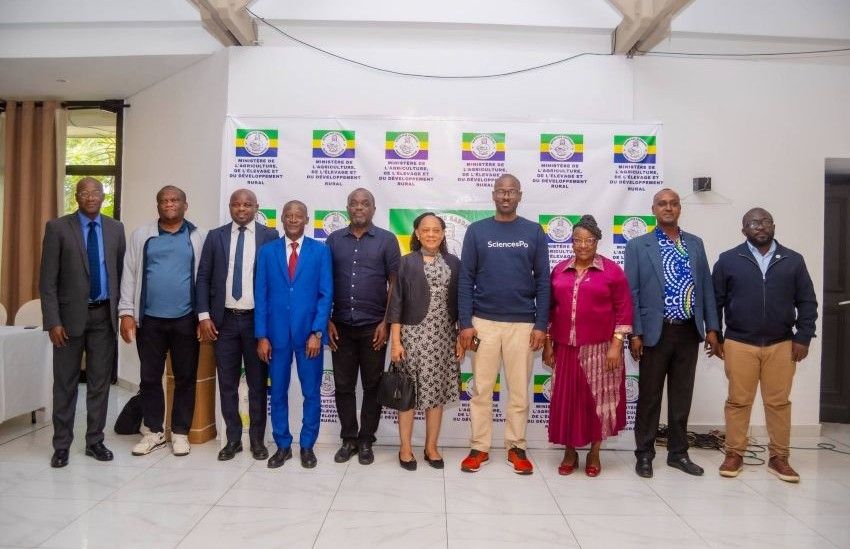
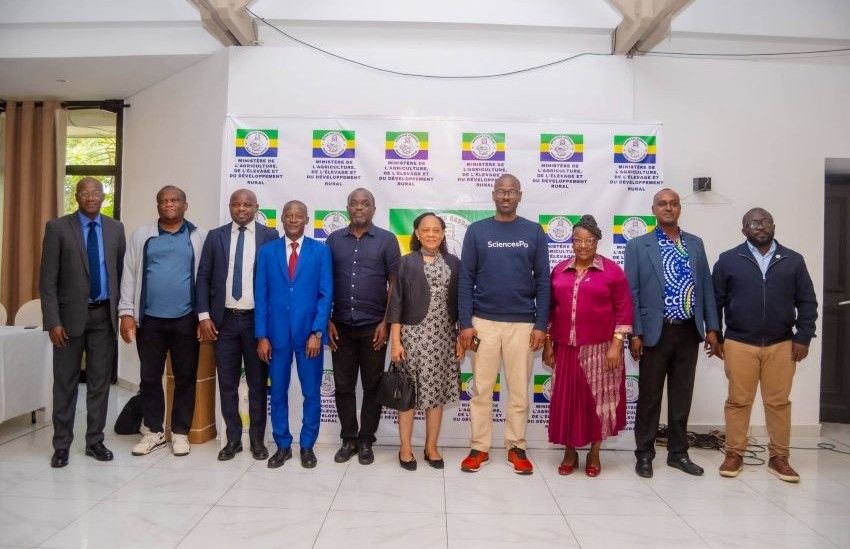
In response to this critical challenge, the Ministry of Agriculture, Livestock, and Rural Development recently convened its senior administration in Libreville for a two-day strategic retreat. The primary objective was to redefine governance methodologies within the sector and accelerate the national agricultural transformation process, targeting the ambitious horizon of 2030.
Under the leadership of Minister Pacôme Kossy, this gathering transcended the scope of a typical administrative exercise. It underscored a firm commitment to steer Gabonese agriculture towards a framework of performance, measurable outcomes, and robust managerial accountability. The clearly articulated ambition is to diminish the country’s food dependency and establish domestic production as a cornerstone of economic diversification.
The retreat, themed “CAP 2030: Aligning Management, Accelerating Results, Securing Gabon’s Food Sovereignty,” brought together ministerial cabinet members, general directors, provincial heads, and representatives from entities supervised by the ministry. Such broad mobilization highlights the critical importance now ascribed to a sector increasingly recognized as a major national security concern in the 21st century.
A new governance paradigm for national ambition
Food security is no longer solely addressed by conventional agricultural policies. Global health crises, geopolitical pressures on supply chains, climate change, and fluctuating food prices have profoundly reshaped national priorities worldwide.
For Gabon, ensuring its food sovereignty now entails a multifaceted approach: boosting domestic production, fostering local processing, structuring agricultural value chains, and securing national supplies over the long term. The strategic retreat held in Libreville was specifically designed to embed this new culture of public governance. The ministry is committed to evolving its steering mechanisms, focusing on performance, administrative efficiency, and the accountability of sectoral leaders.
The stated objective is unequivocal. Every directorate, every supervised establishment, and every provincial representation will now be required to align its actions with a logic of evaluable results and precise indicators. This approach marks a significant departure from traditional administrative models, which often prioritized the resources deployed over the outcomes achieved.
The forthcoming Managerial Performance Pact, expected at the conclusion of these deliberations, will delineate specific commitments, accompanied by quantifiable objectives and regular evaluation mechanisms. The planned introduction of a national performance monitoring dashboard further illustrates this determination to make results-based management a pivotal instrument of Gabon’s agricultural reform.
Significant investments driving sectoral transformation
This strategic deliberation coincides with the ministry’s presentation of a particularly ambitious performance review for the first half of 2026. According to ministerial officials, nearly 7,575 billion CFA francs in private investments have been secured through the signing of five strategic agreements. These agreements are designed to support the modernization of agricultural and livestock sectors, alongside critical processing infrastructure.
Should these investments materialize as committed, they could represent one of the most substantial waves of funding ever recorded in Gabonese agriculture.
Strengthening support for local producers also stands as a key ministerial priority. The aim is to bolster the growth of national farms and foster the emergence of an entrepreneurial agricultural sector capable of consistently supplying urban markets.
Another major undertaking involves the finalization of the Agri-food Systems Transformation Plan for the 2026-2030 period. This crucial strategic document is set to serve as the national roadmap for the coming years, outlining priorities in production, processing, commercialization, and climate resilience.
Food sovereignty: a pillar of national strength
Beyond statistics and programs, the ministry’s initiative reflects a profound evolution in Gabon’s economic vision. In a global landscape characterized by trade disputes, logistical disruptions, and commodity tensions, a nation’s capacity to feed its own population is becoming a paramount indicator of its sovereignty.
Agriculture is progressively transcending its traditional role as a mere productive sector to become a strategic lever for social stability, national security, and economic power.
For Gabon, the stakes extend far beyond merely increasing agricultural yields. The objective is to construct a resilient model capable of creating jobs, revitalizing rural territories, reducing food imports, and bolstering the national economy’s resilience against external shocks.
The conclusions of the retreat, which wrapped up on July 12 with the validation of the ministry’s major strategic orientations, will therefore be closely observed by economic stakeholders, investors, and international partners. For behind the CAP 2030 slogan lies a broader ambition: to definitively usher Gabonese agriculture into an era of performance, industrial transformation, and complete food sovereignty.
For the authorities, the period of diagnostics appears to be over. The current focus is firmly on execution, measuring results, and realizing commitments.
In the global competition for food security, nations that invest today in their production capabilities will secure a decisive strategic advantage tomorrow. Gabon, it seems, has chosen not to remain a mere spectator in this historic transformation.