
Gabon’s national assembly asserts its legislative authority
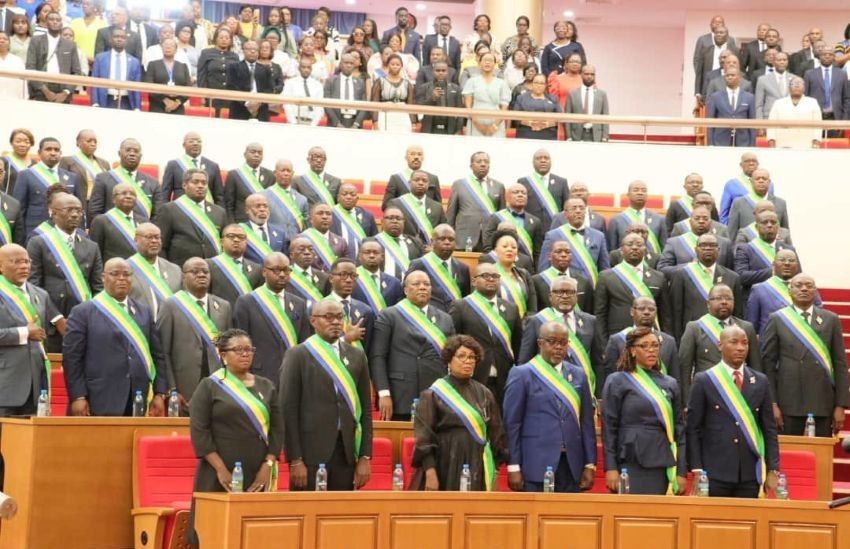
Libreville, Wednesday, July 1, 2026 – Four months after its establishment under the framework of the Fifth Republic, the Gabonese National Assembly has concluded a session that stands as one of the most pivotal in the nation’s recent institutional history.
Within the hallowed halls of the Léon-Mba Palace, the official closing of the inaugural ordinary session, aptly named the “session of laws,” marked more than just the end of a parliamentary cycle. Crucially, it heralded the emergence of a Parliament determined to fully exercise its mandate in the foundational reforms initiated on August 30, 2023.
Presided over by Michel Régis Onanga M. Ndiaye, the deputies proudly highlighted a substantial legislative output, robust diplomatic engagement, and, most notably, a resolute commitment to upholding their legislative prerogatives against an executive branch whose reform ambitions remain extensive. Beyond the statistics and official pronouncements, a fundamental question now emerges: what institutional balance will Gabon’s new Republic forge between governmental effectiveness and democratic oversight?
A defining session for Gabon’s Fifth Republic
The closing ceremony witnessed the presence of the highest state authorities, presidents of constitutional institutions, the Vice-President of the Government, cabinet members, the diplomatic corps, and numerous civilian and military dignitaries.
The context imbued this session with exceptional significance, as it occurred precisely when the new institutions, born from the Constitution of the Fifth Republic, are progressively taking shape.
In his address, the President of the National Assembly presented a detailed overview of the work accomplished. Out of 33 legislative texts submitted for national deliberation, 23 were meticulously examined and subsequently adopted. These legislative instruments are poised to directly impact citizens’ daily lives and are designed to facilitate the establishment of the new institutional framework.
Beyond the sheer volume of legislation, Michel Régis Onanga M. Ndiaye underscored the profound political responsibility vested in the deputies. He reiterated that their mission extends beyond merely voting on laws; it encompasses enriching, amending, and, when deemed necessary for the public interest, returning them to the government for reconsideration.
This unequivocal assertion of independence signifies a crucial evolution in Gabonese parliamentary operations. The new Assembly appears steadfast in its determination to avoid the role of a mere rubber-stamp chamber, a criticism often leveled against legislative bodies in various African nations.
The debate on ordinances enters institutional discourse
One of the most salient moments of this closing session was the cautionary message directed at the government regarding its use of ordinances. While not questioning their constitutional legitimacy, the President of the National Assembly emphasized that this instrument should be reserved strictly for genuinely urgent situations. This declaration resonates as a resolute defense of parliamentary debate.
This stance comes at a time when the executive’s ambitious reforms occasionally necessitate accelerated procedures. However, for the Assembly’s president, the efficiency of public action must never compromise democratic deliberation.
The message is clear: the success of the Fifth Republic will depend as much on the quality of its reforms as on the inclusive manner in which they are formulated. This commitment to safeguarding the parliamentary sphere emerges as a key takeaway from this session, reflecting a pursuit of institutional equilibrium where the Parliament remains a central actor in the decision-making process.
An institution focused on oversight and public engagement
The National Assembly also sought to highlight its pivotal role in institutional dialogue and its growing international presence.
The Parliament Congress on June 15, marked by President Brice Clotaire Oligui Nguema’s inaugural State of the Nation address to both chambers, represented a significant highlight of this session. On that occasion, the head of state presented his vision for priority reforms, notably concerning salary arrears, reimbursement for Poste SA savers, the expansion of social protection, the restructuring of SEEG, and the development of transportation infrastructure.
Yet, beyond diplomatic activities, the core message of this closing session remains one of responsibility. Responsibility of elected officials to their constituents. Responsibility of the government to the national representation. And responsibility of the media in disseminating accurate and rigorous information.
By concluding this first ordinary session, the National Assembly has sent a powerful signal. The Fifth Republic will not be built solely through executive reforms; it will also be forged by the capacity of its institutions to engage in dialogue, exercise mutual oversight, and hold themselves accountable to the citizens.
The session concludes, but the true work is just beginning. For in any developing democracy, legislative texts are merely the starting point; tangible results remain the sole true measure of success.