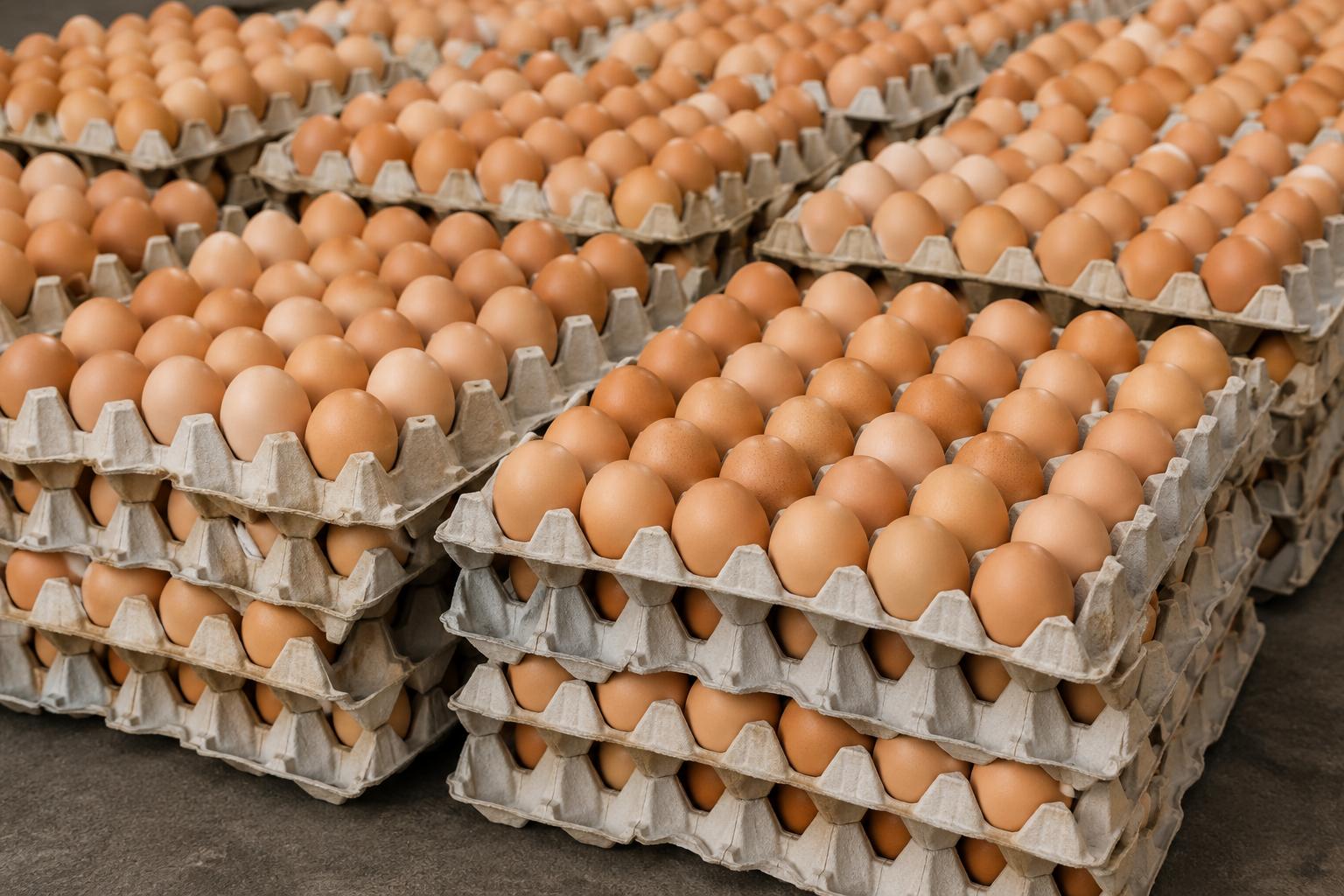

The recent directive from Burkina Faso’s authorities has sent shockwaves through the poultry industry. A joint announcement from the Ministries of Trade and Animal Resources imposed a fixed price of 100 F CFA per egg for consumers, 2,600 F CFA per tray for wholesalers, and 2,750 F CFA for retailers. While framed as a measure to protect household purchasing power, this price control deal is actually a severe blow to entrepreneurial freedom and the survival of an already struggling sector.
Controlling prices without addressing rising costs
Is it reasonable to cap the price of a finished product while ignoring the soaring costs of its raw materials? That’s the impossible equation the government has thrust upon poultry farmers. Egg production relies heavily on animal feed—commonly called “provende”—which includes maize, soybean and cottonseed cakes, and mineral supplements. Over recent months, these feed ingredients have seen prices spiral upward due to inflation, transport costs, and supply chain disruptions.
By unilaterally setting egg prices without subsidizing feed production, the authorities are effectively breaking the profitability of poultry farms. Capping prices at an arbitrary level forces producers to sell at a loss or operate on razor-thin margins.
An outright assault on entrepreneurial freedom
The principle of free enterprise hinges on supply and demand dynamics, allowing businesses to set prices based on their operational and financial realities. When the state intervenes to dictate pricing policies for private companies, it doesn’t regulate—it suffocates.
This intervention discourages private investment. Why would an entrepreneur risk millions in poultry infrastructure, take out bank loans, or hire local workers if the government reserves the right to cap earnings while ignoring real costs?
Unintended consequences: scarcity and black markets
History shows that artificial price controls often backfire. Faced with unsustainable losses, poultry farmers may face several dire scenarios:
- Collapse of small producers: Unlike large industrial players, small-scale farmers lack the resilience to absorb losses, leading to bankruptcies and job losses.
- Production cuts: To minimize losses, farmers may reduce flock sizes.
- Emergence of black markets: As egg shortages hit official markets, scarcity could drive prices well above the regulated 100 F CFA, further hurting consumers.
A smarter approach to affordable eggs
While protecting consumer purchasing power is commendable, it should not come at the expense of producers who drive the country’s wealth. If the goal is truly to make eggs affordable, the right action lies upstream: subsidizing feed production, exempting poultry inputs from taxes, or easing access to credit for farmers.
Capping egg prices while ignoring the steep rise in feed costs is an economic misstep. It sends a dangerous signal to the business community, reinforcing the perception that entrepreneurial freedom remains hostage to disconnected decrees. To rescue Burkina Faso’s poultry sector and secure its food sovereignty, the immediate solution is to lift price controls and bolster production support.