In Niger’s Gaya school children discover their rights
In Niger’s Gaya school children discover their rights
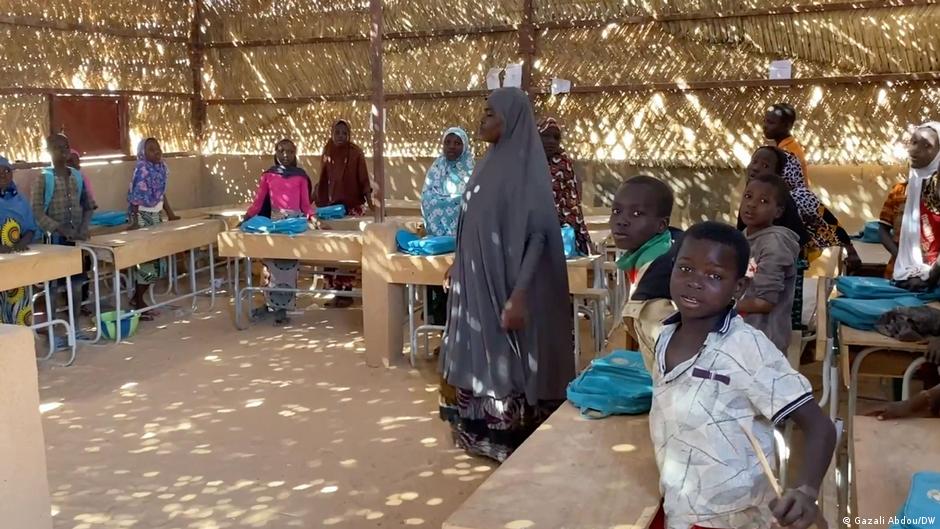
In Gaya, a town in southwestern Niger, a school is teaching children about their rights in honor of African Child Day.
The bell had just rung for the end of class, but for these 9- to 12-year-olds, the day’s lesson was still alive in the hallways of the mission school in Gaya:
“Before today, I thought rights were only for adults, like driving or voting.”
“Yes, we have the right to medical care when we’re sick, and no one can hurt us.”
“Friends, we can also speak up, so parents and teachers have to listen to us. If we need something, we can explain it without getting scolded.”
Today’s moral education class focused on children’s rights. The subject spills beyond the classroom walls.
For teacher Aïssatou, the impact is immediate. “The discussion continues after class. I saw how excited the students were to discover they have rights. Children learn a lot from moral lessons. They memorize and apply everything we teach them.”
Instilling values in young learners
Rights are taught using the competency-based approach (APC), adjusted for each level, explains counselor Omar: “From kindergarten, we teach children about their rights through stories and songs. They understand they have the right to education and healthcare. As they progress to secondary school, we add civic education and moral lessons. At primary level, it’s mainly moral education, which gives them the basics of human rights.”
A lack of awareness about rights
But not all children reach secondary school. Some drop out and develop without ever learning about their rights.
We encounter an eleven-year-old boy collecting plastic bottles on the street. Off the record, he insists, “Rights are only for adults.”
This shows the urgency to educate children beyond the classroom walls.