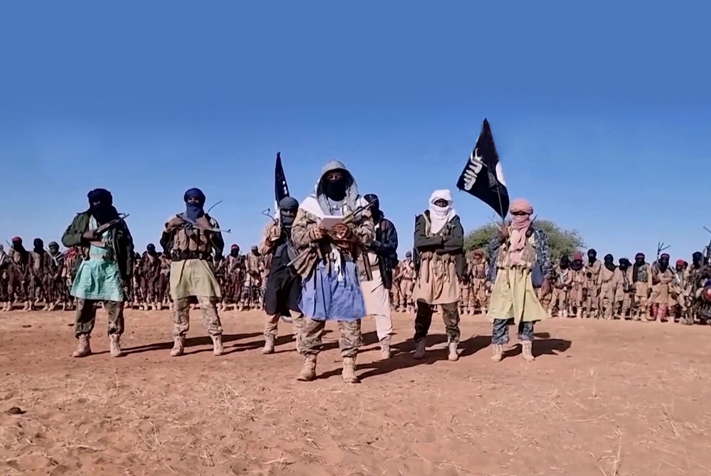

In the vast, semi-arid expanse of northeastern Mali, the Islamic State’s Sahel Province (ISSP) continues to cast a long shadow despite concerted efforts to counter its influence. While global attention often fixates on the activities of the Group for the Support of Islam and Muslims (JNIM), the ISSP remains a persistent and strategically entrenched threat, particularly in the Gao and Ménaka regions.
Core strongholds and operational heartlands
The ISSP’s operational backbone is firmly rooted in a cluster of localities that local communities have come to know as the “3 T’s”—Talataye, Tin-Hama, and Tessit—alongside the strategically vital hub of Labbezanga. These areas serve as the group’s command centers, where it exercises de facto control over movement, trade, and local governance, embedding itself deeply within the social fabric of the region.
Leadership and adaptive tactics
The group’s current leadership is helmed by Abou Al-Bara, who assumed command following the 2021 elimination of his predecessor, Adnan Abu Al-Walid Sahraoui. Under his guidance, the ISSP has undergone a significant tactical evolution since 2020. Gone are the days of large-scale public executions designed to instill fear. Instead, the group has adopted a more insidious strategy—one focused on territorial dominance, localized governance, and subtler forms of coercion aimed at winning the acceptance of local populations while minimizing media attention.
This shift in approach has not, however, diminished the group’s operational capacity. In a recent predawn strike on May 14-15, 2026, Malian armed forces conducted an aerial operation in Bara, Ansongo cercle, neutralizing a high-ranking ISSP operative along with several affiliated fighters. The operation underscored the relentless pressure being applied to the group’s strongholds while also highlighting its resilience, particularly in trans-border zones where it maintains robust logistical networks.
Strategic operations and regional influence
The ISSP’s reach extends along the critical Mali-Niger corridor, where it targets key localities such as Talataye, Tin-Hama, Tessit, Labbezanga, and Ménaka. By controlling the flow of people and goods through these areas, the group asserts its dominance over regional trade routes and exerts influence over smaller armed factions operating in the shadows. These actions are not merely about violence; they are calculated moves to embed the group’s authority within the economic and social structures of the region.
Meanwhile, the rivalry between the ISSP and the JNIM continues to shape the Sahel’s security landscape. While the JNIM garners headlines with high-profile, media-centric attacks—such as the coordinated assaults that rocked Bamako and surrounding areas on April 25, 2026—the ISSP operates with a stealthier, more methodical approach. Rather than seeking the spotlight, the ISSP focuses on consolidating control over territories, exerting pressure on communities, and securing strategic axes without drawing undue attention.
This dynamic shift in tactics has eroded the relative truce that once characterized interactions between the two groups. Since 2020, direct confrontations have become more frequent, though recent military offensives by Malian forces have temporarily redirected the focus of both groups toward a common adversary. However, no formal peace accord has been established, leaving the door open for continued friction.
Ongoing threats and evolving tactics
Intelligence reports from the first quarter of 2026 reveal that 86% of Islamic State activities worldwide were concentrated in Africa, with the ISSP at the forefront of this surge. The group has increasingly deployed armed drones, motorized assaults, and economic pressure tactics to destabilize both urban and rural areas. Critical infrastructure—both civilian and military—along the Ménaka-Ansongo-Tessit axis and in Labbezanga has become prime targets. A stark example of this strategy unfolded on February 7, 2026, when ISSP fighters ambushed a civilian convoy near Kobé, 35 km from Gao, further demonstrating the group’s ability to exploit local vulnerabilities and impose its own form of de facto governance.
Despite international counterterrorism cooperation—such as the May 16, 2026 operation in the Lake Chad basin that resulted in the elimination of a key ISSP figure, Abu-Bilal Al-Minuki—the threat posed by the ISSP remains alarmingly persistent. The group’s territorial control and influence over local armed groups continue to thrive in the “3 T’s” region and Labbezanga, where its networks are deeply entrenched. By diverting global attention toward the JNIM and other factions, the ISSP has managed to strengthen its position, tighten its grip on local populations, and maintain relentless pressure on Malian security forces.
The ISSP’s enduring presence in northeastern Mali is a stark reminder that the fight against extremism in the Sahel is far from over. To dismantle this entrenched threat, a sustained and targeted military and counterterrorism effort—particularly along the Mali-Niger border—is not just necessary; it is imperative.