
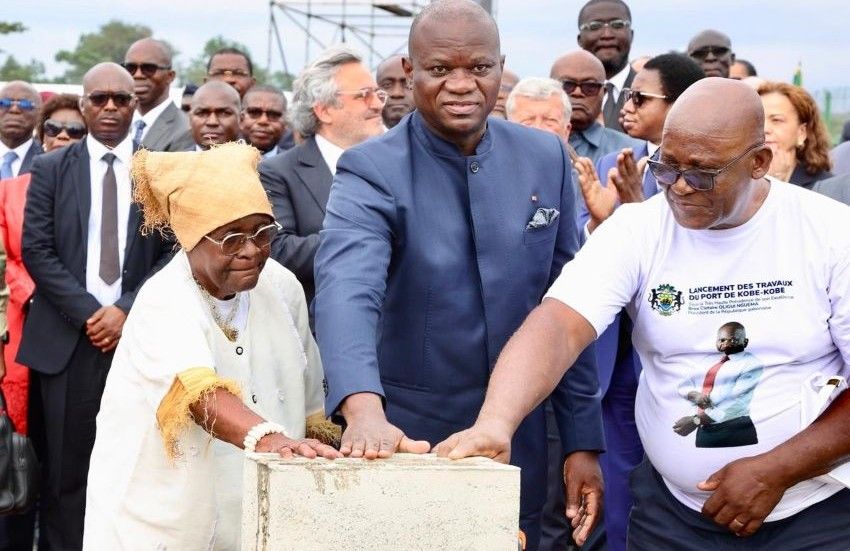
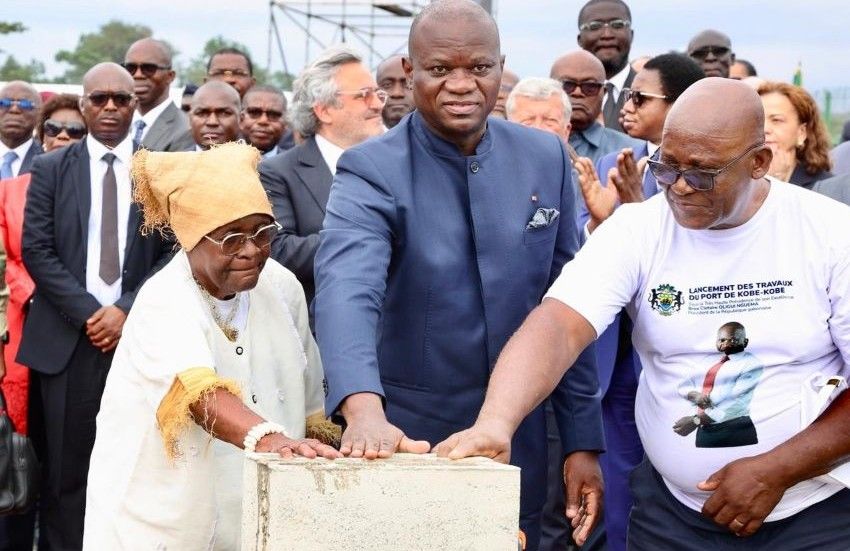
Libreville, Tuesday, June 9, 2026 – The official launch of deep-water port construction at Kobe-Kobe on Monday, June 8, signals more than just the beginning of an infrastructure project. It marks the dawn of a new economic era for Gabon.
The initiative transcends traditional construction, representing a comprehensive national transformation strategy. At the Nyonié site along the Atlantic coast in the Estuaire province, President Brice Clotaire Oligui Nguema initiated a program merging multiple strategic ambitions: industrialization, economic sovereignty, post-oil diversification, regional development, job creation, and enhanced regional influence.
Rarely has a single project galvanized both international investors and domestic aspirations to such an extent.
Four integrated pillars drive the vision
The Kobe-Kobe complex operates on four interconnected foundations. First is the Belinga iron ore deposit, one of the world’s largest untapped high-grade mineral reserves. Second, a 535-kilometer railway will connect mining zones to the coast. Third, the deep-water mineral port will feature four dedicated berths. Fourth, a 400-megawatt hydroelectric dam in Booué will power the entire operation.
This integrated approach breaks from Africa’s historical pattern of exporting raw materials for overseas processing. Gabon aims to retain greater value locally by developing domestic refining and manufacturing capabilities.
The government’s stated goal is clear: leverage natural resources to fuel industrial growth rather than merely export commodities. The April 2026 partnership between Gabonese authorities, Africa Global Logistics, and Algest Investment Bank exemplifies this commitment to building an end-to-end economic chain from extraction to global markets.
A logistics game-changer for Central Africa
The project’s true significance extends beyond mining. With 14-16 meter draft depths, Kobe-Kobe will accommodate massive cargo vessels—unlike many regional ports operating at capacity limits. This capacity will slash logistics costs and attract international investors seeking efficient trade routes.
In a competitive regional landscape, infrastructure mastery becomes crucial. Gabon positions itself as a regional hub serving domestic markets and significant portions of Central African trade flows. This strategy aligns with President Oligui Nguema’s broader vision: preparing Gabon for a post-oil future through mineral wealth, energy potential, and strategic geography.
International partners like China Railway, EDF-Sinohydro, Trafigura, Fortescue, and Africa Global Logistics validate this vision in the eyes of global economic players.
The human dimension behind concrete and steel
Beyond investment figures, the project’s social impact may prove most transformative. Official projections estimate over 9,000 direct jobs and up to 100,000 indirect positions by 2030, with some estimates suggesting 160,000 total jobs as the industrial corridor develops.
For residents of Nyonié, Komo-Océan, and communities along the rail route, Kobe-Kobe represents unprecedented economic opportunity. Enhanced transport networks, service sector growth, new industries, and workforce upskilling could dramatically reshape regional socio-economic landscapes.
Success hinges on one critical challenge: translating monumental infrastructure into tangible prosperity for Gabonese citizens. The real test will be whether Gabon can convert natural wealth into sustainable development, skilled employment, and economic sovereignty.
If realized, Kobe-Kobe won’t just be a new port—it could symbolize Gabon’s emergence as a nation building value locally while integrating national economic chains. Few continental projects embody this ambition so clearly: Africa moving beyond resource exports to construct the infrastructure shaping its future.