
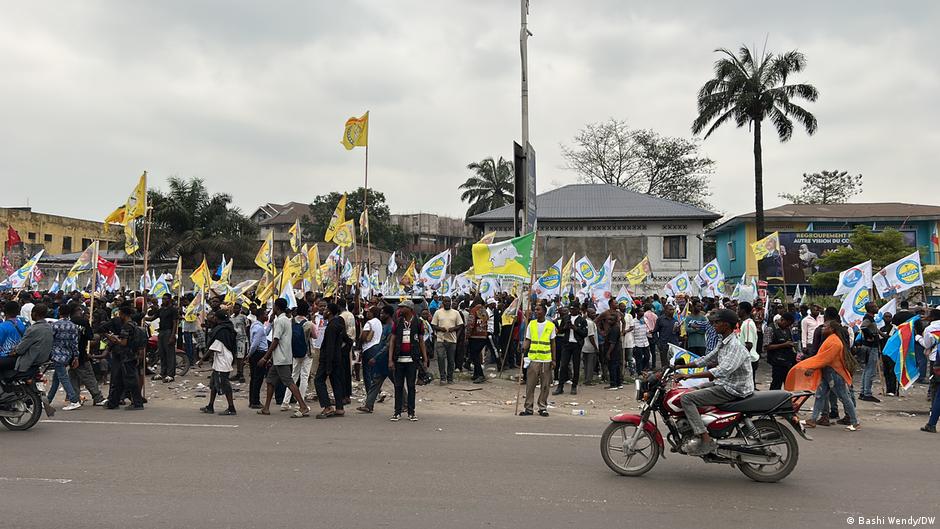
The Constitutional Court’s validation of the law governing referendum organization has sharply divided opinion in the Democratic Republic of the Congo. While government officials view this as a necessary legal step, opposition groups condemn it as a dangerous precedent that could enable constitutional changes they strongly oppose.
The coalition Article 64, a leading opposition alliance, has vowed to continue mobilizing citizens against the proposed changes. Prince Epenge, a prominent spokesperson for the coalition, declared, “We won’t back down. We’ll unite all our strength and energy to ensure this law never takes effect in our country.”
Epenge emphasized the public’s growing frustration, urging citizens to “stand firm, remain mobilized, and resolutely reject any attempt at a third term or national fragmentation.”
Public anxiety in Kinshasa
As coalition leaders gathered in Kinshasa to strategize their next moves, residents expressed deep concerns about the potential escalation of political tensions. Many fear that upcoming protests could disrupt daily life and escalate into violent confrontations.
One resident questioned, “Will their protests remain peaceful?” stressing the importance of avoiding “loss of life.”
Another resident shared similar worries, stating, “I’m afraid the political climate in the DRC could deteriorate further after this decision.”
Some citizens also accused authorities of attempting to destabilize opposition movements. “Those sowing chaos right now are the ones in power,” remarked one resident. “They frequently deploy individuals to disrupt opposition marches.”
A third resident highlighted the vulnerability of ordinary citizens, “Our greatest fear is for the people. They’re the ones who will suffer if protests turn violent.”
Dialogue under threat
Timo Roujean, an analyst with the Konrad Adenauer Foundation, warned that the swift enactment of this law could severely damage political dialogue efforts. He cautioned that if President Félix Tshisekedi signs the law before August 15, it could nullify ongoing dialogue initiatives and empower factions advocating for armed resistance.
“If the law is enacted before mid-August, the prospects for dialogue may vanish completely,” Roujean asserted. He added that in an already tense environment where terms like “constitutional coup” are circulating, the Constitutional Court’s decision could embolden those who believe armed opposition is the only viable response to government actions.
The Court’s decision has not resolved the crisis but instead intensified the standoff between the presidential camp, now armed with a legal framework, and an opposition determined to block constitutional reforms. The coming weeks will be critical in determining whether the political crisis in the DRC deepens or finds a path toward resolution.