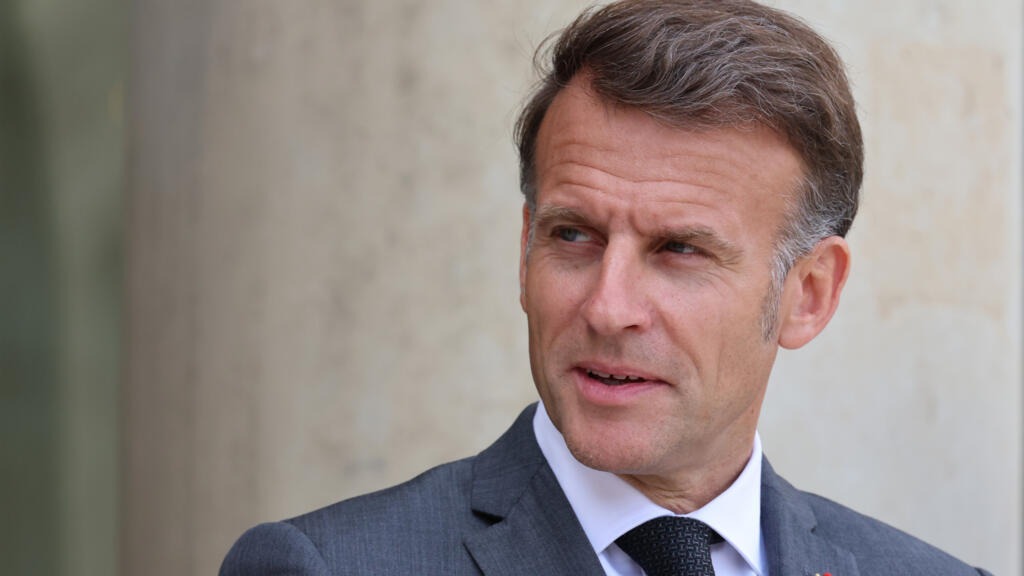

The dust had barely settled from another night of urban unrest—marked by looting, violent clashes, and hastily erected barricades across major French cities—when President Emmanuel Macron made a decisive move that sent ripples through the corridors of power. Despite widespread acknowledgment of critical failures in law enforcement’s response, the embattled Interior Minister Laurent Nuñez’s resignation was swiftly rejected, leaving many to wonder: what strategic forces are at play behind this unexpected refusal?
Why Emmanuel Macron chose to retain Laurent Nuñez amid a storm of criticism
The government’s abrupt decision to block Nuñez’s resignation reflects more than just a political calculation. Sources within the Élysée Palace indicate that Macron’s refusal was rooted in a perceived need to preserve institutional stability at a time when France’s security apparatus is under unprecedented strain. By rejecting Nuñez’s departure, the president sent a clear message: the crisis demands unbroken leadership, not a leadership vacuum.
Analysts suggest this move was also a test of loyalty under pressure. Nuñez, who had tendered his resignation after Saturday’s violent escalation, now faces a stern mandate: overhaul France’s policing strategies or risk further erosion of public trust.
New policing tactics: a shift from reaction to preemptive action
Macron’s insistence on immediate reform signals a fundamental rethinking of how law enforcement handles civil disturbances. The government is pushing for a radical departure from the status quo, with Nuñez tasked with implementing sweeping changes in operational doctrine. Key priorities include:
- Real-time intelligence-driven deployment: Police units are now expected to move swiftly based on predictive analytics rather than waiting for disturbances to escalate.
- Immediate dismantling of barricades: The new directive mandates that any attempt to block streets or public infrastructure be met with rapid intervention to prevent large-scale gatherings.
- Proactive protection of commercial hubs: Law enforcement is under orders to shield businesses and public facilities from targeted attacks, deploying specialized units where necessary.
The president’s urgency underscores a broader anxiety: the current approach is no longer tenable in an era of accelerating social unrest.
The intelligence failures that exposed France’s vulnerabilities
Behind the scenes, closed-door briefings have revealed glaring gaps in France’s preemptive security measures. Macron has demanded a forensic review of the intelligence failures that allowed Saturday’s unrest to spiral out of control. The focus is twofold: first, identifying why early warnings were ignored or mishandled; second, ensuring that future threats are neutralized before they erupt into violent confrontations.
Critics argue that the crisis has exposed systemic rot within the security apparatus—not just in reactionary measures but in the intelligence networks meant to anticipate and prevent such events. Nuñez now faces the dual challenge of restoring credibility while implementing structural reforms that address these deep-rooted deficiencies.
Transparency vs. secrecy: the balancing act of crisis management
Public pressure for accountability has mounted, with calls for full disclosure of what went wrong. The government has signaled a commitment to transparency, though the scope and depth of any forthcoming reports remain unclear. What is certain is that Nuñez’s leadership will be judged not only on his ability to quell the current unrest but on his willingness to expose and rectify the systemic weaknesses that enabled it.
What’s next for France’s embattled security strategy?
The coming weeks will be pivotal. Macron’s gamble on retaining Nuñez hinges on whether the Interior Minister can deliver tangible results—or whether the political fallout from continued unrest will force a reshuffle despite today’s decision. For now, the message from the Élysée is unambiguous: France’s security crisis is far from over, and the government is prepared to take drastic measures to regain control.