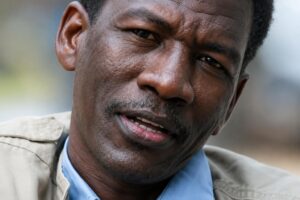

BAMAKO / ANEFIF — Beneath the veneer of strength and sovereignty projected by Mali’s ruling junta, the ground reality tells a far grimmer story. As Bamako’s rhetoric of control clashes with the escalating insurgency in the North, the country is sliding into an unprecedented political and military deadlock. This stark assessment comes from Issouf Ag MAHA, a renowned Nigerien writer now living in exile, who has dissected the nation’s crisis with unflinching clarity.
The junta’s grip on power and the collapse of peace efforts
Since seizing power in August 2020, the military leadership had pledged to restore territorial integrity and curb insecurity. Yet, six years later, the outcome is nothing short of catastrophic. By unilaterally abandoning the 2015 Algiers Peace Accords in January 2024, the transitional authorities closed the last remaining channel for political dialogue with northern rebel factions, effectively reigniting armed confrontation.
In a blunt critique, Issouf Ag MAHA labels this as a symptom of the junta’s « addiction to power. » Far from prioritizing a lasting resolution, the regime in Bamako appears consumed by short-term political survival. Democratic freedoms have been systematically crushed: the press is silenced, public dissent is met with repression, and opposition voices are systematically stifled. As the capital entrenches itself behind barricades, its influence evaporates across the hinterlands.
Anefif and Kidal: where military propaganda meets battlefield losses
On July 4, 2026, fierce fighting erupted around Anefif, a key outpost in northeastern Mali. Government forces, bolstered by Russian mercenaries, found themselves trapped under heavy rebel fire. A convoy dispatched from Gao was ambushed, forcing Malian troops to retreat after heavy casualties. These clashes are not isolated incidents but part of a broader pattern.
Following a humiliating defeat at Tinzawatène and the recapture of Kidal by the Azawad Liberation Front (FLA), the balance of power has shifted dramatically. Despite Bamako’s claims of full control, military stability remains dangerously fragile. Ag MAHA points out a telling gesture: after their military successes, the FLA voluntarily allowed retreating Malian and Russian troops to withdraw safely—a deliberate move to contrast their disciplined conduct with the junta’s brutal tactics and uphold the laws of war.
Africa Corps: terror tactics and civilian suffering in northern Mali
The junta’s pivot toward Moscow, symbolized by the deployment of Africa Corps (the former Wagner Group), has come at a horrific human cost. While this alliance frees Bamako from Western democratic constraints, it has unleashed a wave of violence against local populations.
Ag MAHA’s humanitarian assessment is devastating. Civilians in northern Mali endure what he describes as a « systematic ordeal. » Reports of atrocities have surged:
- Arbitrary arrests and enforced disappearances.
- Summary executions targeting unarmed civilians.
- A deliberate strategy of terror aimed at destabilizing communities.
The Malian government continues to deny these allegations, deepening its denial into a dangerous gamble for national cohesion.
The world looks away as Mali reaches a breaking point
The unfolding tragedy in Mali unfolds against a backdrop of global distraction. Ag MAHA condemns the « deafening silence » from international actors, regional bodies, and the global media. He questions whether the world is waiting for a purely military outcome—or if Mali has simply lost its once-urgent appeal on the international stage.
For the analyst, the nation is hurtling toward a point of no return. By prioritizing the illusion of total military victory over the republican principles of justice, equality, and diversity, the junta risks overseeing not a rebirth of Mali—but its definitive implosion.