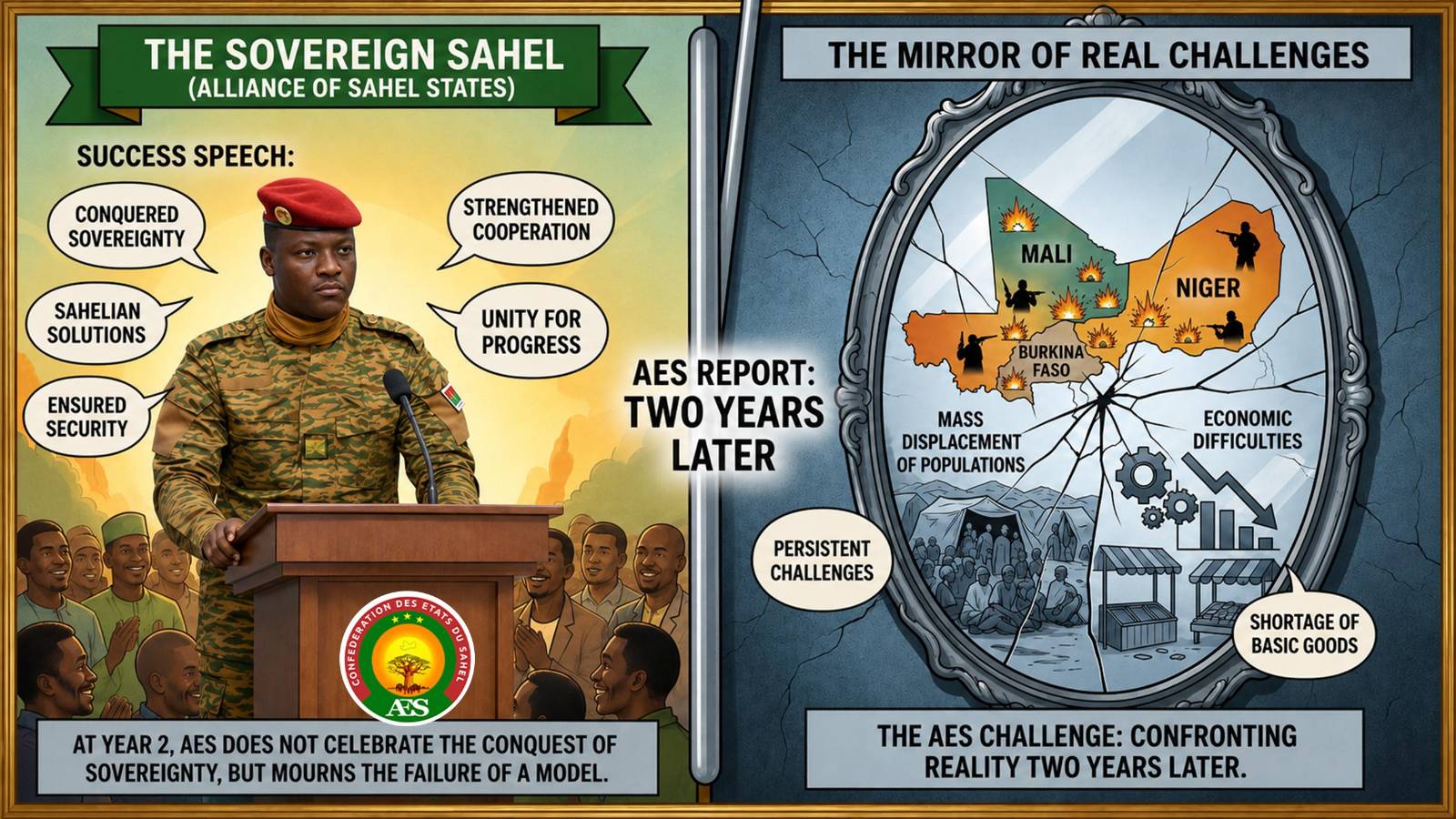

The Alliance of Sahel States (AES), comprising Burkina Faso, Mali, and Niger, marks its second anniversary amid a climate of political optimism and growing skepticism. While its leaders frame the confederation as a triumph of sovereignty, unity, and regional cooperation, tangible outcomes remain elusive for many citizens.
The discourse on sovereignty has emerged as the cornerstone of the AES’s political narrative. However, true sovereignty extends beyond diplomatic defiance or shifting international alliances—it is measured by a state’s ability to safeguard its people, uphold institutions, sustain economic growth, and provide opportunities for its youth.
Yet, despite frequent military announcements, armed groups continue to operate across vast areas of the three nations. Civilians face persistent threats of violence, while humanitarian crises and mass displacements show no signs of abating. On the economic front, the promised benefits of regional integration have yet to materialize. Trade flows remain sluggish, fiscal constraints persist, and household purchasing power continues to decline. For many observers, the AES’s anticipated dividends remain largely theoretical.
The emphasis on political independence, while rhetorically compelling, does little to address the immediate needs of the population. Citizens evaluate governance not by declarations of sovereignty but by tangible improvements in security, healthcare, education, employment, and infrastructure. These are the benchmarks by which the AES will ultimately be judged.
Moreover, the singular focus on sovereignty risks overshadowing critical governance concerns: transparency, accountability, and institutional efficacy. A regional union cannot earn public trust without robust administrative systems, effective public policies, and responsible resource management. Without these pillars, even the most ambitious political projects risk losing their relevance.
Two years into its existence, the AES undeniably represents a significant shift in West Africa’s political landscape. Yet its legacy will hinge not on speeches or symbolic gestures, but on its capacity to deliver measurable improvements in the daily lives of those it claims to serve. The people of Burkina Faso, Mali, and Niger are not waiting for rhetoric—they demand results.



