
Mali is currently navigating one of the most critical periods in its recent history. General Assimi Goïta, who first seized power in 2020 and consolidated it through a second coup in 2021, had vowed to restore national security and sovereignty. Six years later, his administration appears more vulnerable than ever.
An offensive exposes the regime’s vulnerabilities
The limits of populism and misplaced pride are now starkly evident. In Mali, the harsh realities on the ground have confronted a regime seemingly entrenched in its own certainties. On April 25, coordinated assaults by the Group for the Support of Islam and Muslims (JNIM), an Al-Qaïda affiliate, and the Azawad Liberation Front (FLA) targeted numerous military positions, including areas surrounding Bamako. Tragically, Defence Minister Sadio Camara was killed during these operations. Further north, Kidal and other strategically vital localities have fallen out of the Malian army’s control. This recent offensive has brutally exposed the weaknesses of a government that had made territorial reconquest its primary claim to legitimacy. Our on the ground Sahel reporting confirms the severity of these setbacks.
Sovereignty invoked, insecurity aggravated
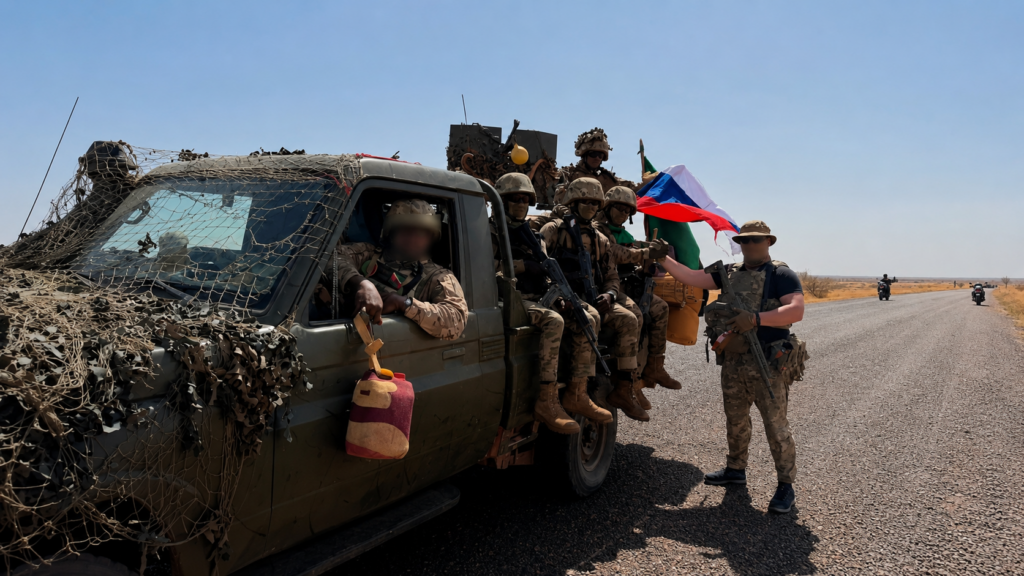
By severing ties with France, facilitating the departure of MINUSMA, and enlisting the services of Africa Corps mercenaries, the junta had promised a Mali finally master of its own destiny. Yet, the outcome has been cruelly different: jihadist armed factions and Tuareg rebels from the Azawad Liberation Front are steadily expanding their reach, Bamako operates under constant tension, and the civilian population endures immense suffering. The rhetoric of national sovereignty has merely served as a smokescreen for an authoritarian concentration of power. Political parties have been silenced, journalists intimidated, and any form of criticism is swiftly branded as treason. This is a critical aspect of Sahel current affairs.
A regime besieged from within and without
Mali now finds itself caught in a tightening vice. Its military and political capacities have reached their breaking point. Externally, jihadist forces continue to demonstrate an undiminished capacity for inflicting damage. Internally, the prolonged tenure of the current leadership and underlying military rivalries fuel widespread uncertainty. The promise of national salvation has unfortunately transformed into a profound impasse. General Goïta, who aspired to embody the restoration of the state and Malian pride, now risks being remembered as the leader who presided over its fragmentation. This urgent Sahel news English report underscores the gravity of the situation.