Mali’s fragile sovereignty exposed by private hostage release deal
Exiled Opponent’s Role in Hostage Release Highlights State’s Struggles
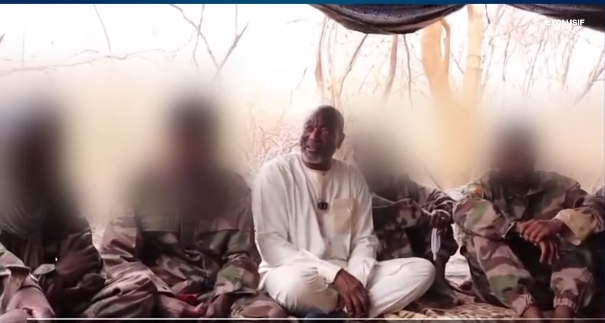
A single photograph sent shockwaves through Mali’s political landscape. It captured opposition leader Oumar Mariko, living in exile, standing alongside fighters from the Group for the Support of Islam and Muslims (JNIM)—Al-Qaeda’s Sahel affiliate—beside 17 recently freed hostages. While the rescue of these individuals brings relief, the circumstances surrounding their liberation expose a troubling gap in the Malian government’s authority.
The Absence of State Power
The fact that Mariko, a political figure out of favor with Bamako’s transitional authorities, could negotiate and secure the release of captives where national security forces have repeatedly failed raises critical questions. How does a civilian actor, officially sidelined, operate with such freedom in regions where the state’s presence is either absent or ineffective?
Observers argue that this incident reveals a deeper erosion of sovereignty. In vast swathes of Mali, the ability to move, negotiate, and resolve conflicts has shifted from official institutions to informal intermediaries. The state’s inability to assert control underscores a growing vacuum, one increasingly filled by non-state actors rather than republican institutions.
The JNIM’s Calculated Public Relations Move
For the JNIM, the hostage release was far from a humanitarian gesture. It was a calculated propaganda operation designed to serve two key purposes:
- Image Rehabilitation: By participating in a mediated release, filmed and publicized, the group seeks to present itself as a pragmatic, even rational, negotiating party—contrasting sharply with Bamako’s struggling government.
- Authority Substitution: The JNIM’s involvement in local governance, including justice and protection, positions it as the de facto power in many communities. This further undermines the legitimacy of Malian officials, who appear increasingly irrelevant.
As one analyst noted, “Sovereignty is not declared in speeches from Bamako; it is proven through the state’s ability to protect its people without relying on intermediaries.”
The Hidden Costs of Shadow Diplomacy
Behind the emotional relief of reunited families lies a darker reality. Informal negotiations come with severe long-term consequences:
- Funding Terror: Ransom payments, though unofficial, provide financial resources that fuel future attacks against Malian security forces.
- Legitimizing Insurgents: Seeking favors from a terrorist commander tacitly acknowledges their control over territory, strengthening their influence among rural populations.
Two Faces of Modern Mali
The nation today is fractured between two realities:
- The Institutional Mali: In Bamako, the government maintains a narrative of military progress and territorial reassertion.
- The Rural Mali: In remote areas, civilians face a harsh choice—collaborate with armed groups or risk survival without state protection.
A Turning Point for State Restoration
The release of hostages through a private mediator is more than a humanitarian footnote; it is a warning sign. When opposition figures and insurgent networks handle national security matters, the risk of permanent fragmentation grows. The challenge for Bamako is no longer just military—it is fundamentally political. Restoring state authority will require more than troop movements; it demands reclaiming legitimacy in regions where power is currently decided at gunpoint.