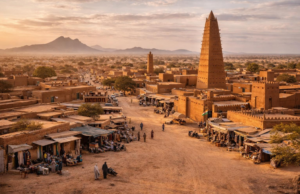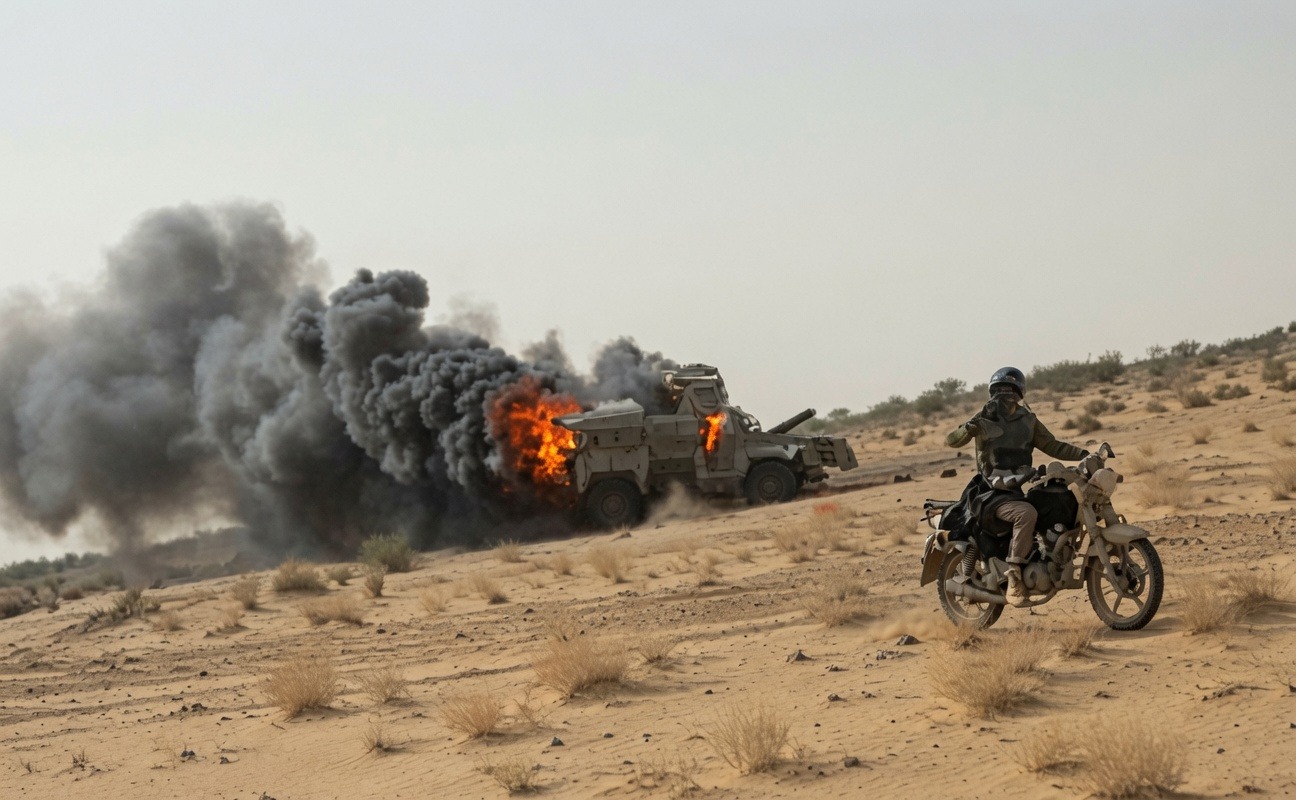

On July 18, a military convoy comprising Malian Armed Forces troops and Russian Africa Corps mercenaries fell victim to a devastating ambush near Tabrichat, a strategic crossroads in northern Mali. The attack, one of the deadliest in fifteen years, left over 50 soldiers dead and dozens more missing or captured, exposing critical weaknesses in regional security operations.
The ambush at Tabrichat: a meticulously executed trap
Following intense weeks of fighting to secure the Anéfis military base, forces were regrouping near Gao. The convoy, stretching several kilometers, divided into two sections: a vanguard of Africa Corps mercenaries and a rear guard of Malian troops. The ambush struck at Tabrichat, a critical junction linking Gao, Bourem, and Kidal, where rough terrain and the convoy’s stretched formation created ideal conditions for an attack.
The assault, launched by a coalition of JNIM and FLA fighters, focused relentless firepower on the Malian rear section, leaving them isolated and overwhelmed.
A grim human toll and documented war crimes
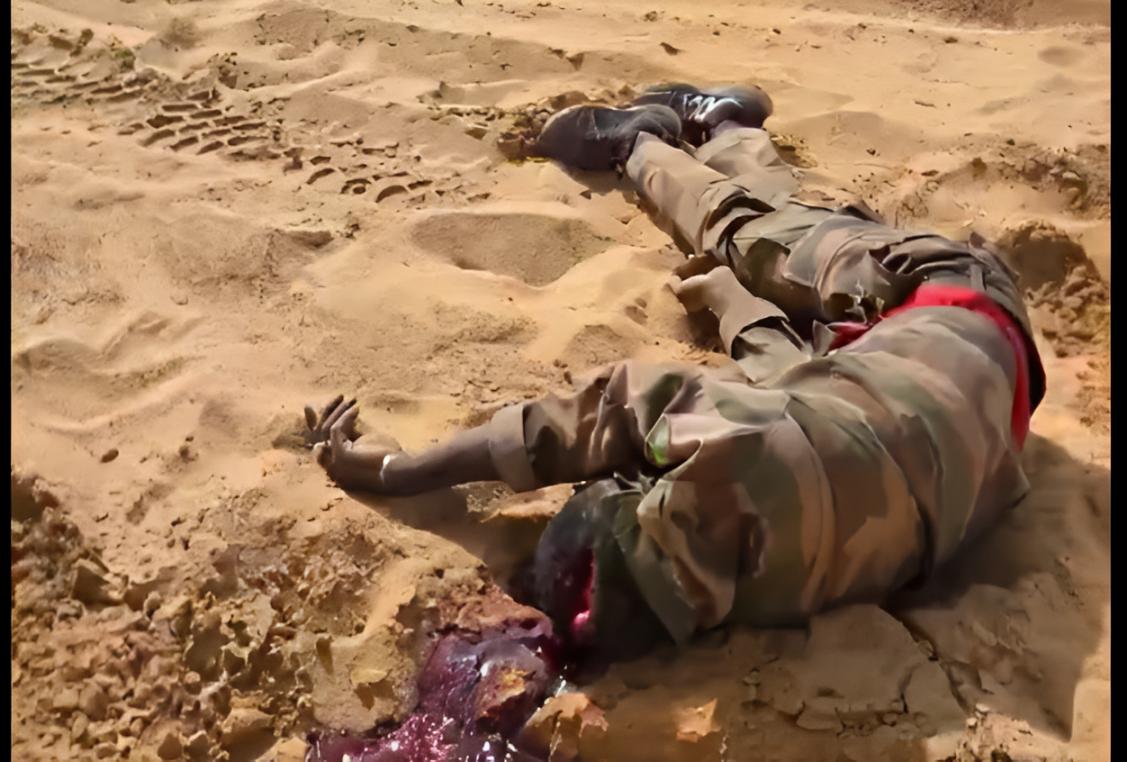
The battle’s aftermath revealed a horrific reality: at least 50 Malian soldiers were killed, with dozens more unaccounted for or taken prisoner—a staggering setback for the Malian army in over a decade. The situation worsened when captured soldiers, disarmed and defenseless, were executed in cold blood by the insurgent coalition, violating fundamental wartime conventions.
Graphic footage of these executions circulated rapidly, first through channels linked to the Africa Corps, sparking outrage across Mali. The images amplified public anger, casting doubt on the effectiveness and ethics of allied operations in the region.
The rising influence of the Ag Ghali dynasty
Visual evidence from the ambush revealed the presence of Hamza Ag Ghali, son of the JNIM’s long-standing leader, Iyad Ag Ghali. His involvement underscores the insurgent coalition’s high-level strategic planning and generational continuity in command. The alliance between JNIM and FLA factions, reinforced by this operation, demonstrates a renewed tactical cohesion and mobility that contradicts recent assumptions about their weakened capabilities.
The Africa Corps’ controversial retreat
At the heart of the controversy lies the Africa Corps’ decision to continue advancing toward Gao without assisting their Malian allies. Positioned at the front of the convoy, the mercenaries avoided direct losses, but their failure to respond to the unfolding massacre raised serious questions:
- Coordination breakdown: How could two sections of the same convoy operate without mutual support protocols?
- Strategic abandonment: Did the withdrawal stem from a directive to prioritize mercenary survival or an operational inability to counter the ambush?
This reluctance—or inability—to intervene challenges the credibility of foreign military support in Mali’s volatile northern regions.
Public outrage and the future of Mali’s security strategy
From Bamako to the northern cities, Malians have reacted with outrage. While the nation mourns its fallen soldiers, anger grows toward the Africa Corps’ conduct. Calls for accountability are intensifying, demanding answers from military and government leaders about convoy security and allied coordination.
This tragedy has exposed the fragility of northern Mali’s supply routes and the urgent need to reassess the country’s security framework. With the JNIM-FLA coalition displaying renewed resilience and aggression, the Tabrichat ambush may force authorities to overhaul their strategic partnerships and operational tactics.