
The quiet that has settled over Niamey’s streets could be deceptive.
The battle may be over, but the political war is only just beginning.
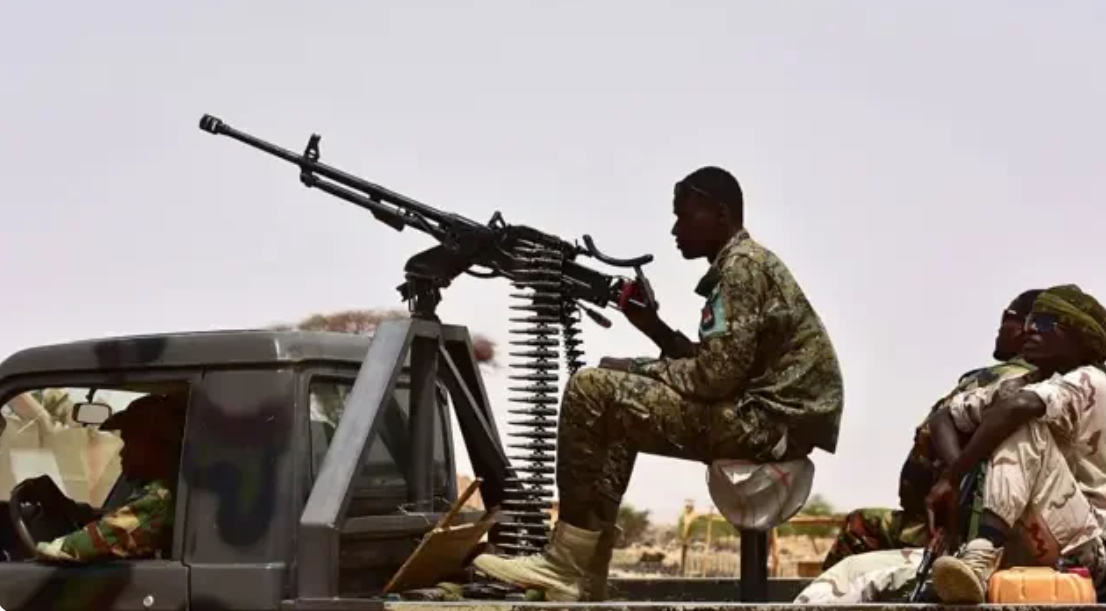
In the night of 28 to 29 August, Nigerien soldiers attempted to topple General Abdourahamane Tiani’s regime. The attack, launched mainly by troops from units deployed on the country’s various fronts, targeted strategic installations in the capital, including Air Base 101 and areas close to the presidential palace.
For several hours, the government teetered.
To save it, Tiani had to call on his Russian allies.
Members of the Africa Corps, successors to the Wagner Group in Africa, intervened alongside loyalist Nigerien forces. They took part in retaking the air base and neutralising the mutinous soldiers. Reports indicate that the Nigerien army regained control of the base with the support of the Russian paramilitary forces.
This is the major political fact of this crisis: Nigerien soldiers were fought on Nigerien soil with direct support from Russian forces brought in to protect a regime born of the 2023 coup.
The junta had made national sovereignty its main argument for expelling French and American forces.
Sovereignty with double standards
For years, Tiani and his supporters told Nigeriens that the French military presence was a humiliation and an affront to national sovereignty.
The French soldiers left.
The Americans were asked to depart.
Western military agreements were torn up.
The regime’s propaganda could then claim that Niger had finally regained its full independence.
But an awkward question now arises: what was the point of driving out the French military if, a few years later, the government must summon Russian troops to save the presidential chair?
The question is all the more explosive because the Russians did not intervene to defend Nigerien territory against jihadist groups. They intervened to help the government repel Nigerien soldiers who threatened the regime.
The symbolism is devastating.
Nigerien soldiers have been dying for years in the Sahel’s war zones. They fight the Islamic State and JNIM, suffer heavy losses, and regularly denounce their fighting conditions. The Niamey mutiny appears to have been fuelled precisely by this frustration accumulated in units that face jihadist violence daily.
And when those same soldiers eventually turn against the government, it is the Russians who come to fight them.
What sovereignty remains when the national government can no longer ensure its own survival without foreign protection?
The rift between Tiani and his army
The 29 August mutiny is probably the most serious warning sign Tiani has received since taking power.
The problem is not merely that soldiers attempted to overthrow him.
The problem is that they were able to do so while Niger officially possesses a substantial security apparatus.
Above all, the dissent appears to have found fertile ground within the ranks of the regular army itself.
Soldiers deployed on the front lines pay the highest price of war. They watch their comrades fall. They face material difficulties. They see jihadist attacks continue despite the junta’s promises.
Since 2023, Tiani has promised to restore security and give Niger back its dignity.
Three years later, jihadist violence remains a major threat, and Nigerien forces continue to suffer significant losses.
In this context, part of the army seems to be wondering whether the regime has drifted away from those who actually do the fighting on the ground.
The Russian intervention may have turned that frustration into hatred.
A Nigerien soldier can accept dying to defend his country. He can endure hardship and sacrifice in the name of the homeland.
But it will be far harder for him to accept foreigners firing at him to protect a political regime.
Tiani: from Bazoum’s ouster to Moscow’s protégé
The historical irony is dizzying.
In July 2023, Tiani seized power claiming he wanted to save Niger from a political system incapable of ensuring the safety of its citizens.
He toppled Mohamed Bazoum, a democratically elected president, claiming to end the failures of civilian rule.
Today, three years on, his own government needs foreign fighters to withstand a military revolt.
This trajectory is hard to ignore.
Tiani came to power through a coup.
He now clings to power thanks to a security setup whose essential component is Russian.
In other words, the man who claimed to free Niger from foreign tutelage appears to have swapped one dependency for another – Western for Russian.
It is precisely this contradiction that could become the regime’s Achilles’ heel.
What if Bazoum had accepted French help?
We must also look back to July 2023.
When Tiani ousted Mohamed Bazoum, France still had over a thousand soldiers in Niger. Paris supported the elected president and, under certain circumstances, considered an operation to help free him.
Close associates of Bazoum had requested French intervention. According to information reported at the time, an operation was considered, but Bazoum ultimately preferred dialogue and refused direct French military involvement.
That decision now belongs to history.
But a question remains: if Bazoum had accepted French intervention, would Tiani have succeeded in his coup?
No one can rewrite history with certainty.
Yet it is entirely legitimate to note that Tiani benefited from that hesitation. The elected president remained a prisoner in the presidential palace while the junta gradually consolidated its grip on the state apparatus.
The most ironic twist is that today, the man who denounced the French presence in Niger is calling on a foreign power to save his own government.
Algeria steps into the fray
As if the Russian presence were not enough, Algeria has just taken a new step.
After the attempt to oust Tiani, Algiers deployed military assets to Niamey, including combat and transport aircraft. This marks a significant shift in Algerian doctrine, which has long been marked by reluctance to commit forces beyond its borders.
Algeria ultimately did not have to fight the mutineers – they had already been pushed back with Russian help.
But the message was clear.
Tiani would no longer stand alone.
Moscow provides military protection for the regime. Algiers now offers strategic support. And the junta can present this encirclement as proof that Niger has gained new allies.
Yet behind this show of force lies a troubling question: how many foreign powers will be needed to protect a government that seems to be gradually losing the support of part of its own army?
The volcano beneath the barracks
The 29 August mutiny may therefore not be an isolated incident.
It could be the first symptom of a much deeper rupture.
Russian weapons allowed Tiani to win a battle.
They did not resolve the frustrations of Nigerien soldiers.
They did not destroy the jihadist groups.
They did not bring back the soldiers killed at the front.
They did not reconcile the troops with the government.
They merely allowed the regime to survive a first overthrow attempt.
And that is precisely where the danger lies for Tiani.
A regime can control a palace with the help of foreign forces. It can retake a military base. It can arrest mutineers.
But it cannot indefinitely govern against an army that is beginning to view its own government as dependent on a foreign power.
General Tiani should therefore look beyond the walls of his palace.
The real threat to his regime may lie neither in Paris, nor Washington, nor even in the Western capitals he regularly accuses of plotting against him.
It could be found in Nigerien barracks.
And if the soldiers who watched their comrades fall to foreign bullets ever decide to settle scores with those they blame for handing their country to Moscow, the next mutiny could prove far harder to contain.
The Russians can protect Tiani.
Algeria can offer support.
But no foreign power can forever replace the loyalty of a national army.
Tiani’s regime may have won the battle of 29 August, but it may have lost something far more precious: the trust of some of those who wear the Nigerien uniform.