
press freedom under siege in Mali as journalists face arrests and censorship
the suspension of a popular call-in radio show and the arrests of journalists Chahana Takiou and Abderhmane Keïta in June underscore the escalating repression facing media professionals in Mali. Over nearly six years under the transitional government led by Assimi Goïta, press freedom has dramatically deteriorated, with the justice system increasingly weaponized against independent journalism. Reporters Without Borders (RSF) warns of the growing threats to information access in Mali, already weakened by insecurity and calls for immediate action to halt these repressive measures.
June has been a particularly tough month for journalists in Mali. Since June 19, listeners can no longer call in to “Allo Klédu”, a popular free-air radio program broadcast on the private station Klédu. The High Authority for Communication (HAC) ordered its suspension for two months, claiming that “several interventions violated broadcasting regulations.” A clearly disproportionate and unjustified decision that stifles public debate.
On the heels of the Pan-African Media Forum, held in Bamako from June 3 to 6 to promote press freedom across Africa, the publisher of the newspaper 22 Septembre, Chahana Takiou, and the director of Le Témoin, Abderhmane Keïta, were arrested. Their detention brings the total number of imprisoned journalists in Mali to three, all charged under the controversial cybercrime law. Takiou faces accusations of “undermining state credibility through judicial institutions,” while Keïta is charged with “regionalist incitement to harm national unity and state credibility.” These arrests highlight the increasingly hostile environment for journalists in Mali, where press freedom has plummeted by 22 places in the RSF World Press Freedom Index over five years, dropping from 99th to 121st.
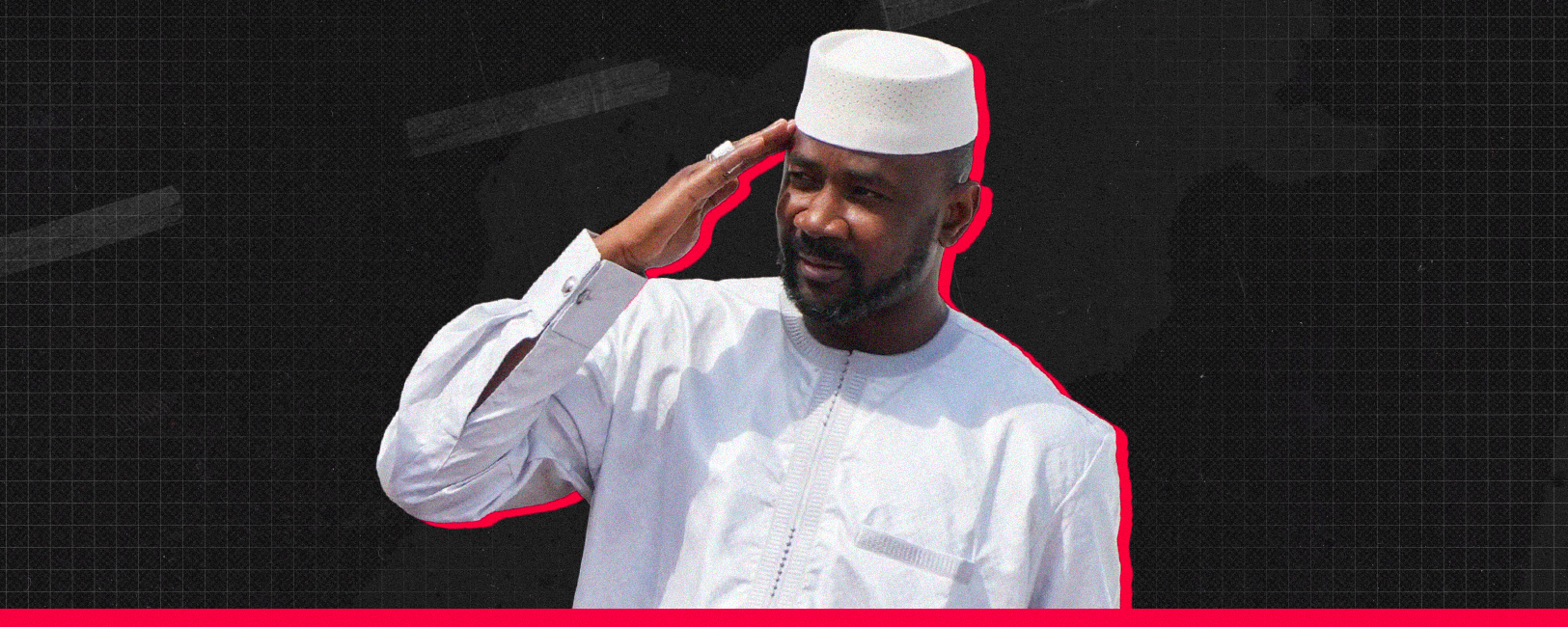
“Before General Goïta’s coup, Mali boasted one of West Africa’s strongest media landscapes. Yet for nearly six years, press freedom has been systematically eroded—security threats, legal harassment, financial strangulation, and systemic censorship. International outlets have been banned, local media silenced or forced to toe the official line, journalists jailed, and cybercrime laws misused. RSF urges General Goïta to end this crackdown on media professionals and release Youssouf Sissoko, Chahana Takiou, and Abderhmane Keïta immediately.”
Press freedom advocates have sharply criticized the detentions. The House of the Press issued a statement condemning the justice system’s failure to foster a peaceful dialogue, despite past efforts to improve relations between media and authorities.
Over the past five years, journalists in Mali have faced mounting pressure from both the government and armed groups. Authorities have intensified efforts to enforce “patriotic reporting,” using repressive legislation and a compliant media regulator—the HAC—to suppress dissent. The cybercrime law, frequently weaponized against journalists, has become a key tool of control.
journalists silenced under the cybercrime law
Chahana Takiou and Abderhmane Keïta—whose trials are scheduled for July 27 and August 17, respectively—are not the first victims of the cybercrime law. Earlier this year, publisher Youssouf Sissoko of L’Alternance was sentenced to two years in prison and fined one million CFA francs (€1,525) for publishing an opinion piece critical of Niger’s transitional leader, General Abdourahamane Tiani. The law was also used to detain Boubacar Traoré, publisher of L’Empire, in November 2025 over a defamation complaint related to a land dispute article.
International media have also been targeted. In March 2022, the Malian government suspended Radio France Internationale (RFI) and France 24 nationwide, marking the start of an aggressive campaign against foreign outlets. Since then, four French media outlets—TV5 Monde, France 2, TF1, and LCI—have faced suspensions.
The crackdown has since expanded to local media. The suspension of “Allo Klédu” is the latest in a series of closures. In 2025, community radio stations Aadar Koïma (Gao), Aadar Koukia (Ansongo), and Radio Kayira (Kolondiéba) were suspended for three months for criticizing military conduct or airing dissenting views. Earlier, Joliba TV News was suspended twice: first in 2022 for a critical editorial, and again in 2024 after a complaint from Burkina Faso’s media regulator. The second suspension reflected a troubling alignment with narratives promoted by the Alliance of Sahel States (AES), which includes Mali, Niger, and Burkina Faso. Despite financial hardship, Joliba TV News resumed broadcasting on June 30, 2025.
The climate of fear has fueled widespread self-censorship. A 2023 RSF report, “In the Skin of a Journalist in the Sahel,” documented how journalists avoid reporting on sensitive topics. The April 25, 2026 attacks illustrate this trend: while international outlets confirmed the assassination of Defense Minister Sadio Camara, many local media delayed coverage, waiting for military confirmation to avoid retaliation.
economic stranglehold on independent media
Financial pressures compound the crisis. Public subsidies to the press, introduced in 1996 to support private media and capped at 200 million CFA francs (€300,000) annually, have been withheld since January 2021. The loss of this funding, combined with the departure of NGOs and international organizations—key advertising partners—has crippled independent outlets.
escalating violence against journalists in Mali
Since 2021, armed groups have kidnapped or killed multiple journalists. In April 2021, French journalist Olivier Dubois, kidnapped in Gao and held by the Group for Support of Islam and Muslims (GSIM), was released in March 2023 after intense international pressure. In 2020–2021, community radio journalists Hamadoun Nialibouly and Moussa M’Bana Dicko were abducted in central Mali, with no official claims or resolutions. In 2023, Abdoul Aziz Djibrilla of Naata was killed, Harouna Attino of Alafia was injured, and Saleck Ag Jiddou and Moustapha Koné of Radio Coton Ansongo were kidnapped—all in a single attack by unidentified armed men; their whereabouts remain unknown. In October 2025, two staffers from the state broadcaster ORTM, Daouda Koné and cameraman Salif Sangaré, were abducted between Sévaré and Konna and later released in December.

Related Posts