
Senegal’s primature reshaped: new directions under prime minister al aminou lô
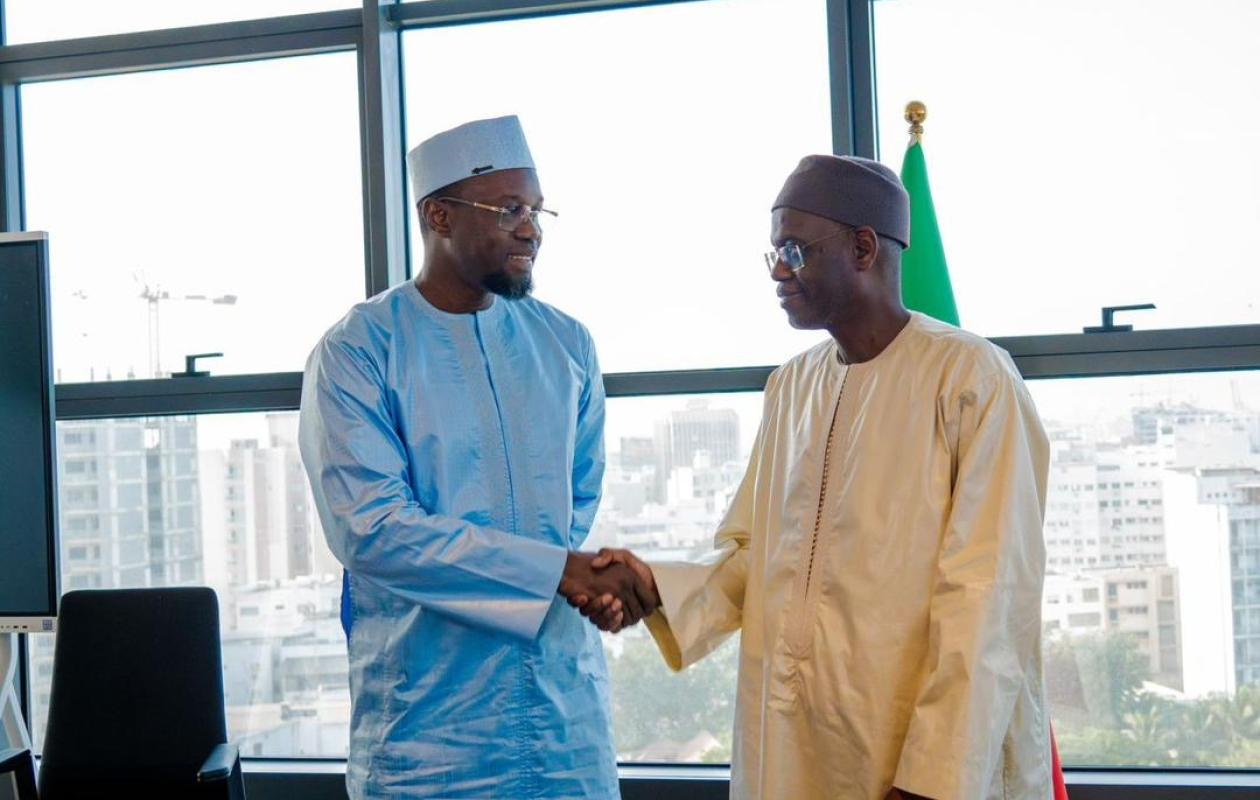
The Senegalese Primature has undergone a significant organizational transformation following a leadership change in May 2026. Ousmane Sonko, who held the position of Prime Minister since November 2025, has been succeeded by Al Aminou Lô, initiating a comprehensive redistribution of various state structures.
These adjustments are mandated by decree n°2025-1431, which outlines the allocation of state services and the oversight of public establishments, national companies, and public-private enterprises among the Presidency, the Primature, and various ministries.
The reforms initiated under Ousmane Sonko
During his tenure at the Primature, Ousmane Sonko actively strengthened the internal organization of departments under his direct authority.
Specifically, decree n°2025-1929 of November 27, 2025, established several new bodies designed to support government operations. These included the Unit for Reform Guidance and Monitoring, the Inspectorate of Services, the Committee for Guidance and Monitoring of Asset Valorization and Recycling Initiatives, and the Procurement Commission.
Within the General Secretariat of the Government, additional entities were also created, notably a Unit responsible for preparing Council of Ministers meetings and tracking institutional dossiers, alongside the National Commission for Access to Information.
New affiliations under Al Aminou Lô
With the appointment of Al Aminou Lô, the Primature’s structure has been recalibrated. His cabinet has seen particular reinforcement with the attachment of the Technical Secretariat of the National Committee for Local Content Monitoring, which previously fell under the purview of the Ministry of Petroleum and Mines.
Concurrently, several entities have transitioned out of the Primature’s direct scope to integrate into other ministerial departments.
This includes the Directorate General of National Civic Service and Volunteering, which is now overseen by the Ministry of Youth and Sports.
BIC-Gouv transferred to Ministry of Communication
Another pivotal alteration involves the Bureau of Government Information and Communication (BIC-Gouv), which has been reassigned to the Ministry of Communication and Relations with Institutions.
This agency, formerly led by journalist Mame Gor Ngom, thus departs from the immediate environment of the Primature.
The National Observatory of Places of Deprivation of Liberty also experiences a change in ministerial oversight, now reporting to the Ministry of Justice.
Elimination of Secretary of State spokesperson role
The new governmental configuration also marks the abolition of the position of “Secretary of State to the Prime Minister, responsible for Relations with Institutions and Government Spokesperson.”
Instead, the President of the Republic has opted to entrust these responsibilities to a full Minister of Communication and Relations with Institutions, who also assumes the vital role of government spokesperson.
These extensive reconfigurations underscore a clear intention to streamline administrative responsibilities and delineate missions more precisely between the Primature and the various ministries.
These adjustments are mandated by decree n°2025-1431, which outlines the allocation of state services and the oversight of public establishments, national companies, and public-private enterprises among the Presidency, the Primature, and various ministries.
The reforms initiated under Ousmane Sonko
During his tenure at the Primature, Ousmane Sonko actively strengthened the internal organization of departments under his direct authority.
Specifically, decree n°2025-1929 of November 27, 2025, established several new bodies designed to support government operations. These included the Unit for Reform Guidance and Monitoring, the Inspectorate of Services, the Committee for Guidance and Monitoring of Asset Valorization and Recycling Initiatives, and the Procurement Commission.
Within the General Secretariat of the Government, additional entities were also created, notably a Unit responsible for preparing Council of Ministers meetings and tracking institutional dossiers, alongside the National Commission for Access to Information.
New affiliations under Al Aminou Lô
With the appointment of Al Aminou Lô, the Primature’s structure has been recalibrated. His cabinet has seen particular reinforcement with the attachment of the Technical Secretariat of the National Committee for Local Content Monitoring, which previously fell under the purview of the Ministry of Petroleum and Mines.
Concurrently, several entities have transitioned out of the Primature’s direct scope to integrate into other ministerial departments.
This includes the Directorate General of National Civic Service and Volunteering, which is now overseen by the Ministry of Youth and Sports.
BIC-Gouv transferred to Ministry of Communication
Another pivotal alteration involves the Bureau of Government Information and Communication (BIC-Gouv), which has been reassigned to the Ministry of Communication and Relations with Institutions.
This agency, formerly led by journalist Mame Gor Ngom, thus departs from the immediate environment of the Primature.
The National Observatory of Places of Deprivation of Liberty also experiences a change in ministerial oversight, now reporting to the Ministry of Justice.
Elimination of Secretary of State spokesperson role
The new governmental configuration also marks the abolition of the position of “Secretary of State to the Prime Minister, responsible for Relations with Institutions and Government Spokesperson.”
Instead, the President of the Republic has opted to entrust these responsibilities to a full Minister of Communication and Relations with Institutions, who also assumes the vital role of government spokesperson.
These extensive reconfigurations underscore a clear intention to streamline administrative responsibilities and delineate missions more precisely between the Primature and the various ministries.