
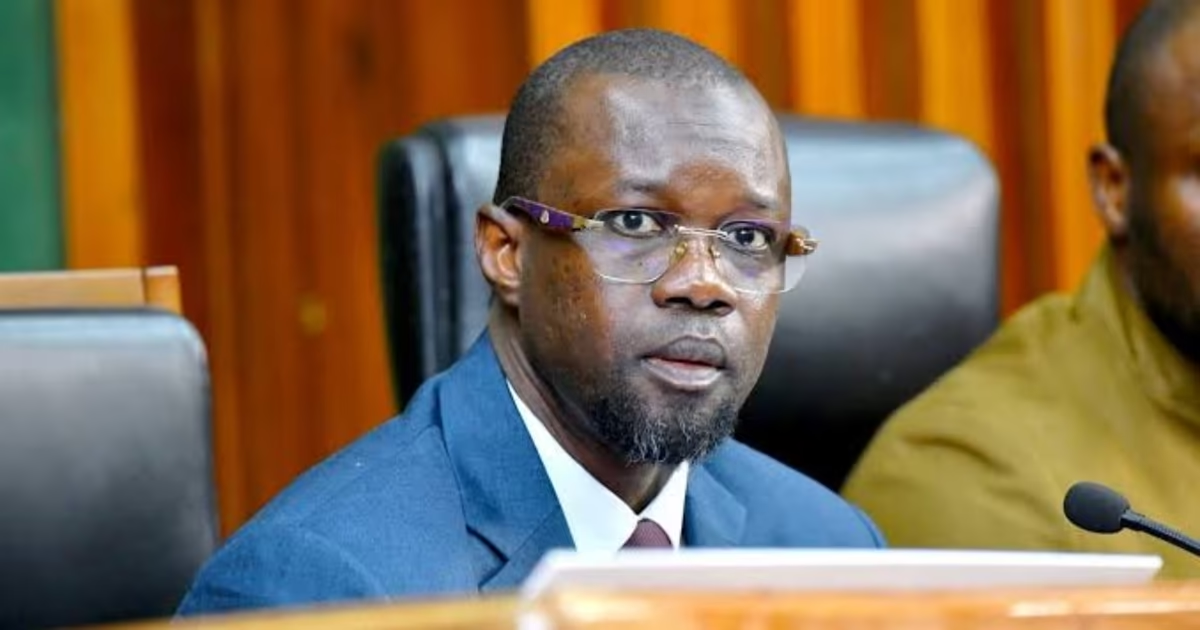
The ongoing verbal sparring between the Pastef party and Kiiraay shows no signs of abating. Without a neutral arbiter to call an end to the dispute, both sides continue to trade barbs, each accusing the other of mismanagement and impropriety.
Dr. Abdourahmane Diouf, Senegal’s Minister of Petroleum and Energy, recently made waves during an appearance on a national television program hosted by Migui Marième Ndiaye. He shed light on the controversial issue of the 1.77 billion CFA francs in political funds that Ousmane Sonko held during his tenure as Prime Minister. But Diouf didn’t stop there—he went further, alleging that after exhausting the allocated funds, Sonko reportedly requested an additional allocation.
The revelation has left a cloud of uncertainty. Was the request granted? More importantly, where did this sensitive information originate? Typically, only two individuals would have access to such details: the President of the Republic and the Minister of Budget. The source of Diouf’s claim remains unclear, leaving many to question its validity and the motives behind its disclosure.
Political funds under scrutiny: a question of transparency
The exchange between Diouf and Sonko’s camp underscores a broader issue plaguing Senegal’s political landscape: the management of public funds. Political funds, often shrouded in secrecy, are meant to support government operations, but their allocation and use are frequently called into question. Diouf’s comments have only intensified the scrutiny, forcing both parties to defend their positions under the public eye.
Unanswered questions linger
While Diouf’s revelation has sparked outrage in some quarters, it has also raised critical questions. Was the additional funding approved? If so, under what circumstances? And why has this information surfaced now? The lack of clarity surrounding these details has only deepened the divide, with both sides digging in their heels and refusing to back down.
As the debate rages on, one thing is certain: the management of political funds in Senegal remains a contentious issue, one that demands greater transparency and accountability to restore public trust.