
The paradox of Kemi Seba: how controversial alliances are undermining his pan-african message
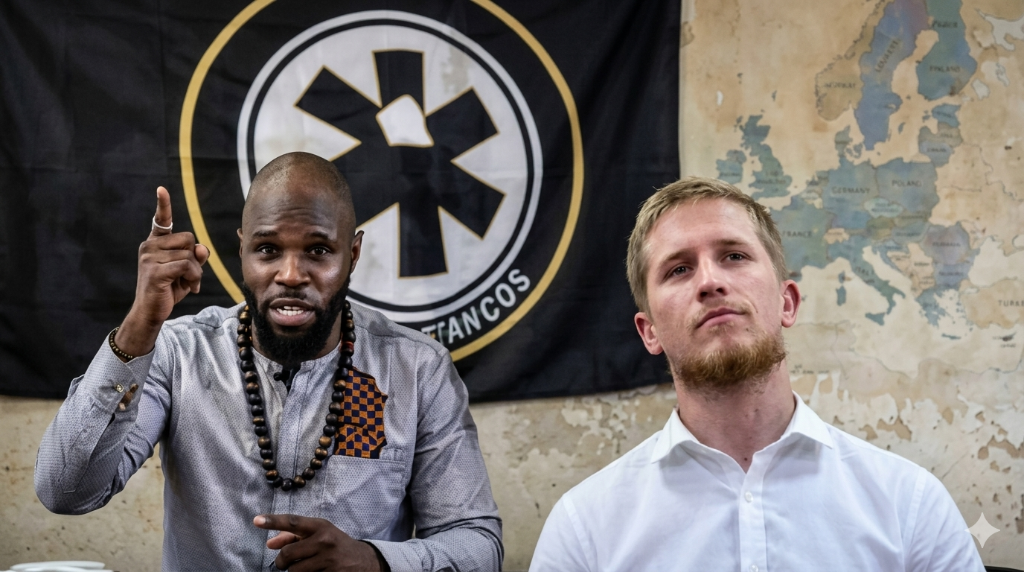
Often styling himself as the “commander” of the Black cause and a champion of African sovereignty against neocolonial forces, Kemi Seba is increasingly entangled in a web of contradictions. His recent detention in South Africa and his surprising ties to radical Afrikaner figures suggest a strategic partnership that threatens to invalidate the core of his activism. Behind the high-energy social media presence and defiant rhetoric lies a series of choices that call into question the integrity of his movement.

Ideological inconsistencies in modern pan-africanism
For years, Stellio Capo Chichi—better known as Kemi Seba—has denounced foreign meddling while advocating for an Africa completely severed from colonial influence. Yet, his public association with figures like Dries van der Merwe, an unapologetic nostalgist for the Apartheid era and a leader in white separatist circles, raises serious questions. How can a quest for total liberation be reconciled with such proximity to those who represent racial segregation?
This alliance, often framed by his supporters as a tactical move where “the enemy of my enemy is my friend,” appears to betray the legacy of anti-colonial movements. By collaborating with those who historically promoted racial hierarchy, Seba isn’t practicing “Realpolitik”; he is undermining the very dignity he claims to uphold. This shift suggests a departure from genuine activism toward a more confusing political strategy.
Financial allegations and the mystery of foreign funding
Legal proceedings in Benin regarding money laundering have cast a shadow over the activist’s financial operations. There is a glaring disparity between his sovereignist rhetoric and the opaque international financial networks currently under investigation by the justice system. The central question now is how a movement that preaches African self-sufficiency can be linked to such questionable international funding mechanisms.
It is particularly ironic that a man who labels the CFA franc a tool of enslavement is now scrutinized for suspicious monetary flows. Should these money laundering charges be proven, it would suggest that the “revolutionary” figure is merely a participant in the global systems he claims to fight, leveraging international channels for personal gain rather than the collective advancement of the continent.
A shift toward political opportunism
The events in South Africa highlight a troubling reality: Seba seems willing to partner with any group capable of disrupting the status quo, regardless of their historical or moral background. His willingness to engage with Afrikaner supremacist factions indicates that his primary goal may be media-driven chaos rather than a genuine quest for justice.
“Pan-Africanism should never serve as a cover for unnatural alliances. True liberation cannot be achieved by shaking hands with former oppressors for the sake of political convenience.”
The unraveling of a public image
Facing arrest warrants and potential extradition, the activist’s reputation for integrity is crumbling. By seeking the backing of racial segregation nostalgists to bolster his own standing, Kemi Seba has crossed a line, turning a noble struggle into a mere ideological business venture. For many observers, he is no longer a credible voice for Africa, but a figure seeking refuge, trapped by his own doctrinal inconsistencies.
Ultimately, history may record that the most formidable opponent Kemi Seba faced was not a foreign power or a colonial currency, but the profound contradictions within his own political alliances.