
Understanding africa corps the russian paramilitary force shaping Sahel’s future
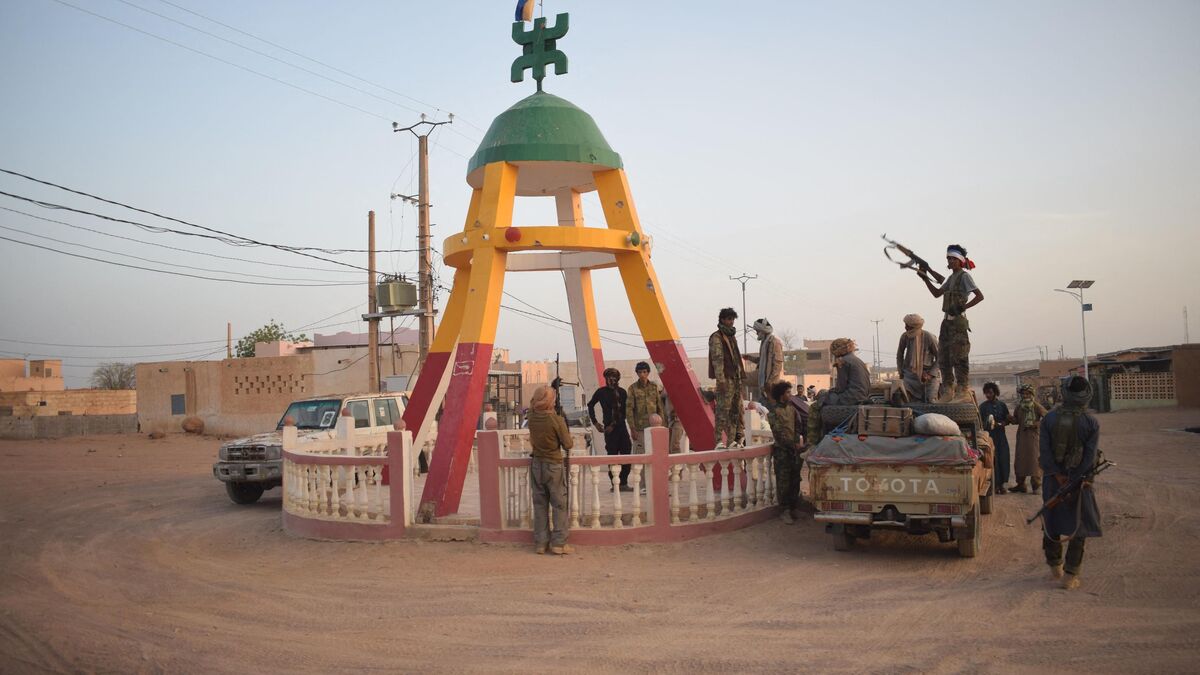
A dramatic shift unfolded in the Mali crisis this past weekend as Tuareg rebels, backed by jihadist factions, launched coordinated assaults on key positions held by the ruling junta. Among the targets was the residence of Sadio Camara, the country’s Defense Minister, who was killed in the attack near Bamako. The offensive marked a turning point in a conflict where geopolitical stakes have intensified, particularly with the withdrawal of Africa Corps, a shadowy Russian paramilitary force that had long held sway over the region.
Kidal falls after years under Russian control
The once-unassailable stronghold of Kidal, a strategic city in eastern Mali, has been retaken by rebel forces. For years, this territory had been firmly under the control of Africa Corps, a paramilitary unit widely regarded as one of Russia’s most covert military extensions abroad. After intense clashes and prolonged negotiations, the group made the unprecedented decision to withdraw its fighters from the city, though its influence across the wider Sahel remains unshaken.
The retreat from Kidal signals a significant, albeit temporary, setback for Moscow’s ambitions in the region. However, the group’s relocation to other areas underlines its enduring role as a critical instrument of Russian foreign policy in Africa.
The rise of Africa Corps: replacing Wagner’s shadow
Africa Corps emerged in late 2023 as a successor to the infamous Wagner Group, which had become synonymous with covert military operations, resource exploitation, and alleged war crimes across the African continent. The transition from Wagner to Africa Corps reflects a strategic pivot by the Kremlin, seeking to rebrand its military footprint while maintaining operational continuity.
The organization’s creation was first publicly hinted at in November 2023 through a Telegram post by the military blogger *Deux Majors*, who cited statements from Igor Korotchenko, a former Russian colonel and Kremlin-aligned military analyst. Korotchenko revealed that Africa Corps operates under the direct supervision of Younous-bek Evkourov, Russia’s Deputy Defense Minister. This centralized command structure contrasts with Wagner’s more decentralized and controversial model, which was frequently associated with Evgueni Prigojine, its late founder.
The death of Prigojine and his close associate Dmitri Outkine in a mysterious plane crash in August 2023 left Wagner in disarray. Their demise, coupled with Prigojine’s brief but dramatic rebellion against the Kremlin, created a leadership vacuum that Africa Corps was designed to fill. Unlike its predecessor, the new force has been positioned as a more disciplined, state-controlled entity, aiming to project Russian influence without the reputational baggage Wagner carried.
A name steeped in historical symbolism
The choice of the name Africa Corps is far from coincidental. It draws direct inspiration from the *Afrikakorps*, the elite Nazi military unit that fought in North Africa during World War II under Erwin Rommel. This deliberate naming choice underscores a calculated attempt to evoke the imagery of a disciplined, ideologically driven force—one that, like its namesake, operates in contested territories with geopolitical significance.
Mission and methods: sovereignty, resources, and influence
From its inception, Africa Corps has articulated a clear agenda: to conduct large-scale military operations across the continent to support governments seeking to break free from neocolonial dependence, eliminate Western influence, and assert full sovereignty. According to Korotchenko, the group’s objectives extend beyond combat operations; they include training local forces, securing mineral resources, and controlling critical migration routes.
Unlike Wagner, which was often accused of brutal tactics and human rights abuses, Africa Corps has adopted a more subdued approach. Its strategy revolves around forging alliances with sympathetic regimes by offering military training, equipment, and logistical support. This method has allowed the group to expand its presence beyond Mali, establishing footholds in Burkina Faso, Libya, Sudan, the Central African Republic, and Niger.
Mali: the heart of Russia’s Sahel strategy
Since 2024, Africa Corps has become the dominant foreign military actor in Mali, deploying hundreds—or possibly thousands—of fighters to prop up the junta in Bamako. Many former Wagner commanders and their units have reportedly defected to Africa Corps, bringing both manpower and operational expertise to the new organization.
The group’s primary mission in Mali is to counter Tuareg rebel advances and jihadist insurgencies while countering the diminishing presence of Western powers, particularly France, which has gradually withdrawn its forces from the region. By securing Mali, Africa Corps strengthens Russia’s strategic position, enabling it to influence regional security dynamics, exploit mineral wealth, and challenge Western dominance in the Sahel.
Sanctions and scrutiny
Despite its more restrained public image, Africa Corps has not escaped international condemnation. In 2024, the United Kingdom imposed sanctions on the group, accusing it of widespread human rights violations and the exploitation of natural resources for private gain. These allegations highlight the dual nature of Africa Corps: a state-backed military force operating under the banner of anti-colonialism, yet engaged in practices that mirror the very exploitation it claims to oppose.
The withdrawal from Kidal may mark a tactical retreat, but it does not signal the end of Africa Corps’ ambitions. As the Sahel continues to be a battleground for competing powers, this Russian paramilitary force remains a pivotal player—one whose actions will shape the future of Africa’s geopolitical landscape for years to come.