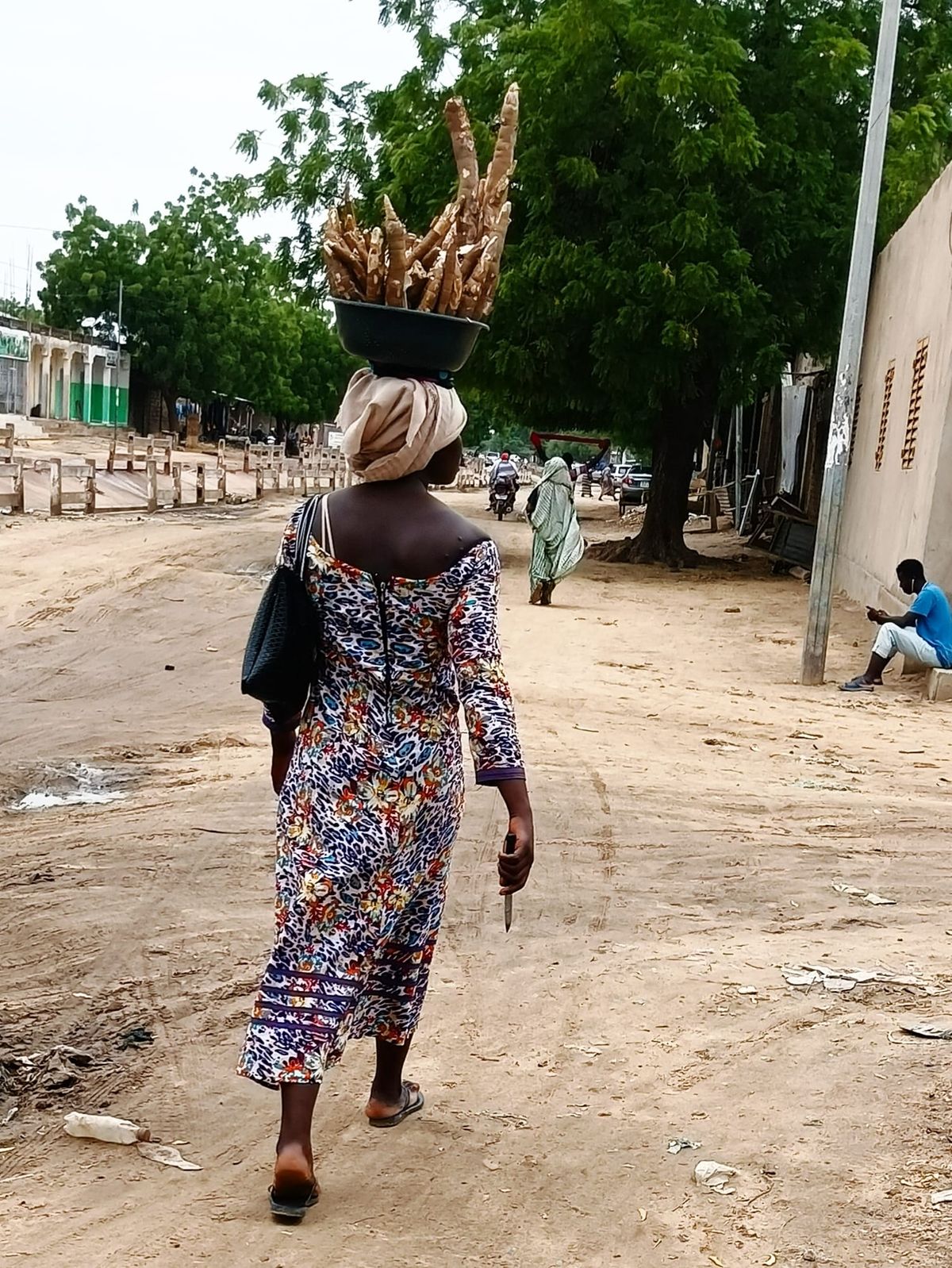

In N’Djamena, the capital of Chad, school holidays often become anything but a time of rest. For young learners like Léa, the break is transformed into an opportunity to gain real-world experience and secure funds for the upcoming academic year.
Léa, a 10th-grade student from the Kilwiti neighborhood, is one of many teenagers who have chosen to sell cassava during her vacation. Balancing a basin on her head, she navigates the bustling streets of the city daily, offering fresh cassava roots to passersby. The proceeds from her sales will help cover her school fees and supplies when classes resume.
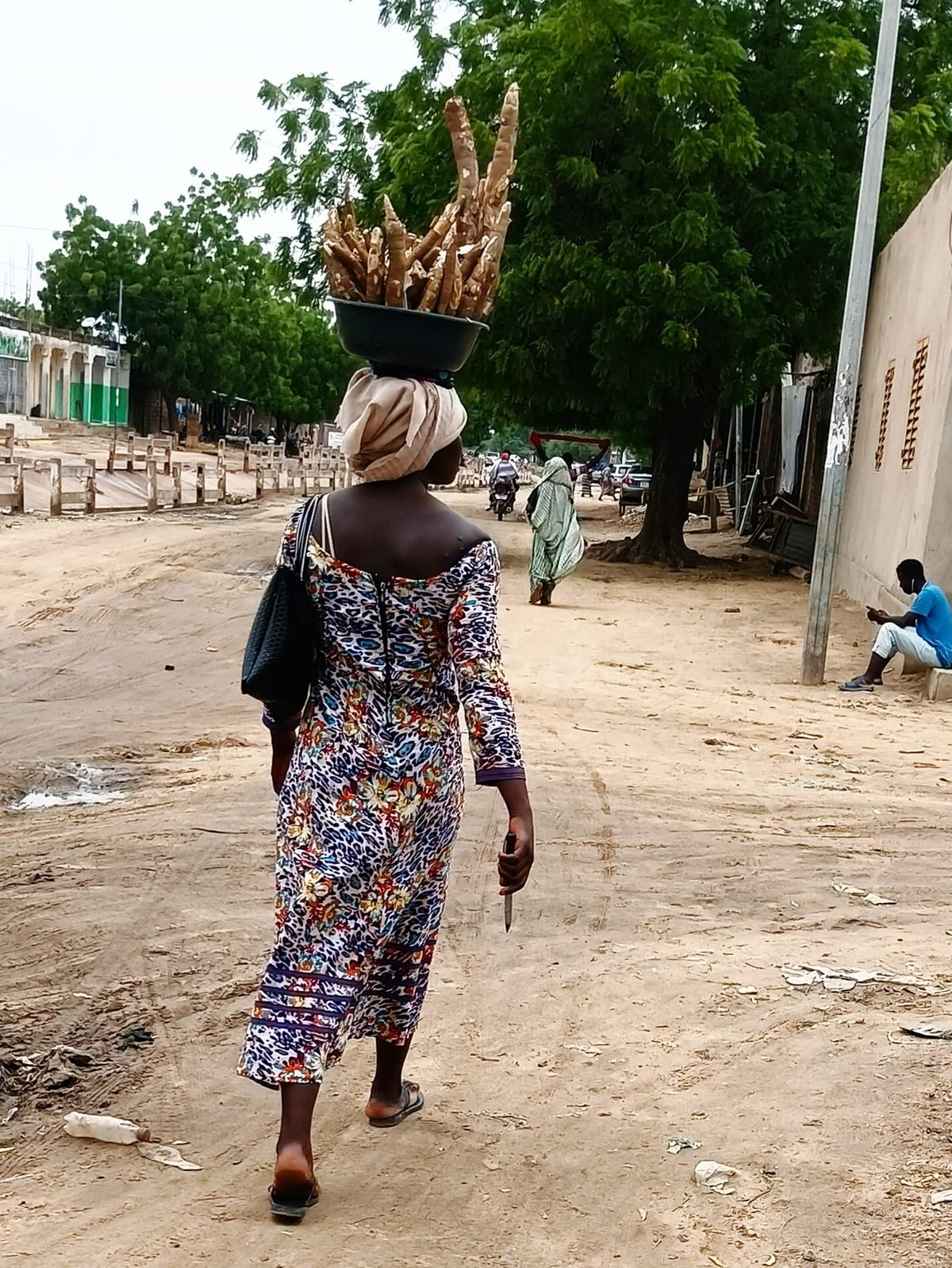
Cassava trade: balancing costs and customer expectations
Léa explains that cassava prices in N’Djamena range from 50 to 500 FCFA, depending on the quantity. While some customers view the small portions—sold at 100 or 200 FCFA—as overpriced, she points out the harsh economic reality behind her business.
« We buy cassava at high prices ourselves, » she says. « We can’t sell at a loss just because someone feels the cost is too high. » Despite these challenges, Léa acknowledges that many of her regular customers appreciate her efforts and support her journey. Her story reflects the broader struggles of young entrepreneurs in Chad, where economic hardship is a daily reality for millions.
Poverty in Chad: a harsh backdrop to youth initiatives
Chad faces severe economic challenges, with nearly 45% of its population living below the national poverty line. Extreme poverty is rampant, with over 36% surviving on less than $2.15 a day. These conditions place tremendous pressure on families, forcing many young people to seek alternative income sources to stay in school. The country’s low human capital index further restricts opportunities for youth development, leaving many with little choice but to take initiative into their own hands.
More than just income: building resilience for the future
Beyond the immediate financial benefits, Léa’s venture symbolizes a shift in mindset among Chad’s youth. Faced with an unpredictable job market and limited guarantees of stable employment after graduation, many students are embracing entrepreneurship early. By combining their studies with small-scale commerce, they gain firsthand experience in financial discipline, negotiation, and the realities of running a business. This hands-on approach not only eases the burden on their families but also equips them with essential life skills for the future.