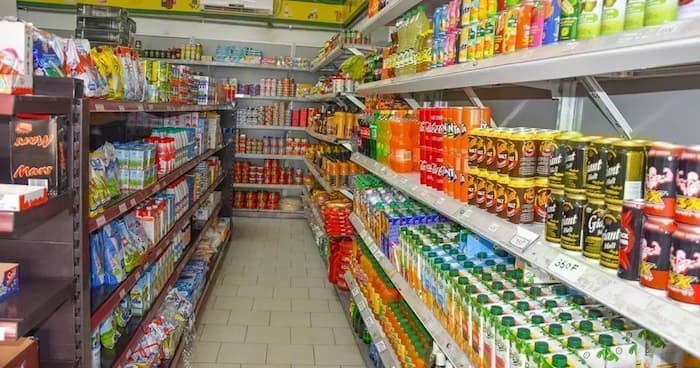

In Senegal, a nation grappling with persistent inflation, a striking observation has reignited public debate concerning the elevated cost of living. A recent comparative analysis, widely circulated across digital platforms, meticulously details a series of prices for various products in Dakar’s markets, juxtaposing them with their equivalents found in Parisian stores.
Everyday essentials: Dakar vs Paris price disparities
The comparison begins with whole chicken, priced at 2,610 F CFA per kilogram in the Senegalese capital. This figure notably exceeds the Parisian equivalent of 2,300 F CFA. Butter from the popular Elle & Vire brand follows a similar trend, commanding 2,990 F CFA in Dakar compared to 1,990 F CFA in France. Cooking oil, a fundamental household staple, reaches 6,990 F CFA in Senegal, while across the Mediterranean, it sells for 6,000 F CFA.
The financial gap widens significantly for other common household items. A packet of Chocapic cereal, for instance, is listed at 5,250 F CFA on Dakar shelves, a price more than double its Parisian counterpart, which stands at 1,990 F CFA. Fabric softener, specifically a bottle of Soupline, completes this picture of disparity, priced at 9,990 F CFA in Dakar against 5,600 F CFA in Paris—nearly twice as much.
Impending import surcharges: a new financial burden
Adding to these existing price differences is a forthcoming logistical constraint poised to further impact import costs. Maritime transporter Maersk has announced plans to implement a new handling surcharge, effective May 1, 2026. This fee, set at 250 dollars per container (approximately 151,250 F CFA), could escalate to as much as 211,750 F CFA in certain scenarios. Such an additional charge is expected to mechanically inflate the cost of imported goods, inevitably passing these increased expenses onto Senegalese consumers.
Public reactions and broader economic pressures
The re-emergence of this price comparison has sparked considerable discussion among Senegalese internet users, many expressing surprise at the magnitude of the discrepancies highlighted. Beyond food items, housing and fuel are frequently cited in public commentary as particularly burdensome expenditure categories for households. This comes amidst a backdrop of a recent fuel price hike implemented by authorities, further squeezing household budgets.
Senegal’s elevated cost of living in regional context
This economic reality positions Senegal among African nations with the highest living costs. A ranking compiled by Countryeconomy, and highlighted in 2024, placed the country as the second most expensive on the continent, trailing only Côte d’Ivoire. This perspective provides valuable on-the-ground Sahel news English insights into the economic challenges faced by residents in Dakar and across Senegal.