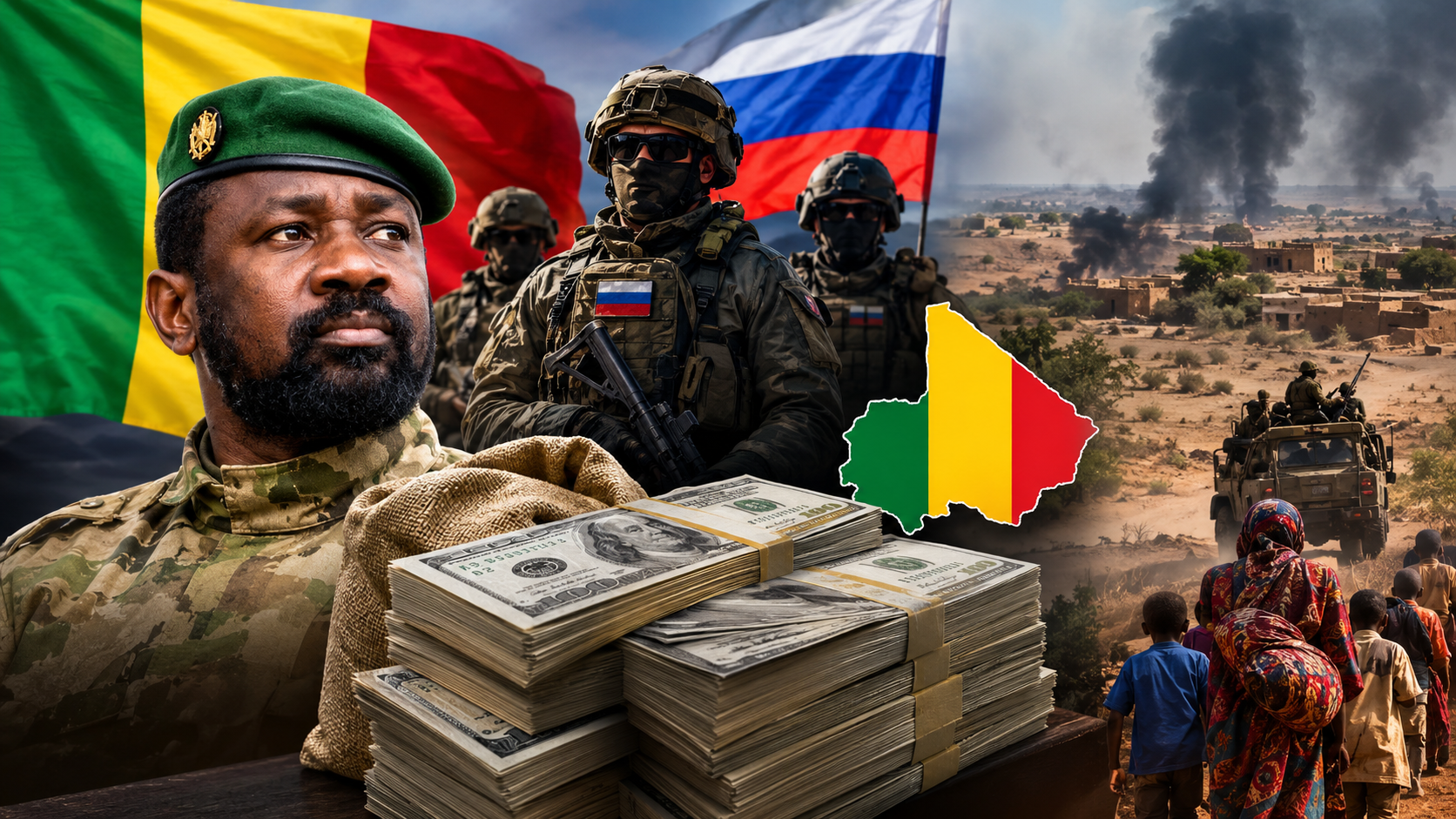

With nearly a billion dollars invested in paramilitary support from Russia first through Wagner, then Africa Corps Mali now faces a critical reckoning. The cost of this partnership extends beyond financial figures; it encompasses the very foundation of the nation’s security strategy. After severing ties with Western allies and turning toward Moscow, authorities in Bamako must justify not just the allocation of public funds but the tangible benefits reaped by the Malian people.
The transition government marketed this military reorientation as a path to regaining control over the country’s security landscape. By replacing traditional partnerships with Russian forces, officials argued, Mali would strengthen its armed forces while asserting national sovereignty. Yet a year after this strategic pivot, the pressing question remains: what concrete gains have justified an expenditure of this magnitude?
From partnership promise to fiscal reality: the cost of security
The financial burden of Russian military support is staggering. Reports indicate that Bamako allocates approximately $10,000 per month for each foreign fighter deployed. When scaled across several thousand personnel, this expenditure eclipses other critical budget lines, including education, healthcare, and infrastructure development in conflict-affected regions. While no conflict can be resolved overnight, the scale of investment demands measurable outcomes secured roads, reduced attacks, and restored state authority in vulnerable areas.
So far, these outcomes have been elusive. Despite the infusion of funds, armed attacks continue, military outposts remain under threat, and civilians in rural and border zones face persistent insecurity. The disconnect between the partnership’s stated goals and on-the-ground realities raises a fundamental issue: has this investment truly enhanced Mali’s security, or has it merely reshaped the country’s dependencies?
The financial commitment is not merely a transaction; it reflects a broader political gamble. Authorities justified the shift away from Western partners by emphasizing sovereignty, independence, and the need to reclaim territorial control. Yet sovereignty extends beyond choosing allies it requires accountability, transparency, and demonstrable results. If the Russian partnership was meant to symbolize Mali’s strategic autonomy, its effectiveness must now be evaluated not through rhetoric, but through outcomes.
Wagner, Africa Corps, and the illusion of structural change
The transition from Wagner to Africa Corps was presented as a strategic evolution, signaling a more professional and accountable deployment. However, a change in branding does not equate to improved results. For Mali, the key question is whether this restructuring has translated into better coordination with national forces, enhanced intelligence capabilities, or more effective protection for communities.
Foreign fighters can provide specific operational advantages, particularly in high-risk environments. Yet sustainable security cannot rely indefinitely on external forces. The ultimate goal must be the restoration of Mali’s own military capacity an army capable of securing territories, protecting civilians, and functioning independently. If security remains contingent on expensive foreign support, then the proclaimed quest for sovereignty rings hollow.
Moreover, the opacity surrounding contract terms, payment schedules, and mission scopes complicates any objective assessment. Without verifiable data on expenditures, troop levels, or operational achievements, the $1 billion figure loses context. It becomes not a measure of progress, but a symbol of uncertainty a price paid for a strategy whose results remain unproven.
The political stakes of unfulfilled expectations
The transition government staked its legitimacy on the promise of reinvigorated security through Russian partnership. By severing ties with former allies and redefining the country’s military alliances, officials positioned this shift as both a strategic and political victory. Yet when a policy is defended as a cornerstone of national independence, it must also be subjected to rigorous scrutiny.
The Malian people deserve clarity: How many fighters are deployed? What are their roles? What specific security improvements have been achieved? The lack of transparent reporting undermines public trust and risks turning a strategic choice into a credibility gap. In a nation grappling with prolonged instability, the true test of governance lies not in the strength of political narratives, but in the tangible security of its citizens.
Security measured in lives, not alliances
Ultimately, the success or failure of Mali’s military partnership with Russia will be judged not by the volume of funds spent, but by the quality of life restored. Families in conflict zones, farmers seeking access to their land, and displaced communities awaiting safe returns measure security in tangible terms: fewer attacks, functioning markets, and re-established state presence.
As long as these conditions remain unmet, the billion-dollar investment will be remembered not as a strategic triumph, but as a missed opportunity. The government must now confront a critical question: Does this partnership represent an investment in Mali’s future, or merely a costly detour on the path to lasting security?
The answer will define not just the country’s military trajectory, but the very concept of sovereignty it claims to uphold.
The road ahead: accountability over rhetoric
For Mali, the time for justification has arrived. The nation’s leadership must provide a clear accounting of how these funds have translated into improved security. If the results remain insufficient, then the partnership’s continuation must be reevaluated not as an attack on sovereignty, but as a commitment to the people it was meant to protect.
A billion dollars is a staggering sum. But in the calculus of Mali’s future, the only figure that truly matters is the number of lives secured and that remains unanswered.
By Moussa Samuel Coulibaly — Journalist