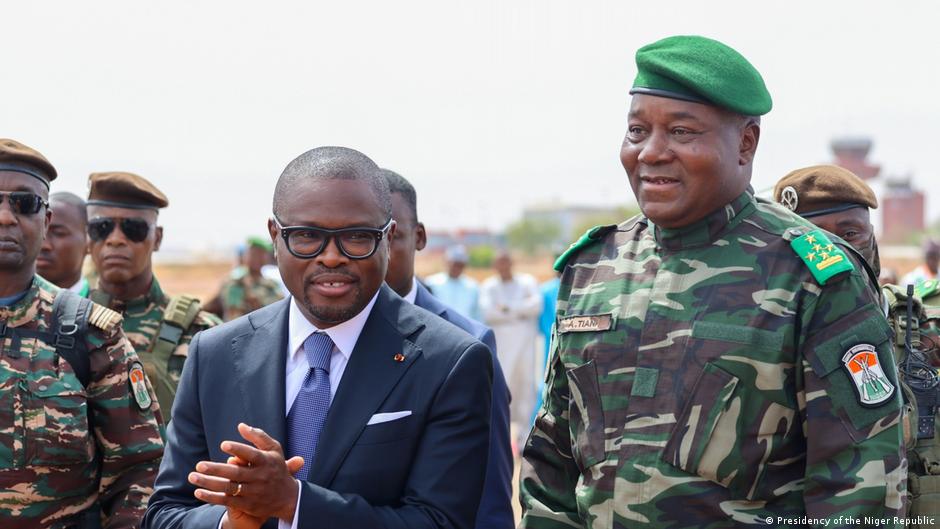

The joint expert committee tasked with resolving the prolonged border closure between Bénin and Niger has delivered its findings, sparking cautious optimism for a potential thaw in relations. After months of stalled negotiations, a framework agreement addressing security, transit protocols, and legal frameworks has been reached. However, Niamey’s insistence on three “non-negotiable” conditions may delay final political ratification.
What lies ahead for a dispute that has crippled trade and strained relations for over three years?
Three non-negotiable prerequisites
Nigerian authorities have outlined three core demands deemed essential before the Benin-Niger border can be reopened after being shut since 2023.
The first is the formal signing of a mutual defense and security pact. This agreement would enshrine a mutual no-aggression clause, preventing either nation from allowing its territory to be used as a launchpad for destabilizing the other. According to Régis Hounkpè, executive director of InterGlobe Conseils, while such commitments are standard in diplomacy, the current context demands explicit clarity: *“Yes, the Bénin will not attack the Niger, and vice versa. It’s a basic principle, but given the three-year freeze in relations, it takes on extraordinary significance. Now we must see how it’s practically enforced—both sides must ensure this non-binding yet classical clause is respected.”*
The second condition centers on intelligence-sharing mechanisms. A joint cell would enable real-time exchange of information on terrorism and cross-border trafficking, fostering mutual trust through reciprocity. Hounkpè calls it a win-win: *“This ensures neither side harbors intentions of destabilization—especially critical in a region battling insurgency.”*
The third demand touches on transparency regarding foreign military presence along the border. The Nigerien government seeks full disclosure of any external defense partnerships the Bénin may have, particularly those involving Western powers. Hounkpè frames it as a sovereignty issue: *“The Bénin is sovereign and free to forge its own defense alliances—whether with France, China, Russia, or any African state. The key is that none of these partnerships are weaponized against the Niger. Pragmatically, destabilizing a neighbor serves no one’s interest.”*
These conditions reflect deep-seated mistrust rooted in the 2023 military takeovers in both countries, which have reshaped regional power dynamics and fueled regional skepticism.
Economic fallout of a closed border
With the Bénin-Niger border still sealed, the economic toll is mounting for both nations—especially the landlocked Niger, which relies on the Bénin as its primary maritime gateway. Nearly 70% of Niger’s imports transit through Cotonou, including fuel, construction materials, and staple foods like rice. Alternative routes via Togo or Nigeria are longer, riskier, and up to 50% more expensive.
The damage extends beyond logistics. The 2,000-kilometer Agadem-Sèmè-Kpodji pipeline, inaugurated to export up to 90,000 barrels of oil daily, has seen shipments suspended, depriving the Niger of critical revenue. Meanwhile, the Bénin’s port congestion is stifling trade flows, with container backlogs and plummeting transit revenues—some sectors reporting up to a 60% drop in customs income.
Regional spillover is also severe. The Mali and Burkina Faso, both landlocked members of the Alliance of Sahel States, depend on the Bénin for essential goods. Diversions through alternative corridors have stretched supply chains, raised prices, and disrupted local markets.
Human cost: markets, families, and stability
The closure has devastated livelihoods. Traders and transporters at border towns like Malanville and Gaya report a 50% drop in customer traffic, with shops shuttering and unemployment rising. Essential goods have become scarce, pushing up food prices across both nations.
Families separated by the border face arduous and costly detours. Some communities have resorted to perilous river crossings or informal networks, fueling smuggling and extortion. The crisis has eroded social cohesion and deepened vulnerability among the most marginalized.
Economic imperative fuels diplomatic thaw
The impetus for reopening stems from shared economic imperatives. The election of Romuald Wadagni as Bénin’s president in mid-2026 marked a turning point. Within days of his inauguration, he traveled to Niamey to revive dialogue, and the joint expert committee was swiftly established to draft a roadmap.
Régis Hounkpè stresses that both leaders must prioritize pragmatism over ideology: *“They’re not just neighbors—they’re bound by geography. Cooperation isn’t optional; it’s existential. The focus must shift from geopolitical posturing to survival: economic resilience, logistical continuity, and counter-terrorism cooperation.”*
Progressive reopening is the most plausible outcome, with initial phases focusing on high-priority goods under enhanced monitoring. If successful, Hounkpè believes the agreement could set a positive precedent for regional blocs like the Alliance of Sahel States and the Economic Community of West African States, much like the recent economic détente between the Mali and Côte d’Ivoire.



