
Niger and Benin edge closer to border reopening amid economic strain
After months of stalled negotiations, a joint expert committee tasked with evaluating the reopening of the Niger-Benin border has delivered its recommendations. The findings include agreements on security protocols, transit regulations, and select legal and economic frameworks. However, Niamey has set three non-negotiable conditions that must be met before political ratification can proceed, potentially delaying the process further.
This border closure, now in its third year, has inflicted severe economic and humanitarian strain on both nations. What lies ahead for this tense standoff?
Three non-negotiable preconditions from Niamey
The Nigerien delegation in Cotonou has outlined three critical conditions for a lasting border reopening, in place since 2023.
- Mutual non-aggression pact: A formal defense agreement must be signed, ensuring neither country will allow its territory to be used as a launchpad for destabilization efforts against the other. While such commitments are standard, the recent history of tension between Benin and Niger makes this step particularly significant.
Régis Hounkpè, senior analyst and executive director of InterGlobe Conseils, views this as a pragmatic necessity: “Of course, Benin will not attack Niger, just as Niger will not attack Benin. These are basic principles, but given the three-year freeze in relations, formalizing this commitment takes on new importance. The real challenge will be implementation—both countries must ensure this clause, though non-binding, is honored in practice.”
- Shared intelligence framework: Establishing a joint intelligence cell for real-time information exchange, particularly on terrorism and cross-border trafficking, is deemed essential.
Hounkpè emphasizes the mutual benefits: “This reciprocal arrangement ensures neither side harbors destabilization ambitions. It’s a step toward rebuilding trust.”
- Transparency on foreign military presence: Niger demands full disclosure of any foreign or military deployments along the Beninese side of the border.
“This touches on sovereignty,” explains Hounkpè. The Beninese president has repeatedly affirmed his country’s freedom in foreign partnerships. But Niger must be assured these alliances won’t compromise its security. Whether it’s France, China, Russia, or regional partners, the key is that Benin doesn’t weaponize these ties. Pragmatically, destabilizing a neighbor serves no one’s interest.”
The conditions reflect Niger’s lingering distrust of Benin’s external engagements, rooted in the political fallout from the 2023 military coups in both countries.
The heavy toll of a closed border on Niger
Without Benin’s compliance with these preconditions, the border remains shut. The closure has crippled a vital trade corridor—Niger, a landlocked nation, relies on Benin for 70% of its imports, including fuel, construction materials, and food staples like rice.
For Mali and Burkina Faso, also members of the Alliance of Sahel States (AES), the impact is equally severe. These countries depend on Benin’s port of Cotonou for supplies, but the detours via Togo or Nigeria add 30-50% to logistics costs.
The suspension of oil flows through the 2,000 km Agadem-Sèmè-Kpodji pipeline has compounded losses. With exports halted, Niger faces significant revenue shortfalls, straining an already fragile budget.
Benin’s economic ripple effects
Benin, too, bears the brunt of the closure. Transit fees from the pipeline and trade routes once generated substantial revenue—blocked shipments now cost millions daily. The port of Cotonou suffers congestion, while sectors like customs, logistics, and wholesale trade report up to a 60% drop in income.
Redirecting goods to Togo and Nigeria risks eroding Benin’s status as a regional trade hub. The economic strain extends to households: rising prices, supply shortages, and disrupted mobility have pushed communities—especially in border towns like Malanville and Gaya—into precarity.
A shared macroeconomic imperative
Hounkpè frames the urgency succinctly: “Reopening the border would restore trade flows, revitalize Cotonou’s port, and allow transporters, logisticians, and businesses on both sides to resume operations.”
The analyst stresses that economic survival—not ideology—should drive decisions. “Both presidents are bound by geography. They have no choice but to cooperate.”
Humanitarian fallout: communities at the breaking point
The closure has devastated local economies. Markets in Malanville and Gaya report half their usual foot traffic, with shops shuttered and livelihoods lost. Alternative routes via Nigeria inflate costs, worsening food insecurity and isolating vulnerable groups.
Families separated by the border face impossible choices, while the void left by official trade fuels smuggling and extortion networks. The human cost underscores the need for a swift resolution.
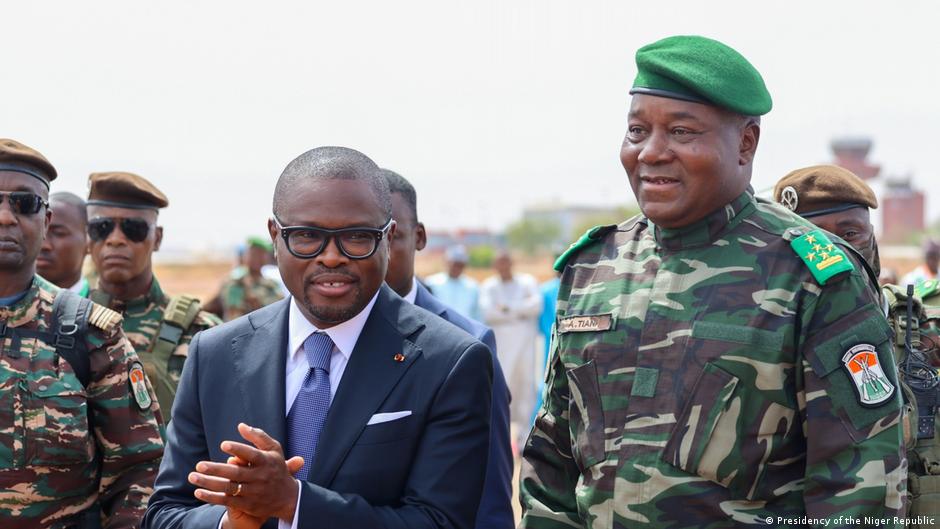
The dialogue’s revival stems from Benin’s presidential transition. Romuald Wadagni, inaugurated in June 2026, prioritized Niger as his first foreign visit, kickstarting talks that led to the expert committee’s formation.
Hounkpè remains cautiously optimistic: “Leaders must set aside ideological differences and focus on economic survival, logistics, and security. Terrorism and instability don’t respect borders.”
Progressive reopening—starting with high-priority goods under stricter controls—appears likely. If successful, the agreement could set a positive example for the AES and ECOWAS, much like the recent détente between Mali and Côte d’Ivoire.